Essential Information
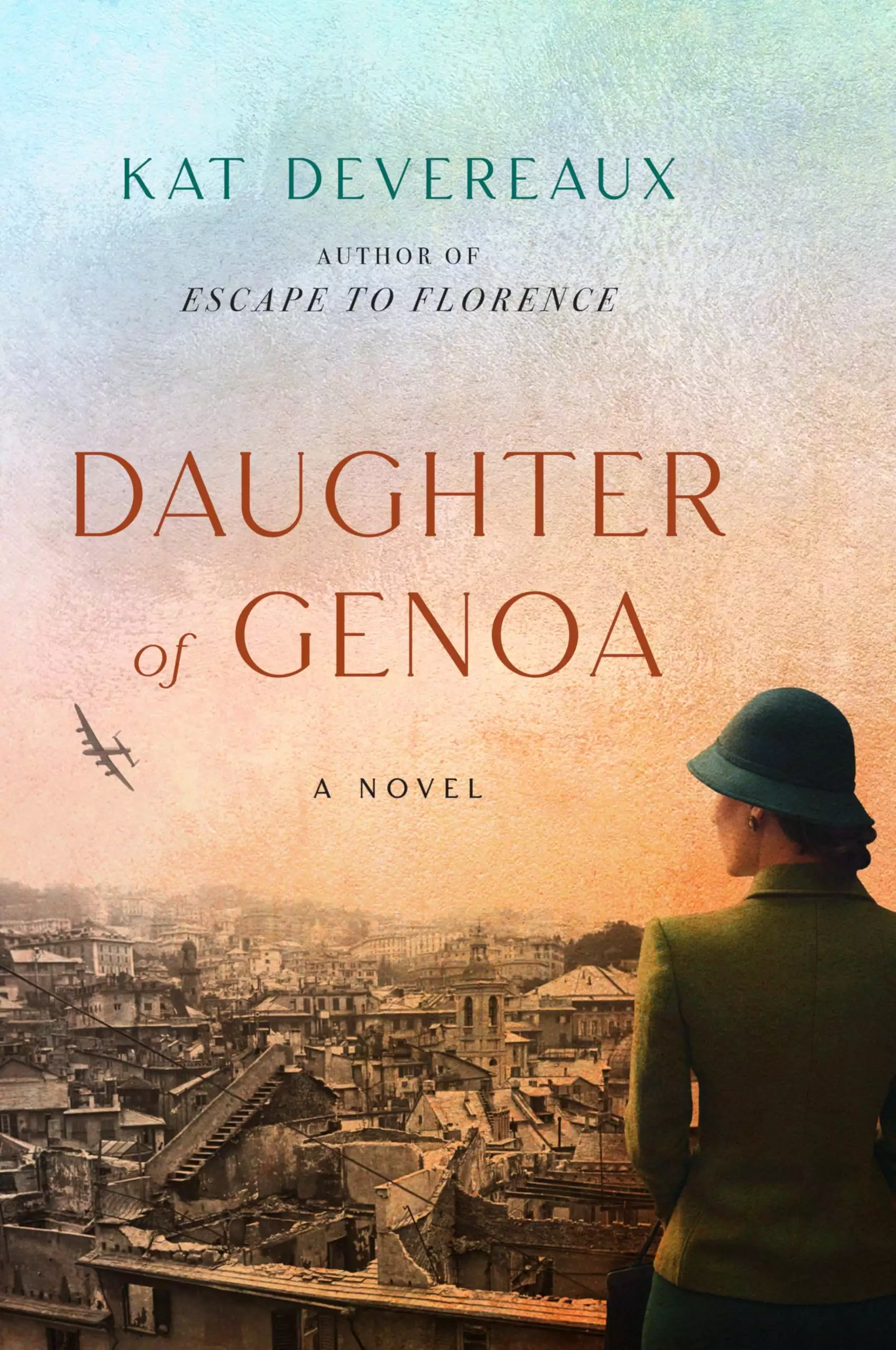
In the autumn and winter of 1938, the Fascist government in Italy promulgated a series of laws—known as the Racial Laws—that deprived the country’s Jewish population of its most basic rights. The effect of these laws was cataclysmic, not only for Italy’s Jewish citizens but for the many refugees who had arrived there after 1933, and who had been promised a safe haven. Among other restrictions, Jews were forbidden to study or teach at Italian schools and universities, banned from working in a vast range of sectors, prohibited from marrying non-Jews, and severely limited in their right to own property and business. Foreign Jews who had settled in Italy were now expected to leave. These harsh measures applied to those with two Jewish parents; to those with a Jewish mother; to the children of a Jewish father and a non-Jewish, foreign mother (my protagonist, Anna, belongs in this category); and to the children of Jewish-Christian marriages who professed Judaism as their religion.
The Racial Laws constituted a U-turn on the part of Mussolini, who had previously claimed to oppose the antisemitic policies enacted in Nazi Germany. They proved divisive even within the upper ranks of the party: some leading Fascists had actively pushed for the new legislation while others opposed it, most famously Italo Balbo. Despite the controversy, however, those who were unaffected by the new measures did not often challenge or resist them; many were only too ready to enforce them. With their
cial isolation, harassment, intimidation and abuse.
The German occupation of September 9, 1943, meant that all Jews on Italian soil were now at risk of arrest, deportation and murder. A number of Italians, some of whom had been prepared to go along with Fascist discrimination, now refused to comply with Nazi persecution or even actively resisted it. This happened all over occupied North Italy; but the city of Genoa, where my story is set, was a special case in many ways.
Genoa was the operative center of DELASEM (Delegazione per l’Assistenza degli Emigranti Ebrei). This organization was originally set up in 1939, with the government’s approval, to facilitate the emigration of foreign Jews. With the occupation, its entirely Jewish leadership was driven underground or into exile. DELASEM became a clandestine rescue network under the aegis of the Jesuit cardinal Pietro Boetto, archbishop of Genoa, one of the very few Catholic hierarchs to commit wholeheartedly to resisting the Final Solution. Even within that group, he was exceptional in using his full authority, the resources at his disposal and the moral standing of his position to protect those who needed his help.
DELASEM is a big story. This novel is a small story: an attempt to imagine the experience of a handful of people engaged in resistance during the tempestuous events of April to June 1944. Only two of my chief protagonists are real people: the “Scarlet Pimpernel” Massimo Teglio, who was head of North Italian DELASEM after November 1943; and don Francesco Repetto, Cardinal Boetto’s secretary and Teglio’s closest collaborator in this period. I have done my best to stay true to what I know of their personalities, and to work as far as possible within the gaps of the historical record. But their individual actions and conversations in the story that follows, the granular aspects of their clandestine work—especially the detail of the lists—and their relationships with my other, invented characters are entirely imagined.
Anna
It’s extraordinary how the most unpleasant things stay with us the longest. I last had to look at you in 1938. That’s ten years ago, and yet here you are, in my head. Even though I’m safe now, I still find myself scanning the papers for your name. Marinaio Dead: that’s what I’d like best, but I’d settle for Marinaio Disgraced. It’s useless, because there’s never any mention of you at all. It seems that you’ve come through it all intact. Financially ruined, I’m sure, but alive and free.
That’s far more than you deserve. I hate you for what you did to me; what you did to Stefano. I hate you for it in a particular way, but that’s not why I can’t forget about you. That’s not why I talk to you in my mind or see you in my nightmares. No, Commendatore, the thing that makes me sick is quite simply that you are alive and that Vittorio is dead. He was a far better man than you are, and if I could talk to you—really talk to you—I would never let you forget it.
Genoa, 1944
I was half-asleep on the couch when the doorbell rang. I sat up, and The Murder of Roger Ackroyd slid off my chest and landed with a papery thud on the floor. For a moment I held my breath, hoping I’d imagined the sound of the bell—that it was one of those hallucinatory noises you sometimes hear between dreams and waking. But then it rang again—once, twice—its shrill, insistent sound assaulting my ears. I stood and approached the door with silent, flat-footed steps, my heart racing.
Please, not the Germans.
I lifted the small brass cover on the spyhole and saw my landlady, signora Pittaluga, staring angrily back as if she could see me, too. She knew I must be in, of course—that I had no choice but to be in, that I went out only for the absolute necessities. Had she come for my rent? It couldn’t be that, could it? Surely she was supposed to come the day after tomorrow, when I’d had time to go to the bank and see the kind bank manager who let Stefano’s account stay open, although he was dead, and let me have access to it, although that was probably illegal. As I hesitated, her finger went to the bell. I opened the door, quickly, before she could ring again and set my nerves jangling even more.
Signora Pittaluga came in as she always did, brandishing her handbag before her like a shield. She looked around as if the place were strange to her, as if she were shocked by the cramped little flat she rented to me—at a price, I might add, that had only risen as my situation became more desperate.
“Good afternoon,” she said, and as she turned her expectant gaze on me, I realized in horror that I had been wrong. The days had got away from me, slipping and blurring into one another despite all my efforts, and I should have had the money ready today. I had never been late in paying signora Pittaluga. I had never, thus far, been late in paying anyone. I cleared my throat and hoped she would have mercy on me, just this once.
“Good afternoon. I’m very sorry—I haven’t had a chance to go to the bank. I can go first thing tomorrow. Or now,” I added, as her mouth pursed and her fingers tightened on the strap of her shiny black crocodile bag. “I can go now, if you wouldn’t mind waiting. It isn’t far. I’m sorry.”
“Well, signora Levi, I don’t quite know what to do.” Since the Germans came, she’d made a point of calling me by my father’s name rather than my husband’s. Before that I had always been signora Pastorino, classically Genoese and plausibly Catholic. “I can’t wait around here, I’m afraid. I simply haven’t the time. I suppose I could manage to come back tomorrow, if you can assure me that you will have the money ready.”
“Of course I will,” I said.
“Then it’s all right this time. But only this time,” she said, and one penciled eyebrow crept up towards her hairline. “My family relies on this income, you understand. If you forget again, then I shall have to see what my son-in-law has to say about it. He works at the questura.”
She mentioned him often, this son-in-law. He was one reason I’d stayed in Carignano, in the heart of Genoa, while the city emptied out around me; while those with the means to do so fled to the safer suburbs and the hillside villages. Because the bombs might spare me, but I knew that the police would not. I could not afford to alienate signora Pittaluga.
“Thank you,” I said, meekly, as if she hadn’t just threatened me. As if I didn’t want to snatch that shiny black bag from her hands and beat her around the head with it. “I really do appreciate your understanding. It won’t happen again, I promise.”
“I should hope not, signora Levi. I shall come past at noon tomorrow. Good day.” She went out, and I sank back down onto the couch and put my face in my hands, cursing myself.
I decided that I would go out first
thing in the morning. I would go to the bank, and I’d pass by the shop on the way back to see if the man there had put aside anything for me, as he sometimes did: a spare loaf end, a half block of margarine, sometimes a piece of fish or a cutoff scrap of meat, if he could manage it. Even the idea made my stomach squirm, and I thought of the little tin of sardines he’d given me last time. I could have them for dinner tonight, a special treat to take away the nasty taste of signora Pittaluga’s threat. But now it was only four o’clock, and if I didn’t want to wake up hungry in the night then I would have to wait at least until seven, ideally longer. Until then, I would simply have to distract myself.
I’d mended everything that needed to be mended and re-hemmed three skirts that didn’t need hemming at all. I had no accounts left to balance; I’d dusted every surface in the flat, washed all my underwear, scrubbed the bath, and trimmed my hair with the scissors I’d discarded as too blunt for sewing. There was nothing else to do. I reached down, picked Roger Ackroyd up from the floor and settled down to read, pretending the best I could that I didn’t already know how it ended.
The air raid siren sounded just as I’d opened the sardines. I had waited until I could stand it no longer; I could not set them aside and let them spoil. I stood over the sink and forked the little fish into my mouth, desperately reveling in their rich taste and smooth, fatty texture, the soft crunch of the small bones and the oil that dripped down my chin. Then I wiped my face, gulped down a glass of water, took my coat and bag and went downstairs.
Living so close to the port, I didn’t want to risk staying home when the alarm went up, though I’ve since heard that plenty did. Instead I chose to run out to the shelter, relying on the crowds to keep me safe and inconspicuous. But those crowds kept dwindling, and tonight there was just a handful of people hurrying along my street towards Galliera Hospital and the public shelter that lay beneath it. An older lady and three younger women, perhaps her daughters, were a little ahead of me. I pressed on so that I almost caught up with them: not so close that I’d alert them to my presence, close enough that any observer might have taken me for part of the group. As I pursued them along the street under the plaintive wail of the siren, one of the young women looked back and briefly caught my eye; to my relief, she smiled, but I still slowed my pace a little.
hardly be otherwise. I made for the underground entrance, insinuating myself into the flow of people so that I was carried along, protected from view, into the long, narrow, echoing tunnel with its harsh electric light. I forged on further and further, letting the bustle and noise envelop me until I found a little patch of space and sank down onto the wooden floor with my back to the curved wall and my coat over my knees. Even with so many bodies in the way, I could feel a faint current of air from the round window at the far end of the tunnel, which emerged high up in the stone wall above via Banderali. Before all this began, I used to love Carignano, with its high terraces and its splendid views over the city and the sea. Now I hated it because, when the bombing started, I knew that I would hear everything. There was no protective barrier, no comforting layer of soil to muffle the violence outside.
Everyone around me was mercifully absorbed, huddled together in groups, consoling one another, bickering. Nobody seemed to be paying any attention to me, and I hoped that nobody would. But the hairs on the back of my neck prickled, in the way they do when you’re being watched, and I looked around. Sitting a little way away, against the opposite wall, was a Jesuit priest. I knew that he was a Jesuit because my father had taught me and my brother to spot them when we were small. And they were easy enough to identify, in their black buttonless cassocks with the wide black sash at the waist, going about solemnly in pairs—one older, one younger—with their gazes downcast as if they might see something wicked. This one was middle-aged and alone. He was slender and scholarly looking, with a worried face and a pair of round spectacles, and he had an open prayer book in his hand, but he wasn’t looking at it. He was looking at me.
I felt a surge of revulsion and anger. Who was this priest to stare at me, to single me out among all these desperate people who might actually need his help—who might want his help? Was it really such a novelty for him to see a woman on her own? Fury made me bold, and I raised my chin and looked him straight in the eye. For the briefest of seconds, my gaze held his, and then he looked away. He closed his prayer book, got up and, with the slightest motion in my direction—it might have been a nod, it might have been a shrug—made his way towards the entrance of the tunnel.
My heart was hammering now. I was suddenly very afraid that he knew who I was and what I had to hide. My father didn’t loathe the Jesuits for nothing. They were the Pope’s enforcers, relentless champions of Christian supremacy. They had persecuted the Jewish people for centuries. They had supported the Racial Laws, calling on Mussolini to defend Italian Christianity against its supposed Jewish enemy. They were everything that he, and I, and my good Scottish Protestant mother, hated about the Catholic church. And now this one had seen me, had perhaps realized that I had reason to fear him, and for all I knew he had gone to fetch someone to take me away. I hugged my knees to my chest and shut my eyes tight, waiting miserably for a hand to descend upon my shoulder.
Nobody came. Before long the guns began to rattle, and the earth all around shook, and the noise and chatter of the tunnel gave way to a terrible, mute tension. But you can’t be scared all the time, no matter how bad things are; your brain simply won’t let you. At some point you have to sleep, and so after a while, I curled up on my side with my coat over me and my bag under my head, and I slept like an exhausted animal. I didn’t wake until the all clear sounded at dawn. Vittorio
As Vittorio emerges from the shelter and into the chilly spring morning, he finds himself looking around for the young woman he saw earlier. In his line of work, you quickly learn to spot those who live in hiding. It’s not just the physical signs: the pale complexion, the mended clothing, the obvious nerves. In much-bombed Genoa, all those are common enough. No, it’s something else. It’s an air of wanting to vanish, of trying to be as small and as unobtrusive as possible. It’s a way of holding yourself so you don’t draw attention. When he saw her like that, tucked up against the wall of the shelter, he was fairly sure she needed help. The hatred and fear in her expression when she looked at him, as painful as it was—that confirmed it.
He can’t approach her himself, of course; not after that. Perhaps if he can lay eyes on her, get a sense for where she might live, he can have someone else look for her once the chaos has died down: a friendly nun or, better still, a laywoman. But the crowd is dense and he can’t see her, can’t even bring her features to mind. He has already failed to help. Carignano is covered in dust and smoke; people are surging around him, clutching at one another and at him, begging for a prayer or a blessing. He looks into the pale, terrified faces that turn to his and he does what he can to soothe them, to be the reassuring presence he knows they expect. His chest hurts with every breath of thick, cold air, and he’s beginning to feel very bad, worse even than usual. He’s shamefully unprepared. He had come to the hospital to hear a parishioner’s confession, and now he is at the center of all this horror, sick and sleep-deprived, trying desperately to be useful and hoping that his instinct will kick in, that well-trained priest’s instinct that has carried him through so many horrific situations. But it doesn’t, not today. Today, apparently, he’s just a man.
“Father Vittorio?”
A young, mousy-haired woman—a girl, really—in a Red Cross uniform is looking up at him. He’s seen her face before, he realizes. Certainly around the hospital, but somewhere else, too: perhaps the archbishop’s palace, or his home church, the Gesù.
He must look as tired and baffled as he feels, because the girl gives him a frank smile. “I don’t expect you know me,” she says, “but I know you. I have a patient who’s asking for a priest. Will you come? Now?”
“Of course.” He turns to go back towards the hospital, but she shakes her head and sets off in the other direction. She’s moving so swiftly that he has to try to keep up with her. The pain in his chest becomes tight, demanding.
There’s a courtyard on the left, the gate standing open; she ducks into it and waves him after her. “I saw you earlier in the shelter,” she says quietly, “and I’m very relieved to find you again. I told a lie, you see. My patient doesn’t need a priest, but she does need help.”
“I see,” Vittorio says. He takes out his handkerchief and wipes the sweat from his face.
“I found this lady in via Gualtieri. She’d had a nasty turn. She’s very underfed—well, we all are right now, but even so—and I gather she lived in one of the houses that was destroyed. She must have come home, seen it and passed out from shock, poor soul. It took me a moment to bring her round, and she’s still not right.”
“And now she hasn’t anywhere to go?”
“Worse than that.” The girl looks around her, lowers her voice another notch. “I had a look in her handbag, when I couldn’t rouse her—I thought I might be able to call someone for her, a husband or a mother or some such. And I saw her identity card. Says she’s from Troia.”
Vittorio knows what that means. The most rudimentary false papers, the only ones available to Jews in the first weeks of the occupation, were all stamped by the questura of Troia in the free zone of southern Italy. It was the
only counterfeit stamp available in those days. He thinks of the Fascist police and the German SS, patrolling the devastated streets of Carignano to hunt for those flushed out by the bombing, and he turns cold.
“Her name’s Marta Ricci,” the girl goes on. “That’s what it says on her card, anyway. There’s someone sitting with her now—seems a nice enough woman, but I don’t know. I said I was going to fetch her parish priest. That’s you, Father Vittorio, so best you remember her name. Marta Ricci. And I’m Nurse Dora.”
“Good thinking, Nurse Dora,” Vittorio says. “Let’s go and see her, shall we?”
Via Gualtieri was once one of those typical Carignano streets lined with tall, stately buildings, a little down-at-heel these days but still grand enough, or at least respectable. Now it’s a sprawl of rubble and wasted walls, laid wide open by the RAF bomb that has landed directly in the middle of it. The ruins are crawling with people: rescue parties and firemen, workers with barrows and shovels, already bringing the chaos into some kind of order. Vittorio thinks of ants.
“There she is,” Nurse Dora says, and she leads Vittorio towards a heap of masonry where two women are sitting. A wiry, headscarved matriarch who holds a broom like a scepter, and next to her, a slight figure in a shabby tweed coat, curled up with her head resting on her knees. Something about her is familiar—the coat, ...
We hope you are enjoying the book so far. To continue reading...
Copyright © 2026 All Rights Reserved

 Please log in to recommend or discuss...
