
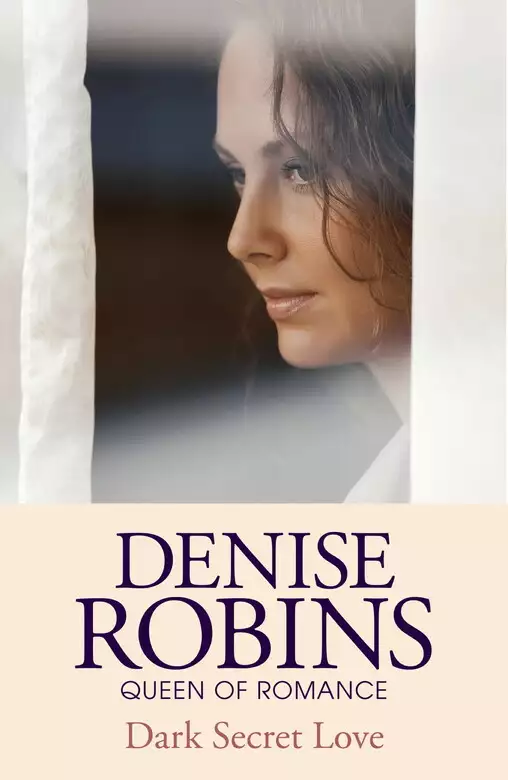
Dark Secret Love
- eBook
- Paperback
- Book info
- Sample
- Media
- Author updates
- Lists
Synopsis
After eleven years of marriage Christina faces the facts - she has left her husband and children and is nearing the day of her divorce. As she recalls the factors that led up to her break-up with Charles and her passionate new attachment to Philip she discovers in a flash the truth about herself. Her confidence is shattered. It is as though - on the point of slaking her thirst at the well of her new passion - she has discovered something venemous at the bottom of the cup.
Release date: October 24, 2013
Publisher: Hodder & Stoughton
Print pages: 192
* BingeBooks earns revenue from qualifying purchases as an Amazon Associate as well as from other retail partners.
Reader buzz
 Please log in to recommend or discuss...
Author updates
Dark Secret Love
Denise Robins
‘Charles, please!’
Her nine-year-old son swung round to look at her. He was irritated. His voice was scornful.
‘Ninety’s not fast. Bennett’s father has done a hundred and twenty in his Aston Martin.’ He turned back to his father. ‘Come on, Daddy, the road’s quite clear.’
Beside Christina, Dilly, her small daughter, looked anxious. She wasn’t frightened but she heard the tone of her mother’s voice and recognised the fear behind it.
Christina to herself—‘Don’t look! If you close your eyes you won’t realise how fast you’re going. Charles is a good driver. There’s no need to panic …’
But no matter what she said to herself, fear continued to rise in her. No matter how good a driver he might be, there was always the driver of the other car who could make mistakes. Why couldn’t Charles remember the accident last year? It hadn’t been his fault. She had only suffered from bruises and cuts. But the shock had had far-reaching effects, triggered off sudden attacks of headaches and frequent insomnia.
‘Charles, please don’t drive so fast.’
Still he made no reply nor did he slacken speed. The needle was now close on the hundred mark. James’s face was flushed with eager excitement.
‘Charles!’ There was real panic in Christina’s voice now. She couldn’t control it any longer.
‘For God’s sake, Chris, how can I concentrate with you nattering like this in the back? You’ll soon turn Dilly and James into bundles of nerves if you go on like this.’
Dilly spoke:
‘I’m frightened.’
Dilly’s hands clutched the back of the driver’s seat.
‘Oh, don’t be so silly—girls are drips, aren’t they, Daddy?’ said James.
Charles laughed and put his foot down on the accelerator a little harder. They were nearly at the end of the dual carriage-way. Christina knew the road. Half a mile farther on there was a bad corner and deep down inside her she knew there would be a lorry coming round the corner; knew that they were going to hit it.
‘No, don’t—Charles, please stop it. No, no, no!’
Her voice rose to a scream, yet no sound seemed to emerge from her throat. The speedometer touched one hundred and ten. When it reached one hundred and twenty they would see the lorry. They were approaching the bend, Charles was not going to slacken speed. There … there was the lorry. Christina covered her face with her hands.
A horn blared deafeningly against her ear-drums …
She opened her eyes.
She could see only darkness now. The horn still hooted intermittently but seemed farther away. She realised that she’d been asleep, reliving the old nightmare. The horror of it was still with her, and her hands, as she reached for the bedside lamp, were trembling. She pressed down the switch. She was wet through with perspiration. It was some minutes before she could bring herself to climb out of bed and change her nightdress. She was still shivering when she climbed between the sheets and lay back against the pillows. She was quite exhausted.
It was all over now.
There would be no more horrifying drives with Charles, with James taunting her about her uncontrollable nerves. It was all in the past, over … just as her marriage was over. The hearing of the divorce was scheduled for 31st July, the last day before vacation.
Christina sighed—reached for a cigarette and lit it. She began to calm down. Last night when her friend and solicitor, George Woolham, had telephoned to give her the date, she had suddenly lost her nerve. The full force of what she was doing—breaking up her marriage—leaving her husband and children—had knocked her momentarily off-balance.
July the thirty-first was Charles’s birthday.
‘Must it be that day, George?’ she had asked her legal adviser who was also one of her best friends.
‘For God’s sake, Chris, it’s no good getting sentimental at this stage. You haven’t changed your mind about leaving him, have you?’
‘No! I’m sorry to be so silly. I suppose after eleven years of marriage old customs die hard.’
Now, after the appalling nightmare about the car, her conviction that she was doing the right thing came back in full force. No highly strung woman could live happily with a man like Charles. He had nothing to offer her. Neither love, friendship nor understanding. Once, she had been a gay, happy girl who took life calmly and reasonably. Now she was nervy—a mass of inhibitions—almost psychopathic in her own opinion. That was what her marriage had done to her, and the sooner she put it behind her and started a new life, the better.
How much easier this period of waiting would have been if she could have gone straight to Philip. Living alone was not easy for her after the full busy life she had led at home; entertaining for Charles and looking after the children. Here in this flat she had far too much time for thinking. Introspection could be dangerous and unsettling, when one was at the cross-roads.
She wished she could bring herself to lift the telephone by her bed and dial Phil’s number. But her little blue leather clock showed the time to be 4 a.m. Phil had been at a late rehearsal of one of his plays for television. He would hardly welcome the sound of her voice and the story of an hysterical dream at this hour of the morning. It wasn’t as if she had anything much more to say; except that useless feminine repetition: ‘I love you, I need you, I just wanted to hear your voice.’
She took a sleeping pill from the small bottle on her table and lay back once more, waiting for the drug to take effect. She needed the release which sleep could afford from thinking and remembering. There’d been enough of it even before she had decided to put an end to her marriage.
For weeks, she had vacillated, torn between duty and her need for all that Philip could offer her. Maybe if Charles or the children had shown any real interest in her, she would never have had the courage to leave them. God knows she’d struggled hard against the temptation that Phil’s love had put in the path of duty. Perhaps fate had reserved their meeting for the exact psychological moment when her nerves were at breaking point and she knew she couldn’t bear another day as Charles Allen’s wife.
She had met Philip at a party given by her dearest friend, Frances Grafton. Fran must have known that she and Phil would be immediately and completely ‘sympathique’. Philip was a writer. Rather romantic and very much an artist and with something of the actor in him, too. The exact opposite of Charles. What Fran might even have anticipated was the instant flame of physical attraction that would spark between the two of them and flare up into a blazing love-affair. Whether she suspected it would become too strong for them in the end—Chris did not know.
This living apart now—Philip in his London flat, she in the small apartment she’d rented from one of Fran’s friends—was wildly frustrating for her and for Phil. But Charles had insisted that either she live alone until she was married to Philip, or he would not allow her to see the children.
She had been forced to accept Charles’s dictum and even admitted it was right and proper. Christina understood children, and one could hardly explain to a boy of ten and a girl of eight that their mother was living with her lover while Daddy lived at home, alone. Too tricky altogether. It might have been easier if she could have believed that Charles was merely doing this to be vindictive and keep her apart a bit longer from Phil. Everything in fact might have been easier if she could have hated Charles.
Perhaps the only time she had really felt she did had been during that drive into Brighton which she had just relived in that grim nightmare. But normally speaking, Charles had never been actively cruel. In the eyes of most people he must always have appeared as an excellent husband and devoted father. Certainly he was devoted to his son—funny that she should always think of James as Charles’s son. But then the two were completely alike, self-sufficient, unemotional, independent of her. Both so obstinate—lacking a sense of humour.
She knew that Charles was right when he had told her that James would rather live with him; that day they discussed the divorce. The boy adored his father. As for Dilly, her small girl, Christina did not feel it fair to separate her from her father, brother and home. Both children were at boarding-school for eight months of the year. Charles had agreed they should spend part of their school holidays with her. Dilly was not a sentimental child. Just as well as things had turned out. She had certainly never clung to her mother the way some children did. Both James and Dilly seemed to have inherited Charles’s spirit of independence. They were completely happy and settled in their schools.
Leaving them had in a way broken a little piece off Chris’s heart, but the logical part of her mind accepted that it was all for the best. When Chris was married to Philip there would be no settled home for the children to come to. His London flat could never be more than-a pied-à-terre. He was so often away. He spent months working on film-scripts, on the Continent or in America. At present he had a big contract with an important company in Rome. He was also due to go to Hollywood in the near future. Chris asked herself what place would there be for two young children in this new life that she would lead with him. And the answer was none.
The thought frightened her a little. James and Dilly might not need her but they were still her children, part of her, and she could not completely deny her need for them. But Phil was not particularly fond of children. They did not interest him although he was friendly with those whom he met. He was the sort of man who pats a child on the hand, gives it half a crown and forgets it immediately. He had assured Chris that he would feel differently about Her family. She wondered suddenly how James and Dilly would like Phil. So far they had not met him. When the time came she knew she would feel nervous about it. They were so essentially Charles’s children; critical and not easily taken in. They might be merciless if they didn’t take to Philip. He naturally wouldn’t like it if they were stand-offish and unresponsive to him.
Once Chris made up her mind to leave Charles, the future had seemed settled, more uncomplicated than it had actually turned out. She had been sure she would be happy with Philip. He was the complete, satisfying lover. At times her own intense physical need and response to him rather embarrassed her. Now she was losing her nerve. Supposing the children condemned her for walking out on their father? They wouldn’t understand how impossible he had been to live with. How could they? Kids know nothing about marriage. They got along so well with him. Besides, what child was capable of judging their parents tolerantly, or of connecting them with strong likes or dislikes? They expected their father and mother to like each other and remain together. Charles was a hero to them. But unfortunately they were already a bit prejudiced against their mother. Charles’s stepmother, Winifred Allen, had seen to that. Winifred hated Christina, and had always spoiled and indulged the children, and, however inadvertently, passed on to them a little of her own contempt and disapproval of Chris.
But then, Winifred was partly responsible for the break-up of the marriage; of that, Chris was positive; to remember her was to conjure up some of the nastiest moments of the past. Winifred, in the future, was capable of turning the children quite ruthlessly against her. It would be her way of getting her own back on Chris for hurting Charles. Winifred had always loved Charles as deeply as if he had been her own son.
But I haven’t hurt him, thought Chris in a moment of despair. It’s only his pride. If he’d been capable of being hurt, I wouldn’t have left him. He deserved to be left if ever a husband deserved to lose a wife.
There’d been so many times when she had tried to put things tight between them and make Charles understand her point of view. She had hoped he might realise that she was reaching the end of her tether. He had been either too blind or too disinterested to meet her halfway. George Woolham was right—it was stupid to become sentimental and remorseful about a man who had treated her with such indifference. Charles had rejected her physically and mentally. It had been inevitable that she should, in the end, leave him. The end mightn’t have come so soon if she hadn’t met Phil when she did, but if there hadn’t been a Philip she could still never have gone on living with Charles. She would have left him anyhow. She was profoundly thankful that Philip came into her life when he did. He had rescued her from the misery that had for a long time been more mental than physical.
For so long, living with Charles, she had been forced to repress her warm loving natural instincts and bury her hopes of being the wife of a man who needed her in bed as well as in the kitchen or facing him at the end of the table. Yes—that was the crude truth. She had wanted to belong to a man who wanted her. Not to be put on one side and told that ‘that sort of thing’ was fine for a honeymoon or a special occasion, and then left alone—for weeks—even months, to wonder why she bothered to put on a new dress, try a new hair-style, use a new perfume or behave in every detail like a woman. Charles had made her wonder, often, if she was one—yet she knew she was attractive to other men. Charles had made her feel a housewife, hostess, a mother to the children. But Phil was different. God!—when you were in bed with Phil, you knew you were a woman—one hundred per cent. And it wasn’t only sex. Christina didn’t like love-making in its purely sexual significance. She wanted romance—tenderness—all the charming preliminaries that some men thought a waste of time. Well, Philip gave everything—the sweetness as well as the passion.
Had she felt this way about Charles when they first met? She had been very young and romantic then. Was she one of these women who had been born out of their time and should she have been a Victorian—when lovers disguised the love-tablet with a heavy coating of sugar, so much so that today they were called hypocrites? Did she deceive herself? Was all this chaos caused by sex—ugly, self-seeking, and in the long run, as destructive of beauty as the worm in the bud?
Would she end up as badly with her second husband as she had done with her first?
Christina clutched with hot damp hands at her pillow. The sleeping pill was taking effect. Her breathing quietened. Her fears dissolved. But as she fell asleep the tears trickled down her cheeks and she tasted the salt of them on her lips.
She remembered the night when she and Philip first became lovers. Despite her thirty-odd years, she had felt like a young bride. Virgin—untouched and fresh for this man, in body, mind and spirit. She had been shy of Charles. With Philip there could be no false modesty—only honest desire. He had taught her a new way of loving; shown her that physical love could be complete and unashamed between a man and a woman, and that her urgency could match his. There need be no repressions, none of the difficult reservation she had felt constrained to produce as a kind of brake on her passions when with Charles. A night’s love with Philip was completely different from anything she had experienced with her husband. It was really like the first time. Strange, new, exciting.
She remembered saying as they lay close together:
‘I’ve never been unfaithful before.’
Phil’s lips were wandering over her throat and shoulders and coming to rest on her breast. He had already told her that she had lovely little breasts, like a young girl’s—round and still firm. Only the dark tinge of the nipples replacing the virgin pink, showed that she had borne children.
His fingers began to play with her long, thick auburn hair. He liked her long hair. She had promised never to cut it. His touch aroused her to fresh excitement. Her whole body shivered. She slid her arms round his waist and drew him against her.
‘You’re not sorry?’
‘No! I’m far from sorry. It’s been the most wonderful experience for me. More than that, I love you, Phil.’
‘I have an idea that I am very much in love with you.’
She looked into his eyes. They were a greenish colour. She had accused him before of having lashes too long and dark for a man—wasted on him. His hair which she began to ruffle with one hand was very dark. He had a pale skin, the sort that looked blue the instant that he needed a shave. How different human beings could be, she thought. Comparisons were odious, but she couldn’t help comparing this slim hard body—exceptionally youthful for a man nearing forty—with her husband’s. Charles wasn’t quite as old as Phil but he had let himself grow flabby. He was as fair as Phil was dark. Those pale blue eyes of his could never look as deep, as full of feeling as Phil’s. It was incredible, too, to note how differently two men could make love. It was so long since Charles had shown the slightest sensual interest in her, he seemed to have become more like a brother, and not a very affectionate one. Even when they were first married, his passion had flared up in a moment and as quickly died down. It had never been with him as it was with Phil—the sustained excitement, deliberately long-drawn-out until the final supreme mutual moment of fulfilment. The prolonged exploratory feverish caresses. The delight shared in each other’s bodies. The cigarettes smoked in the darkness as they lay whispering to each other. And when the hectic moments were over, the sweet fatigue that followed. The sleepy questions asked of each other:
‘It was perfect for me. Was it for you?’
‘Has it ever been like this with anybody else?’
‘Nobody has even been so marvellous—don’t evet let anybody else do our things, will you?’
Philip switched on the light. He looked at her with an artist’s appreciation as well as a lover’s desire. She flung an arm across her eyes. Charles used to turn the light out. She had sometimes wondered if he ever realised how she looked, or, for instance, that there was a mole under her left breast. But Phil had found and kissed it, called it ‘one of nature’s perfect imperfections’. He had said that it showed up the creamy colour of her skin.
She could have painted her toenails every night for Charles and he would never have looked at them. She had learned all too quickly that it just wasn’t in him to be a lover. But Phil had kissed every toe and told her that she had beautiful feet. He had revived all the self-confidence which she had lost. . .
We hope you are enjoying the book so far. To continue reading...
