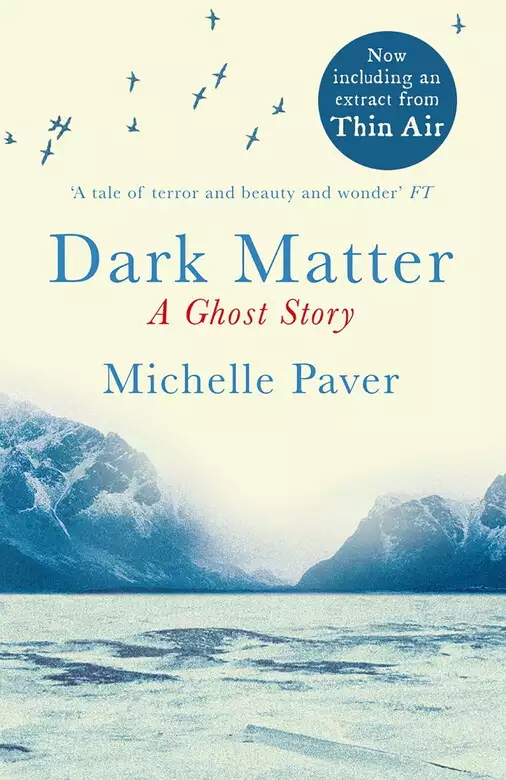
January 1937. Clouds of war are gathering over a fogbound London. Twenty-eight year old Jack is poor, lonely and desperate to change his life. So when he's offered the chance to join an Arctic expedition, he jumps at it. Spirits are high as the ship leaves Norway: five men and eight huskies, crossing the Barents Sea by the light of the midnight sun. At last they reach the remote, uninhabited bay where they will camp for the next year. Gruhuken.
But the Arctic summer is brief. As night returns to claim the land, Jack feels a creeping unease. One by one, his companions are forced to leave. He faces a stark choice. Stay or go. Soon he will see the last of the sun, as the polar night engulfs the camp in months of darkness. Soon he will reach the point of no return - when the sea will freeze, making escape impossible.
And Gruhuken is not uninhabited. Jack is not alone. Something walks there in the dark...
Read by Jeremy Northam
(p) 2010 Orion Publishing Group
Release date:
October 21, 2010
Publisher:
Orion
Print pages:
256
* BingeBooks earns revenue from qualifying purchases as an Amazon Associate as well as from other retail partners.
‘Dark Matter is terrific … [a] wild beast that grabs you by the neck’
‘The ultimate test of a good ghost story is, surely, whether you feel panicked reading it in bed at midnight; two-thirds through, I found myself suddenly afraid to look out of the windows, so I’ll call it a success’
‘Told in the increasingly fearful words of Jack as he writes in his journal, this is a blood-curdling ghost story, evocative not just of icy northern wastes but of a mind as, trapped, it turns in on itself’
‘Paver has created a tale of terror and beauty and wonder. Mission accomplished: at last, a story that makes you check you’ve locked all the doors and leaves you very thankful indeed for the electric light. In a world of CGI-induced chills, a good old-fashioned ghost story can still clutch at the heart’
‘Dark Matter is a spellbinding read – the kind of subtly unsettling, understated ghost story M.R. James might have written had he visited the Arctic’
‘Jack becomes sure that an evil presence is trying to drive him away from Gruhuken. Paver records his terror with compassion, convincing the reader that he believes everything he records while leaving open the possibility that his isolation … has made him peculiarly susceptible to emotional disturbance. The novel ends in tragedy that is as haunting as anything else in this deeply affecting tale of mental and physical isolation’
‘It’s an elegantly told tale with a vivid sense of place – and it’s deeply scary’
‘Dark Matter is brilliant. Imagine Jack London meets Stephen King … I loved it’
‘Disquieting and poignant in equal measure, Paver’s novel reminds us that fear of the dark is the oldest fear of all. An ideal read for long winter evenings’
‘There is an icy thrill to this gripping ghost story’
‘Everything you could want from a ghost story and more – her ability to describe a setting so perfectly that you can see it in your mind’s eye is amazing. Wow, basically’
‘An artful exercise in suggested menace’
‘Gruhuken is reportedly haunted, and hints as to why are skilfully drip-fed through a tense and strangely beautiful narrative that bristles with the static electricity of a stark, vast, frozen Arctic night’
‘The very best ghost stories usually concern the predicaments of the living rather than the return of the dead. It’s a point appreciated by Michelle Paver, whose haunting new novella so cleverly illustrates how it is fear, rather than death, which is the great leveller’
Embleton Grange
Cumberland
24th November 1947
Dear Dr Murchison,
Forgive me for this rather belated reply to your letter.
You will I am sure understand why I found it hard to entertain your enquiry with any pleasure. To be blunt, you evoked painful memories which I have tried for ten years to forget. The expedition crippled a friend of mine and killed another. It is not something I care to revisit.
You mentioned that you are working on a monograph on ‘phobic disorders’, by which I take it you mean abnormal fears. I regret that I can tell you nothing which would be of assistance. Moreover, I fail to see how the ‘case’ (as you put it) of Jack Miller could provide appropriate material for such a work.
In your letter, you conceded that you know little of Spitsbergen, or indeed of anywhere else in what is often called the High Arctic. This is to be expected. Few people do. Forgive me, though, if I question how you would then propose to understand what it can do to a man to overwinter there. To battle the loneliness and desolation; yes, even with the many comforts that our modern age affords. Above all, to endure the endless dark. And as circumstances dictated, it was Jack’s misfortune to be there alone.
I don’t think we will ever learn the truth of what happened at Gruhuken. However I know enough to be convinced that something terrible took place. And whatever it was, Dr Murchison, it was real. It was not the result of some phobic disorder. And in this respect I would add that before entering politics I undertook some years of study in the sciences, and thus feel myself entitled on two counts to be considered a reasonable judge of evidence. Moreover, no one has ever doubted my sanity, or proposed to include my ‘case’ in a monograph.
I don’t know how you came by the knowledge that Jack Miller kept a journal on the expedition, but you are right, he did. I saw him writing in it many times. We used to rag him about it, and he took this in good part, although he never showed us its contents. No doubt the journal would, as you suggest, explain much of what happened; but it has not survived, and I cannot ask Jack himself.
Thus I fear that I am unable to help you. I wish you well with your work. However I must ask you not to apply to me again.
Yours sincerely,
Algernon Carlisle
It’s all over, I’m not going.
I can’t spend a year in the Arctic with that lot. They arrange to ‘meet for a drink’, then give me a grilling, and make it pretty clear what they think of a grammar-school boy with a London degree. Tomorrow I’ll write and tell them where to put their sodding expedition.
The way they watched me when I entered that pub.
It was off the Strand, so not my usual haunt, and full of well-to-do professional types. A smell of whisky and a fug of expensive cigar smoke. Even the barmaid was a cut above.
The four of them sat at a corner table, watching me shoulder my way through. They wore Oxford bags and tweed jackets with that elegantly worn look which you only acquire at country house weekends. Me in my scuffed shoes and my six-guinea Burton’s suit. Then I saw the drinks on the table and thought, Christ, I’ll have to buy a round, and I’ve only got a florin and a threepenny bit.
We said our hellos, and they relaxed a bit when they heard that I don’t actually drop my aitches, but I was so busy wondering if I could afford the drinks that it took me a while to work out who was who.
Algie Carlisle is fat and freckled, with pale eyelashes and sandy-red hair; he’s a follower rather than a leader, who relies on his pals to tell him what to think. Hugo Charteris-Black is thin and dark, with the face of an Inquisitor looking forward to putting a match to another heretic. Teddy Wintringham has bulging eyes that I think he thinks are penetrating. And Gus Balfour is a handsome blond hero straight out of The Boy’s Own Paper. All in their mid-twenties, but keen to appear older: Carlisle and Charteris-Black with moustaches, Balfour and Wintringham with pipes clamped between their teeth.
I knew I hadn’t a chance, so I thought to hell with it, give it to them straight: offer yourself like a lamb to the slaughter (if lambs can snarl). So I did. Bexhill Grammar, Open Scholarship to UCL. The slump putting paid to my dreams of being a physicist, followed by seven years as an export clerk at Marshall Gifford.
They took it in silence, but I could see them thinking, Bexhill, how frightfully middle class; all those ghastly mock-Tudor dwellings by the sea. And University College … not exactly Oxbridge, is it?
Gus Balfour asked about Marshall Gifford, and I said, ‘They make high-quality stationery, they export all over the world.’ I felt myself reddening. God Almighty, Jack, you sound like Mr Pooter.
Then Algie Carlisle, the plump one, asked if I shoot.
‘Yes,’ I said crisply. (Well, I can shoot, thanks to old Mr Carwardine, DO, retired, of the Malaya Protectorate, who used to take me on to the Downs after rabbits; but that’s not the kind of shooting this lot are used to.)
No doubt Carlisle was thinking the same thing, because he asked rather doubtfully if I’d got my own gun.
‘Service pattern rifle,’ I said. ‘Nothing special, but it does OK.’
That elicited a collective wince, as if they’d never heard slang before.
Teddy Wintringham mentioned wirelessing and asked if I knew my stuff. I said I should think so, after six years of night technical school, both the General and Advanced courses; I wanted something practical that would keep me in touch with physics. (More Mr Pooter. Stop wittering.)
Wintringham smiled thinly at my discomfort. ‘No idea what any of that means, old chap. But I’m told that we rather need someone like you.’
I gave him a cheery smile and pictured blasting a hole in his chest with said rifle.
It can’t have been that cheery, though, because Gus Balfour – the Honourable Augustus Balfour – sensed that things were veering off track, and started telling me about the expedition.
‘There are two aims,’ he began, looking very earnest and more like a schoolboy hero than ever. ‘One, to study High Arctic biology, geology and ice dynamics. To that end we’ll be establishing a base camp on the coast, and another on the icecap itself – which is why we’ll be needing a team of dogs. Secondly, and more importantly, a meteorological survey, transmitting observations three times a day for a year, to the Government forecasting system. That’s why we’re getting help from the Admiralty and the War Office. They seem to think our data will be of use if – well, if there’s another war.’
There was an uneasy pause, and I could see them hoping we wouldn’t get side-tracked into discussing the situation in Spain and the neutrality of the Low Countries.
Turning my back on world politics, I said, ‘And you’re planning to achieve all that with only five men?’
This drew sharp glances from the others, but Gus Balfour took it in good part. ‘I know it’s a tall order. But you see, we have thought about this. The plan is, Algie will be chief huntsman, dog-driver and geologist. Teddy’s the photographer and medico. Hugo’s the glaciologist for the icecap side of things. We’ll all lend a hand with the meteorology. I’ll be the biologist and, um, Expedition Leader. And you’ll be—’ He broke off with a rueful laugh. ‘Sorry, we hope you’ll be our communications man.’
He seemed genuinely keen to win me over, and I couldn’t help feeling flattered. Then Hugo Charteris-Black, the Inquisitor, spoiled it by demanding to know why I wanted to come, and was I quite sure I understood what I’d be letting myself in for?
‘You do realise what the winter will be like?’ he said, fixing me with his coal-black stare. ‘Four months of darkness. Think you can take it?’
I gritted my teeth and told him that was why I wanted to go: for the challenge.
Oh, they liked that. I expect it’s the sort of thing you’re taught at public school. I was glad I hadn’t told them the real reason. They’d have been mortified if I’d said I was desperate.
I couldn’t put off buying my round any longer. Pints for Algie Carlisle, Teddy Wintringham and Hugo Charteris-Black (at sevenpence a go), a half for me (that’s another threepence halfpenny). I was thinking I wasn’t going to manage it when Gus Balfour said, ‘Nothing for me.’ He made quite a convincing job of it, but I could tell that he was trying to help me out. It made me feel ashamed.
After that, things went OK for a while. We worked our way through our drinks, and then Gus Balfour glanced at the others and nodded, and said to me, ‘Well, now, Miller. Would you care to join our expedition?’
I’m afraid I got a bit choked. ‘Um, yes,’ I said. ‘Yes, I should think I would.’
The others looked merely relieved, but Gus Balfour seemed genuinely delighted. He kept clapping me on the back and saying, ‘Good show, good show!’ I don’t think he was putting it on.
After that we fixed our next meeting, and then I said my goodbyes and headed for the door. But at the last moment, I glanced over my shoulder – and caught Teddy Wintringham’s grimace and Algie Carlisle’s fatalistic shrug. Not exactly a sahib, but I suppose he’ll have to do.
Stupid to be so angry. I wanted to march back and smash their smug faces into their overpriced drinks. Do you know what it’s like to be poor? Hiding your cuffs, inking the holes in your socks? Knowing that you smell because you can’t afford more than one bath a week? Do you think I like it?
I knew then it was hopeless. I couldn’t be part of their expedition. If I can’t put up with them for a couple of hours, how could I stand a whole year? I’d end up killing someone.
Jack, what the hell are you doing? What the hell are you doing?
As I headed home, the fog on the Embankment was terrible. Buses and taxicabs creeping past, muffled cries of paper boys. Street lamps just murky yellow pools, illuminating nothing. God, I hate fog. The stink, the streaming eyes. The taste of it in your throat, like bile.
There was a crowd on the pavement, so I stopped. They were watching a body being pulled from the river. Someone said it must be another poor devil who couldn’t find work.
Leaning over the parapet, I saw three men on a barge hauling a bundle of sodden clothes on to the deck. I made out a wet round head, and a forearm which one of the gaffs had ripped open. The flesh was ragged and grey, like torn rubber.
I wasn’t horrified, I’ve seen a dead body before. I was curious. And as I stared at the black water I wondered how many others had died in it, and why doesn’t it have more ghosts?
You’d have thought that brush with mortality would have put things in perspective, but it didn’t. I was still seething when I reached the tube station. In fact I was so angry that I overshot my stop and had to get out at Morden and backtrack to Tooting.
The fog was thicker in Tooting. It always is. As I groped my way up my road, I felt like the last one left alive.
The stairs to the third floor smelt of boiled cabbage and Jeyes’ Fluid. It was so cold I could see my breath.
My room wasn’t any better, but I had my anger to keep me warm. I grabbed my journal and spewed it all out. To hell with them, I’m not going.
That was a while ago.
My room is freezing. The gas jet casts a watery glimmer that shudders whenever a tram thunders past. I’ve got no coal, two cigarettes, and twopence halfpenny to last till payday. I’m so hungry my stomach’s given up rumbling because it knows there isn’t any point.
I’m sitting on my bed with my overcoat on. It smells of fog. And of the journey I’ve taken twice a day, six days a week, for seven years with all the other grey people. And of Marshall Gifford, where they call me ‘College’ because I’ve got a degree, and where for three pounds a week I track shipments of paper to places I’ll never see.
I’m twenty-eight years old and I hate my life. I never have the time or the energy to work out how to change it. On Sundays I trail round a museum to keep warm, or lose myself in a library book, or fiddle with the wireless. But Monday’s already looming. And always I’ve got this panicky feeling inside, because I know I’m getting nowhere, just keeping myself alive.
Tacked above the mantelpiece is a picture called ‘A Polar Scene’ that I cut out from the Illustrated London News. A vast, snowy land and a black sea dotted with icebergs. A tent, a sledge and some husky dogs. Two men in Shackleton gear standing over the carcass of a polar bear.
That picture is nine years old. Nine years ago I cut it out and tacked it above the mantelpiece. I was in my second year at UCL, and I still had dreams. I was going to be a scientist, and go on expeditions, and discover the origins of the universe. Or the secrets of the atom. I wasn’t quite sure which.
That’s when it hit me: just now, staring at ‘A Polar Scene’. I thought of the body in the river and I said to myself, Jack, you idiot. This is the only chance you’ll ever get. If you turn it down, what’s the point of going on? Another year at Marshall Gifford and they’ll be fishing you out of the Thames.
It’s five in the morning and the milk floats are rattling past under my window. I’ve been up all night and I feel amazing. Cold, hungry. . .
We hope you are enjoying the book so far. To continue reading...

 Please log in to recommend or discuss...
