A teen uses her art to protest injustice and galvanize others to resist in this fierce, gorgeously written near-future dystopian novel about girls finding their voices in the darkest of times, perfect for fans of The Handmaid’s Tale and Girls with Sharp Sticks.
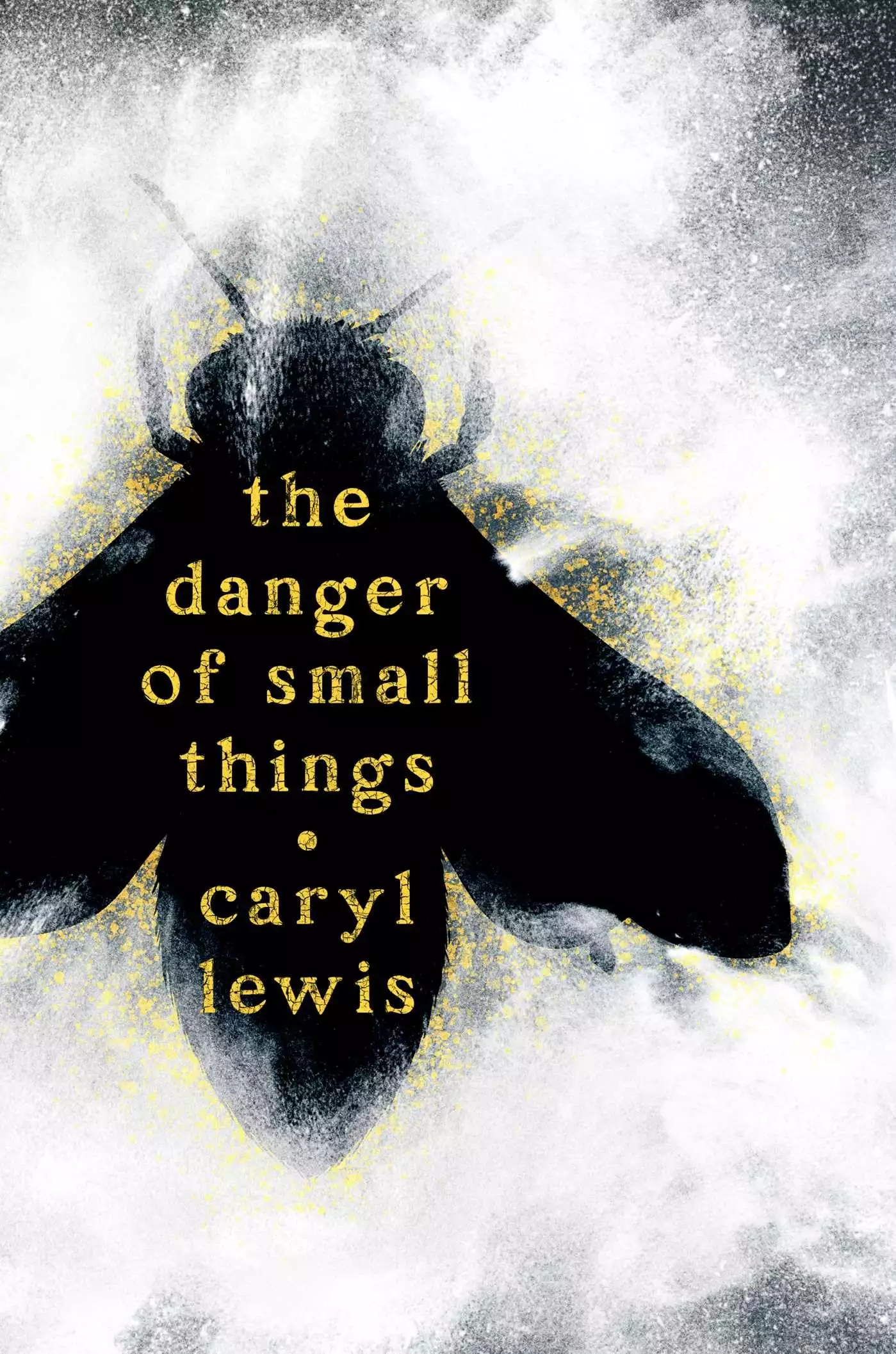
The whole world rested on a single bee’s wings…until that last honeybee died, and the balance of the universe tipped. Now, famine and war rage across the land. People are no longer allowed to read or create art. They are forbidden to believe in the existence of love.
Like every other girl, Jess has been taken from her home to live in a government dormitory, where they are forced to pollinate crops by hand with brushes. But unlike the others, Jess knows how to read and paint—and she knows that brushes aren’t meant for pollinating.
Jess is her mother’s daughter, with a strong streak of rebellion that even the harshest punishment can’t stamp out. She knows there is something horribly wrong with this system built on the hard labor of young girls, a system that forces them to marry and have children as soon as they are able. With smuggled paints and brush in hand, can Jess inspire a revolution?
Release date:
March 24, 2026
Publisher:
Atheneum Books for Young Readers
Print pages:
272
* BingeBooks earns revenue from qualifying purchases as an Amazon Associate as well as from other retail partners.
Chapter 1 1. The world ended years before anyone realized it had, in complete silence. I can’t stop thinking about it, about when and where it might’ve happened; whether it happened in the folds of a flower in someone’s back garden, or in a concrete carpark, or at the side of a city street on a gray morning as people bustled past, heads down to catch their train? No one was listening, but that day a hum left the world, a noise that no one had noticed was there until it was long gone, leaving behind a terrifying, sterile silence. And I still can’t believe that no one frowned, no one turned their head and noticed the absence of something. The truth is that the whole world rested on a single bee’s wings. The whole world. The mists over the greatest forests, old people walking hand in hand, countries, oceans, storms, languages, children, cities, freedoms, and dreams. Everything. Everything rested on those translucent wings. They were fragile as stained glass, and they carried the weight of the world—until we shattered them.
Cass says I’ll get punished if they hear me talking about it. She always flicks her red plait over her shoulder, crosses her arms, and tells me that it cannot be undone, that you cannot piece a bee’s wings back together again, so why do I torture myself? And I try not to, it’s just that every night after everyone falls into bed exhausted, I wake up a few hours later, my body taut and strung out on this thin mattress. I look up at the bottom of Cass’s bunk—at the slats that look like train tracks—and these thoughts just will not stop coming and coming and my breathing gets all shallow like I can’t get enough oxygen out of the air and all I can think about is how those broken wings collapsed a hive and how in that moment the balance of the universe tipped.
I listen as Cass turns over in her bunk, tune in to her breathing, and try to match my breaths to hers. Breathe in, breathe out, swallow down the panic. I look at the strand of hair that’s falling in a curve off the side of her bed, set free from the day’s tight plaits. Although I can’t see her face, I know her skin is damp from sweat, her freckled cheeks sunburned under her eyes, the fan on the ceiling seemingly just moving heat around the bunkhouse. And for a moment, I can almost imagine that we are safe. It’s just a bunk, a striped mattress, and a lock of Cass’s hair in the darkness.
They said it was frightening how quickly it happened. News banners scrolling across screens saying that crops were failing and experts talking about it, their faces tense, explaining how only crops pollinated by wind would survive. Before long, certain foods became scarce, and within decades, you couldn’t really go outside in summer and the rains just would not come. And then in desperation, people plundered the sea for food, and the wars started and the famines, and the borders closed, and communications broke down, and everything fell to pieces. Eventually everyone was given identity papers, girls weren’t allowed outside anymore, and boys had to learn to fight.
Mum hid us as long as she could, longer than she should have. Every Monday morning she’d go to the ration line in the city center. Shey would wrap his arms around her and tell her to be careful out there and then I’d go and distract myself by sitting by the window, studying the sky as it moved from watery blue to a sickly sallow color as the day exhausted itself. She’d gotten someone she knew to fudge our dates of birth on the documents and she had to stand in line for hours, a knife in the back waistband of her old jeans in case she ran into trouble. When she got home, we’d share whatever she’d been able to get. Bread, usually, and pasta; there hadn’t been milk or meat for months. Shey was growing so fast, and Mum would stop eating halfway through her food, saying she wasn’t hungry anymore, and would push her plate toward Shey even though I could see that she was swallowing her own spit, trying to trick her brain into thinking that she was full.
I’d ask her what it was like before the collapse, but she said she didn’t remember, only what her parents told her, and I’d make her tell me those stories over and over so I could kind of push out the edges of the world, and when we were old enough, she taught us to read, like her parents had taught her. You had to hide books or they’d be taken away and burned by the militia— they were trying to stop people from thinking too much. We must have read the ones hidden in the house a thousand times before Ruth next door gave us some more. Ruth was really old, much too old to work, so they’d cut back her rations to the minimum, and she was on her own. Mum would help her out, and in return she got these books.
The best one was an encyclopedia. Mum ripped the pages out of it and pasted them all around the inside walls of the house. Pictures of oceans and forests and these animals that I just couldn’t imagine used to be real. These things called chame leons that could change color and these blue butterflies that could cross the whole earth. And sometimes by flashlight, she’d make shadows on the walls with her hands and tell us stories of hummingbirds, which had iridescent green wings, and these things called coral reefs, which were teeming with fish of every size and color, and these wavy, frondy underwater forests. We’d lie on the bed, all three of us, looking up at the pictures in the dark, and sometimes she’d be trying to tell us something about how angry she was when the camps were set up and the military took over and she’d just cry, and Shey would get upset and look away, and I’d wrap my arms around her middle, and I could feel her mood shift from this warm marigold orange to this emptied- out muddy green.
Most girls were brought here at eleven. I got thirteen years with Mum and Shey. That’s more than anyone else in this place got. Seven hundred and thirty days more, to be precise.
I remember asking her, though. Mum. Why. Why didn’t they do anything? Before that last bee died, before the seasons changed, and she’d just shrug. Say that perhaps people thought that the world would end in a cacophony. That something momentous would happen like the moon becoming untethered from Earth, or a bomb dropping, filling the world with screaming. I suppose they couldn’t see the danger in small things. They thought that whispers could be ignored. They couldn’t see that a thread could unravel a tapestry, or that a single bee could destroy the world.
We hope you are enjoying the book so far. To continue reading...

 Please log in to recommend or discuss...
