- Book info
- Sample
- Media
- Author updates
- Lists
Synopsis
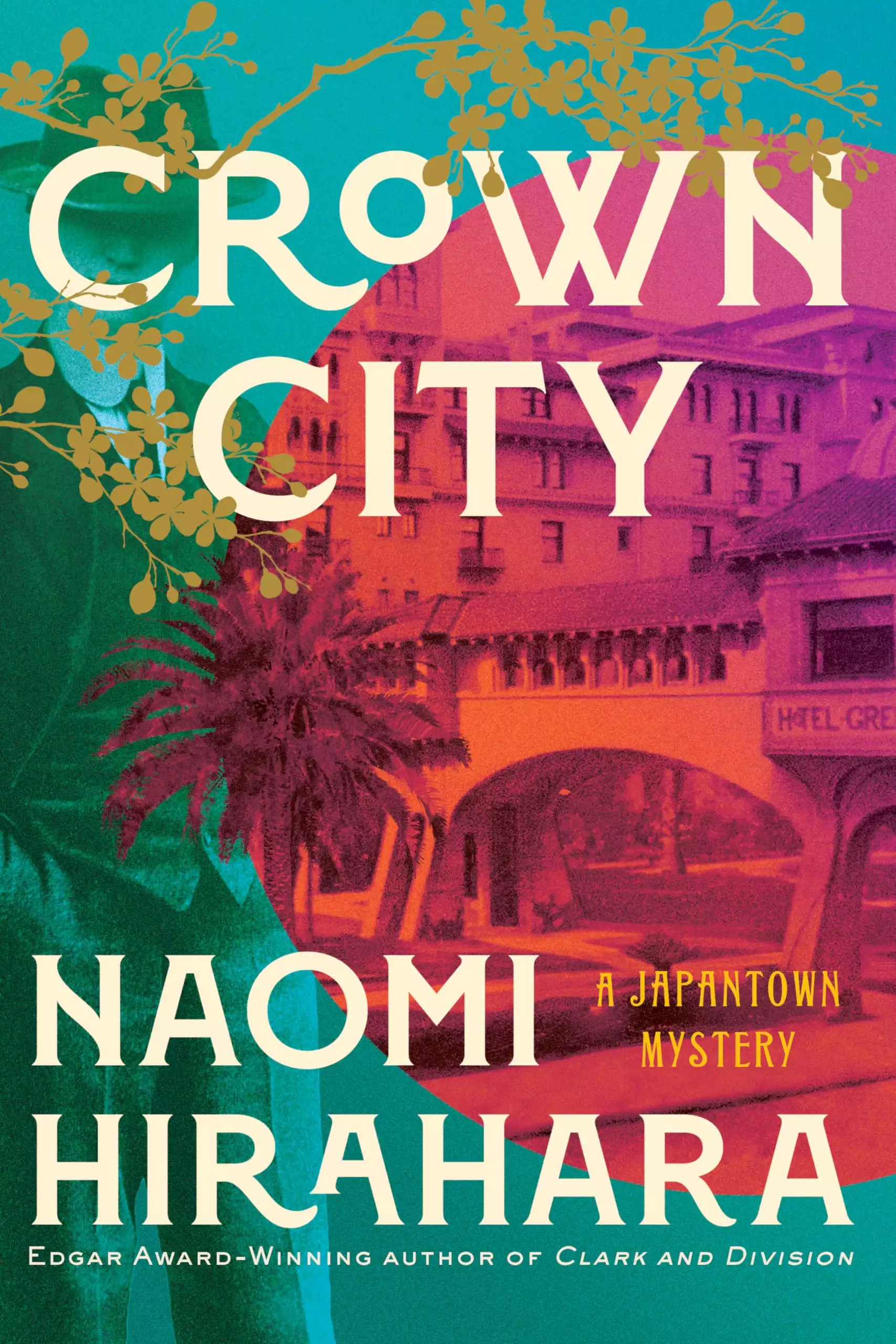
Pasadena, 1903: Eighteen-year-old Ryunosuke “Ryui” Wada staggers off the boat from Yokohama, Japan, ready to reinvent himself after the untimely deaths of his parents. Though battling loneliness and culture shock, Ryui does his best to settle into his work as an art dealer's apprentice while adjusting to his new home. From his enigmatic photographer roommate, Jack, to the beautiful seamstress living downstairs, Ryui finds himself surrounded by colorful characters and unbelievable opportunities and is soon utterly swept up in all “Crown City” has to offer.
But tensions are seething under Pasadena's bustling prosperity. Ryui is the victim of an anti-Japanese attack, and a painting is stolen from the studio of Toshio Aoki, Pasadena's most successful Japanese artist, who then hires Ryui and Jack to investigate. It's not long before their sleuthing leads them into real danger. Ryui is a naive young man in a foreign country—has he bitten off more than he can chew?
In this fish-out-of-water mystery, studded with cameos by real historical figures, Edgar Award–winner Naomi Hirahara brings to life a fascinating slice of California history.
Release date: February 24, 2026
Publisher: Soho Crime
Print pages: 336
* BingeBooks earns revenue from qualifying purchases as an Amazon Associate as well as from other retail partners.
Reader buzz
 Please log in to recommend or discuss...
Author updates
Crown City
Naomi Hirahara
Ryunosuke Wada
Gila River Relocation Center
Rivers, Arizona
Louise Wada
1122 N. Clark St.
Chicago 10, Illinois
July 8, 1943
Dear Louise,
Your mother says that I’m not thinking properly because of the valley fever. Heavy thoughts pile on top of my body, pushing down on my chest like I’m being buried alive by the desert here in Gila River. The heat that blistered your fair skin when the camp opened last summer has returned, but more families with money have installed swamp coolers for their barracks.
The Arizona horizon is dominated by the sky, as blue as one of Hokusai’s prints of Mount Fuji. Except there’s no majestic volcano, no pine trees. Only a craggy orangish mountaintop and strange cactus that look like lonely men standing at a distance from each other.
I am grateful, though, that you were able to give me that piece of wood you found with your brother before you left for Chicago. I know that I first scolded you two—maybe Richard more harshly. I do regret that. But you know about the shootings in Manzanar and Topaz and whatever other camps. The military police are young and inexperienced, eager to use us Japs for target practice to prepare to fight in the Pacific. Though I am sure you would do nothing more wrong than wandering around the brush, your disobedience would be an excuse to shoot at two innocent Nisei.
now cottonwood from an oak. It’s not your fault. I never taught you about how to dry lumber or how you must cut wood parallel to the grain for joints to achieve maximum strength to support a wall, roof, or a tabletop. You view me, your eccentric father who spent his evenings locked away in his wood shop next to the family’s Model A, as a simple worker at Nippon Nursery.
One time, when you were a child, I overheard you asking your mother, “Why won’t Papa let us play in the garage?”
“That’s where Papa is a magician,” she told you.
I know that our house was not a conventional one. When you were a teenager, you wanted kitchen tables and chairs from Sears. Not furniture made from my own hands. But somehow, you changed after you graduated from Pasadena High School. And when we were forced to leave the house, I heard you warn Mr. Carr to get renters who would take care of the furniture. “They should use coasters for their drinks,” you told them. “And tell them to make sure to polish the wood on a weekly basis.”
I had your mother bring that piece of cottonwood to me when I was hospitalized. The nurses here—even your mother—don’t trust me with a pocketknife, so I have to use only my hands to make this cottonwood into something of beauty. Your Houdini-san will make magic again, through the oil and the pressure of my fingers. I’m making a kobu. I think that you’ve seen the other Issei men furiously rubbing bits of broken branches. You didn’t stay in camp long enough to see what can be created solely through the power of human touch. A rotting burl can be transformed into the bend of a woman’s smooth knee. The remains of a boxwood, its trunk split open by lightning, can be shined into the curves of a cresting wave.
I learned this type of hand polishing through my father’s workers in his wood shop in Yokohama. I know that I have not spoken much to you about Yokohama or him, specifically. All I’ve told you was that he was a carpenter, but he was actually much more than that. My mother, who was born of samurai stock, told us never to ebaru, brag about ourselves, and she was right. Especially in America, what does “master temple carpenter” mean? In Japan, our artisan family was still below samurai and farmers, but within the artisan class, we were close to the top.
Now, as I lie in this bed, my earliest memories seem to rise and dominate my reality. I don’t know how much more I can write on paper. When the fever subsides, I will try again.
Sincerely, Dad.
1885-1903
1.
Itell people that I’m from Yokohama, but I was actually born in the countryside of Yamaguchi, just below Hiroshima. What should my birthplace mean to me if all of my memories are from Yokohama?
I wish that I could have taken my children to Yokohama at least once. Growing up, they viewed Japan as the Old Country, because many of their friends who actually traveled with their parents to family hometowns like Wakayama, Hiroshima, and Fukuoka would return with reports of dreary places with virtually nothing to do besides fish and plant rice.
My Yokohama was nothing like this. It was full of people, sounds, and smells from all around the world—China, the United States, Holland, England, Portugal, and Australia. There were diplomats, soldiers, merchants, sailors, entertainers, and, of course, us artisans. The port was expansive, the bay filled with ships of all sizes, bringing in or taking out passengers and goods of every kind imaginable. Motomachi, a shopping area with as many signs in English as Japanese, had streets lined with fancy photo studios selling postcards depicting watercolor scenes of Yokohama. Since Yokohama was a main port of departure to South America and the United States, many Japanese wearing their best clothing sat for a memento of life before leaving their native country.
My favorite spot to view Yokohama was at the top of the steep 102-stone steps that led to a famous teahouse. I’d come at the end of the day, when light was slipping away and docked ships were barely visible. With the sea’s expanse hidden, Yokohama seemed more compact and intimate. Below, on the right, I could see the laundry hung on the second floor of the humble house where my parents, our maid, and I lived. Electric lights from Yokohama’s Chinatown flashed on the left and beyond that was Kaga-cho, where my father’s carpentry shop was located. Shipbuilders and traders traversed dirt roads in their wooden geta, either to their wood-framed homes or to alleys where women of the night plucked on stringed instruments behind paper doors. The only disadvantage of the dusk was the reappearance of the buzzing mosquitos, but I had been bitten so frequently as a child that I had become immune to their poison.
In 1885, when I was born, Japan was in the middle of a transformation, adopting more of a Western way of governing. That year, Ito Hirobumi became our first prime minister under what we call the Meiji—Enlightened—Restoration after the American naval officer Commodore Perry had forced his way into our archipelago fortress. We still had our Meiji Emperor, but no longer did the shogun or samurai hold power. In Motomachi, I frequented a store that sold woodblock prints for art dealers. As I wandered through the stacked prints awash in bright colors, I ignored the ones depicting scenes of foreigners in Yokohama, opting instead to leaf through ones capturing Nippon of old—a shogun brandishing a skull as a warning to underlings who would attempt to unseat him, or horses galloping with samurai riders who hoisted bows to launch arrows toward targets.
I would be the first to admit that I was sheltered from a lot of turmoil that this Meiji government brought to Japan. Occasionally one of my father’s disgruntled workers called me a botchan, a Japanese name reserved for spoiled brats, specifically sons of the wealthy. My father was not rich, but our family was privileged in the sense that our positions as artisans were secured. We didn’t have to worry about our next meal or a roof above our heads.
Occasionally I would encounter beggars wandering the streets. My mother merely ushered me across the street, never explaining to me how these men became so desperately impoverished. When I was with my maid, however, she would sometimes stop to give them a rice ball that she was planning to eat later in the day.
“Why did you give the man your lunch?” I asked one day after the beggar scurried away.
“He reminds me of my father,” she told me. “He was a farmer in the country, but after the new leaders began to charge rent that we could
not afford, my father came to the city to find work. We never heard from him again.”
This was the only time our maid shared details of her past with me. Thinking back, I believe she regretted being so honest with me. The encounter with this particular beggar engendered memories of her father, which caused her to speak without thinking. She didn’t make that mistake in my presence again.
Near my father’s shop in Kaga-cho was an enormous factory that produced various artworks; my father did business with the owner. I sometimes walked through the factory floor with my father, marveling at the women weaving table coverings on looms and men balancing large vases on rotating pottery wheels with their clay-covered hands. I went to school with some of the barefoot boys painting flowers on plates and they were my occasional playmates.
It was in this factory that I first met Victor Marsh, an arts dealer known to my father. Victor and his older brother, George Turner or GT, were Australian—an adventurous and unconventional people. My father had had more dealings with the British and the Americans. My father always seemed to be more at ease with the British. He liked sitting down with them, eating hard biscuits with black tea in fanciful painted teacups that sat on matching saucers. They, like us Japanese, seemed more controlled by rules and restraint. The Americans, on the other hand, seemed a bit dirty and uncouth. They liked to handle our artwork without asking for permission first. I was drawn to these Americans’ confidence, I have to admit. They had no tradition or national precedence to confine them. I wondered what it would be like to live life with that kind of freedom. As it turned out, I would learn for myself.
The Australians, specifically these Marsh brothers, didn’t fall in either one of these broad categories. First of all, they could speak and even read Japanese fairly fluently. GT, the first white man to open a Japanese arts gallery in San Francisco, was especially skilled in language arts. His pronunciation was odd, having a rhythm like a rowboat going back and forth in choppy waters. But after you got used to his vocalization, you almost became hypnotized by his speech. It was as if he was speaking another language altogether, one that you could mysteriously
understand but weren’t quite sure how.
Victor, whose eyes were the color of water, rested his gaze on me for so long that I had to look away. While his Japanese-language skills were not as strong as his brother’s, he seemed to be better at assessing a man’s strengths and weaknesses—perhaps mostly his own.
“Your son seems like a smart one,” he commented to my father.
“A little scaredy-cat,” my father replied. “This one’s always shaking like a leaf.”
“It’s all right to be afraid,” Victor said. “Actually, it’s a sign of great intelligence.”
My mother, highly educated for a woman, tutored me in Japanese literature after my public school classes. She loved to read and took me to used bookstores in Yokohama and even nearby Tokio to buy classical books written in the Tokugawa period when she was a toddler. Although the new Japanese government told us to abandon the old and issued us new textbooks, my mother told me to never let go of the past.
2.
In 1893, when I was eight years old, my father was sent to the Chicago World’s Fair to help oversee the construction of the Ho-o-Den, modeled after a pavilion of the Byodo-in Temple near Kyoto. I was only familiar with Chicago as the center of a train system that traveled all the way to the Pacific Coast. My mother had told me of a devastating fire a decade before I was born that had decimated many of the historic buildings, and said that Chicago was now creating new structures of steel frames and glass that stretched out to the heavens.
In contrast, Japan wanted to assert its world dominance by re-creating a treasured courtyard that went back to the Heian period. The Ho-o-Den was an homage to the phoenix, the mythical bird that descends from the
sky to mark a new era. It would take my father months to complete the construction. I wish that I could say that I missed him deeply, but I barely noticed his absence until he returned at the end of the year.
Once safely home, my father, as usual, did not tell me much about the exposition, but he had brought back a couple of souvenirs for me. One was a small woven American Indian blanket, the size of the open palm of his hand, from a special exhibition heralding the artwork of the native peoples of North America.
The other was a pamphlet of the Japanese village at what was officially called the World’s Columbian Exposition. It was all in English and written by Okakura Kakuzo, one of the most respected arts authorities in Japan, an expert of culture and languages whom my father had highly esteemed.
My mother and I sat and perused every centimeter of that publication. Together we read Okakura’s pamphlet only a paragraph a day because our grasp of English wasn’t as strong as my father’s. I could barely understand what Okakura was trying to illuminate about Japanese culture, but I knew what was being communicated was precious and needed to be protected.
I didn’t mind spending so much time with my mother while my father embarked on his construction projects. My father was exacting and demanding, expecting high performance from anyone under his employ. I would still be drawn to his presence, albeit from a distance. Through the open sliding door in the morning, I’d watch him carefully pull on his dark blue tabi, making sure that the big toe snugly fit in its hold while the rest of the toes lay flat in the rest of the sock. This was the standard footwear for all carpenters as it ensured their stability when climbing up ladders and rafters. He wore an indigo-blue kimono top that was cinched at the waist by an obi sash. Even the knot around his waist was tied with a sense of deliberate efficiency that I could never hope to emulate.
Even though I was still in adolescence, I should have noticed that my mother’s health was suffering. She would get out of breath often, usually instructing me to complete household errands on my own without her. Since her physical struggles worsened incrementally, I had tricked myself into thinking that
nothing was wrong. One day, she could not get out of bed. I went to school as usual, but when I returned, she had been taken away to protect the household—mostly me—from her diagnosed disease, tuberculosis. She was sent to a sanatorium, its exact location unknown to me. My father still had to tend to his faraway construction projects, so at night I was usually alone with the maid. I started to turn to the huge bottle of cooking sake in the kitchen to relieve my sorrows, first in small sips and then large gulps. One evening I became so inebriated that I wandered outside only to collapse on the side of the road, almost lying in the gutter. The maid, who had been searching for me, found my drunken body and was able to help me get safely home. She insisted that I promise to swear off sake forever in consideration of my recuperating mother. I agreed, but my mother still died at the age of thirty-three. I had not gotten a chance to see her since I left for school that one day.
3.
After my mother’s death, my father began to spend more time with me. He took me to local construction sites, lumberyards, and forests hours away from Tokio. He would explain the cypress, with its pinkish center, was the tree of choice to be used in temples and shrines. We stood in the middle of a cypress grove in Fukushima, tall skinny trees with dark bark. “Breathe,” my father said to me. I closed my eyes and complied. “What do you smell?”
“Mikan,” I replied, referring to our family’s
favorite citrus fruit, plentiful in my birthplace of Yamaguchi Prefecture.
This is one of the rare times where he smiled broadly, revealing his crowded bottom teeth, which resembled an overgrown cedar grove.
While we youth were all required to go to school, gone were the after-school excursions to used bookstores. Instead I was to report to the carpentry shop in Kaga-cho. In the beginning, I wasn’t supposed to touch the lumber or the tools, unless I was cleaning them. Nor was I to sit on the floor. I had to stand the entire time, my toes going numb in my tabi. My father gave me a thick hand-bound book that contained various dimensions for roof eaves, walls, and alcoves. This was the kiwari for Buddhist temples, my father’s specialty. Anyone dealing with construction needed to memorize these measurements and I spent many sleepless nights attempting to imprint these numbers into my head.
Finally after some months, I was allowed to touch the wood. I felt the warmth of his breath as he instructed me. “This is the male joint, the tenon.” He brought out a piece of timber with a projection that was about three centimeters thick and inserted it into a mortise that was cut to accommodate it. “A perfect fit. See how tight it is, yet no friction.” He pulled out the tenon and had me push it into the cavity of the mortise.
I couldn’t help but start to smirk. I had been exposed to the banned erotic woodblock prints that the boys at the art factory smuggled and passed around. I understood how male and female bodies were different and how they were to fit together.
My father didn’t appreciate the lecherous expression on my face. “This is not a joke!” he exclaimed. “You are on the verge of being a man. Shape up and be serious!” He said it loud enough that the other workers could hear. My ears burned as the rest of the crew swallowed their amusement and attempted to hide their
smiles. I would never win their respect, not to mention my father’s.
In time I was allowed to smooth the rough wood surface after it was cut into planks. It was tedious work, requiring me to go over it with a hand plane. Looking down the length of the rectangular wooden box container, I made adjustments to the fit of the steel blade by hitting the end of the box with a mallet. These blades, coated with a translucent layer of iron, were special, produced by blacksmiths trained in creating the sharpest and strongest samurai swords. Swoosh, swoosh, swoosh. As I pulled the plane against the surface of the cut wood, the steel blade contained inside released a long ribbon, as transparent and thin as the shed skin of a snake. The middle of my back grew stiff after engaging in this work for a few hours. Luckily, because of my young age, a night of good sleep fully restored me to start over the next day.
“Oi, Ryunosuke,” my father said to me the time when we were on an expedition to look for good lumber in Fukushima. He pointed at a gnarled knot emerging from the root of a decaying cypress tree. “This is the result of a sickness or stress in its life. You may see some of my workers cut it off to hand polish it for decoration. But such deformities have no place in the construction of a temple. Avoid such infected trees at all costs.”
I nodded, but barely took in what he was saying to me. In spite of his exacting and mathematical nature, he sometimes had very strange ideas, causing his workers to snicker behind his back.
When I was sixteen, I was allowed to travel with him to the faraway cedar groves on the remote Yaku Island off of Kyushu. The journey to the island took many days, as we stopped by to see the original Byodo-in Temple, the inspiration behind the Japanese pavilion at the Chicago World’s Fair. Most impressive was indeed its Phoenix Hall, which had winged roofs that precisely reminded me of a ho-o in flight. The bronze statues of the ho-o on the ridge of the roofs sparkled in the sun, giving the illusion that they were actually moving.
Also located on the outskirts of Kyoto was a temple that my father was helping to repair after an earthquake caused damage to the roof. He pointed to the rafters, explaining to me how the joints fit perfectly together. My workmanship had improved over the past several months and I made an offhand comment that I was ready to work on the structure for such a temple. My father became incensed, berating me for making such a presumptuous comment. “This takes a lifetime of training, you foolish boy,” he said.
That incident set the tone for our travel down to Kagoshima. I kept my distance from my father, allowing his workers to dominate his time on the wood-burning train. Miserable, I felt resentment harden in my abdomen. Only when we were on a boat to Yaku Island was I able to regain a sense of wonder. I had never seen water that pristine blue, and the looming island was a most vibrant green, like algae on wet stones in tide pools. Once we debarked, we entered a moss-covered world inhabited by giant cedars whose roots emerged from the wet soil like tentacles or fingers. I felt that the trees were almost human.
onsidering which tree to cut down and take with us back to Yokohama. That’s when I saw the burl, a knot, on the bottom of a cedar in an open area. Its face, a wrinkled knob peeking out from the green covering, seemed to call out to me: I want to go where you are going. Take me with you.
But did I dare? I recalled what my father had told me back in Fukushima: Burls were a sign of disease and should never be taken from their resting place. I was weary of my father’s superstition; there were plenty of other carpenters who proudly extracted burls and hand polished them into works of pride. This could be my special kobu, my own piece of these magical cedars on Yaku Island. I took out my double-edged handsaw, which was secured at my lower waist with a cloth belt, and applied it to the tree. I expected more resistance, but the cedar knot immediately rolled free after one pull of my saw. It was the size of a satoimo, a taro root, like the ones our maid boiled for too many meals. This burl was covered in dark, flaky bark, and I was determined to aid in its transformation.
I was a thief that afternoon. I should have felt more guilt than I did. Not that I had stolen a burl, but that I had removed evidence that this cedar had a small blemish that might signal a larger imperfection. The loggers my father had hired were probably at fault, too, because instead of performing the grueling and dangerous work required to cut a tree down in the crowded forest, they decided to take this lone cedar in a clearing.
As I rubbed and transformed my burl, I called it Tama-chan. I always kept Tama-chan close by, smoothing out the years that had accumulated on its outer layers. I considered Tama-chan my lucky talisman for the next two years. I prayed that it could reverse the bout of bad luck that had shadowed my young life.
On my eighteenth birthday, that same cedar taken from Yaku Island, which had been air-drying in our lumber house in Yokohama, was transported to Kamakura for a temple building. ...
We hope you are enjoying the book so far. To continue reading...