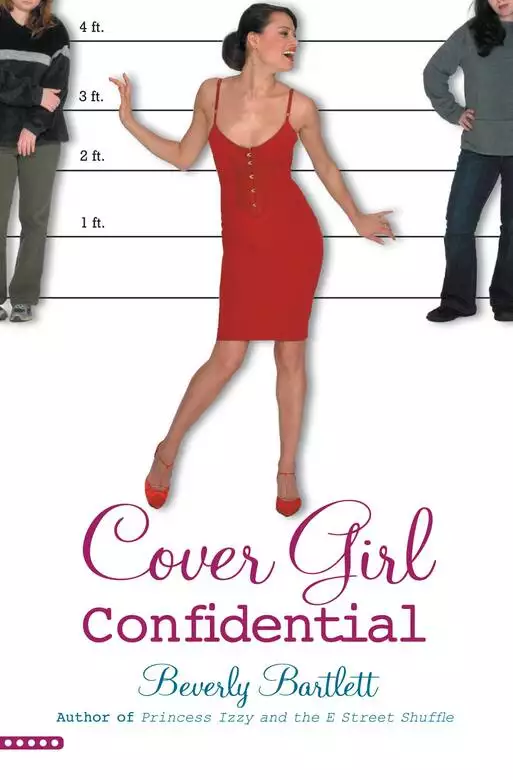
She's the host of a wildly popular, top-rated morning show. Bride of a high-society golden boy. A veritable household name. An immigrant rags-to-riches story that's the American dream personified-and so perfect for Hollywood. Men want her. Women wish they could be her. But now Addison is in jail awaiting deportation and her celebrity rating is falling faster than a discount boob job. Maybe the First Lady's personal vendetta is to blame. (Addison insists that the president was pulling her onto his lap when that photo was taken.) Or perhaps everything started to go downhill when she threw exercise equipment at her husband on live TV. (Addison says the jerk had it coming.)
Release date:
March 13, 2007
Publisher:
5 Spot
Print pages:
272
* BingeBooks earns revenue from qualifying purchases as an Amazon Associate as well as from other retail partners.
George Clooney clipped his pen to the chart he was holding and looked at me curiously.
“Is something wrong?” he asked, his head cocked in that devilish way he cocks it.
“Nothing that you couldn’t cure, Doc,” I replied. I popped my tongue against my teeth on the word Doc, as if I’d practiced it a lot.
I had.
I reached down to snap open the top button of my blouse. As I did so, I imagined my mother, four states away and still wearing the veil, gasping in horror and disgust. Then I unbuttoned another.
George did his best to look intrigued. But since I’d done this a thousand times that very day, I think he was just bored.
“You appear to be healthy enough,” he said. He winked.
“No, no,” I said, “I demand a physical.” This time I winked. I released another button.
I grabbed his tie, used it to pull him close to me. I could smell on his breath the garlic from the salad dressing at lunch. Men! I thought. They can actually eat dressing on their salad. I’d had vinegar. No calories. No fat. No carbs.
“Aren’t you dating Dr. Carter?” George asked. “And that new male nurse in radiology? And the hernia patient?”
“Not right now,” I whispered into his ear as I loosened his tie with one hand and ran my hand through his hair with the other. “Not at this very moment.”
He nuzzled his rough skin against my cheek until his lips found mine. He pushed me down on the hospital bed. He was heavy against me. I moved my hands along his waist. His stomach was softer than I expected. Maybe he should drop the salad dressing, I thought.
I was supposed to groan with pleasure, but the garlic and the soft stomach and the constant retakes were spoiling the mood. I tried to think of something pleasing. I imagined the headline my publicist expected in the next Entertainment Weekly: NEWCOMER ADDISON MCGHEE AND RETURNING GEORGE CLOONEY REVIVE ER!
I yowled.
The director called “Cut,” then sighed heavily.
“Addison, Addison, Addison,” he said, shaking his head dramatically. “This isn’t HBO.”
Days later, I ran into George. He had the uncomfortable look of a man who can’t place a name.
“Madison, isn’t it?” he said.
I started to correct him. Then thought the better of it. It was one of those parties after the Oscars. To get me in, my agent had to call in several favors—and create life-size posters of my new Sports Illustrated cover to mail to the party organizers. He’d had no favors left to get me a date.
“So you’re doing all right for yourself,” George continued. “Sports Illustrated cover, eh? Gauze bikini?”
I nodded, and he sighed with relief at having gotten it right.
He turned to his date, an auburn-haired woman who looked brainy in the most willowy sense of the word. “Didn’t you say you saw it on the newsstand?” he asked her.
“No,” she said.
“Well then,” he said, awkwardly.
I gave a self-deprecating wave, as if to say that she hadn’t missed much. “I don’t think it’s out yet, anyway.”
He repeated himself. “Well then.”
“Who are you here with?” his date asked, smiling in what I imagine she thought was a we-girls-like-to-chat-about-our-guys kind of way. Of course, if my guy were George Clooney, I might like to chat about him, too. Garlic, stomach, ill-advised return to ER, and all.
I smiled gamely, raised my drink: “Just me and Jack Daniel’s,” I said.
I wasn’t serious about the Jack Daniel’s. Are you kidding? My parents would die. Plus, that’s 150 calories right there. I was drinking Diet Coke, which I thought I could pass off as Jack Daniel’s and Coke, if pressed. I had read that men now think it’s very cool for women to drink manly drinks like that, even if heavily diluted with a noncaloric soft drink.
George had apparently not read that article. He looked a little shocked. His date looked more shocked. Surely this reaction wasn’t about the Jack Daniel’s? Maybe the part about being dateless?
I nervously tugged at one of the dangling ringlets I had left around my face; the rest of my hair was pulled up in what I thought was a casually sophisticated way. I had spent virtually all my remembered life in America, but I never knew, at moments like this, if I had made some cultural faux pas or was just naturally awkward and socially ill at ease in any culture.
Then Tom Hanks walked up, his newest Oscar slung casually across his hip and Rita looking bored on his arm. I was spared any further awkwardness, for suddenly I wasn’t even there.
Well, that won’t last long, I thought. Someday, even Tom and Rita will know who I am. Someday.
Chapter 1
That was three long years ago.
I’m pretty sure that Tom and Rita know who I am now. My face (and body) have graced a thousand magazine covers, a huge moving billboard in Times Square, and some pretty seedy Web sites—those without my authorization, of course. I’ve been fawned over by presidents. (Well, I guess technically by one president.) Threatened by first ladies. (Well, again, one.) I’ve attended all the best premieres, adorning the arms of all the nation’s most eligible bachelors. (Mostly arranged by my publicist, but still.) I launched a morning television show that was dubbed by leading academic journals as the most scandalous blurring of entertainment and news since—well, since the last time they were scandalized. They’re so sensitive sometimes.
I was celebrated in talk shows and women’s magazines for being an inspiration to young women of color the world over. And then, when things went bad, I was hounded by some of the same people for having a quick temper and bad judgment about men.
I suppose they were right about my judgment. Though, in my defense, I do not have a lot of experience. I’ve been photographed on red carpets with more men than I can count, but actual dates are few and far between. I spent a lot of lonely nights in pricey hotels before becoming the bride in one of the most spectacularly controversial and short marriages of our times. And the nights after that were lonelier still.
In a roundabout way, I guess, that’s how I ended up here, in prison, serving time on a trumped-up felony charge and awaiting a deportation hearing. My agent is thrilled. “You’ve never been more famous,” he said in his last letter. (That’s the great thing about prison. It encourages the long-lost art of letter writing.) But my father is terrified that his little girl will be sent back to the country he fled all those years ago. I guess I’m a little scared, too.
Last night, my lawyer—an old high school friend—visited. I will confess with some shame that I hadn’t thought much about her during my heady rise to fame. I assumed she was still living it up in unincorporated Slater County, Nebraska, riding in the back of pickups and getting chased out of the parking lot by Wal-Mart security. I never dreamed she would have gone to law school and moved to Albany, New York. This oversight on my part was not personal, I hasten to add. I failed to think about her not due to any fault of hers—nor, for that matter, any particular disinterest in Slater County. Cassie was, and I guess still is, the best friend I ever had. And those were good times in Slater County. It’s just that when you’re trying to pro-ject an air of sophisticated beauty, stylish grace, and informed commentary, the last image you want bouncing around in your head is any memory at all from high school—with the baby fat and the pimples and the really sad crushes on impossibly glamorous older men. (In my case, the PE instructor, Mr. Stinnett.) Kate Hudson tells me that everyone feels that way, but I think it was worse for me. There weren’t many immigrant families in Slater County, and my early attempts at assimilation had only patchy success.
Cassidy Von Maur was one of the people who accepted me, however. And though I’d rarely thought of her or high school in the intervening years, I recognized her right away when she showed up in the prison visiting room a few months ago.
“Cassie?” I said, not quite believing my eyes. Then, more confidently, I squealed with glee, “Cassie, my lassie!” (This was my oh-so-cool greeting for her in high school. You can see why I prefer not to think about those years.) I continued with another high school classic: “Get out of here!”
She smiled, said that she preferred Cassidy now, and explained that she had heard I needed a good immigration lawyer. “Lucky for you,” she said, “I am one.”
Once you’re famous, you know, that’s how things happen. Whenever you need something, it shows up at your door. Cassie was exactly what I needed. It felt so good to have someone to giggle with again.
But during last night’s visit, she ignored my efforts to reminisce. She lectured me, sternly. She narrowed her eyes and looked exceedingly cross. She said that she didn’t think I was taking this whole thing seriously enough. She pointed out that if I got deported to my father’s homeland—the only other country I had legal standing in—I would be in a hopeless, helpless situation. “You don’t speak the language,” she said. “And you don’t have a lot of—” She hesitated, then spit out the ugly truth. “—skills.”
I cringed. Making small talk on television for hours at a time is a lot harder than people think. But I said nothing.
“Furthermore,” she continued, “you’re famous the world over for being photographed in shameful costumes.”
I started to protest. The world over? I seriously doubt that. I’m not Madonna, after all. I’m quite sure there are a few remote Siberian villages or an odd South Pacific island or two where people are completely unfamiliar with my work—or at least my “costumes.” But my vanity got the best of me. I didn’t want to talk about the places where I’m not famous. So instead I just said: “I don’t know about shameful . . .”
“Cotton balls?” Cassie said incredulously.
“Oh,” I said.
I don’t know how I’d forgotten about the award-winning Vanity Fair cover in which I am clothed only in cotton balls—and not very many of them, I might add. That cover was the talk of the nation for a while. My own show hyped it tirelessly. Baxter Bailey, the rumpled weatherman, would constantly find smudges that needed rubbing off his map. “Got a swab, Addison?” he’d say, with a mischievous grin. And Hughes Sinclair, my dapper and dashing co-host, would chuckle and warn Baxter not to borrow too many, as I appeared to be running quite low.
Cassie smirked. “I think it’s a safe bet they would consider cotton balls shameful,” she said. “And in case you’re unaware, this is not a culture that takes shaming lightly.”
She said my only hope of surviving in my father’s homeland, really, would be for me to marry as soon as I arrived. But because I’m twice the age of the average child bride there— “easily, twice the age,” Cassie emphasized, somewhat meanly—I’d be considered too old and, given my well-publicized past, too previously married for any decent man there to be interested.
I waved my hand gamely to show that I did not care. “I’m done with marriage,” I said. “So that’s no loss.”
Cassie sighed. “This isn’t a joke, Addison. You’ll be surviving on your wits in an economy that doesn’t value wit. You won’t last three months.”
I looked at my fingers, noticed that I needed a manicure, and then thought, for the first time, about my chances of finding a good manicurist if I got deported. My paternal grandmother has terrible nails. So do all my aunts. The evidence suggests that theirs is not a culture that highly values cuticle health. I gulped. (Discreetly, I hope.)
“Couldn’t they just deport me to London or something?” I asked.
Cassie snorted. “London?” she said. “Oh yeah, London is just begging the United States to send over any spare convicted felons we have on hand! Begging!”
She sighed and started over in a more even voice. “That’s just not the way it works, Addison. When people get deported, they get deported to their home country. You don’t get to pick and choose.”
I nodded.
“ICE is serious about this one,” Cassie said. “This isn’t going to go away.”
“Ice?” I said.
“Immigration and Customs Enforcement. We call them ICE because they’re coldhearted when it comes to this stuff.”
She muttered that last part, and I wasn’t sure if I was supposed to have heard it. So I just said, “Oh.”
“All these terms are explained in the material I gave you to read,” she added sharply. “You really need to read it.”
But then she patted my hand in a conciliatory way. She said that if she was going to save me, she needed to know everything. So she gave me an assignment.
That is why I’m writing this, you see. She told me to record every single thing that happened to me from the moment I was photographed splayed across the lap of the sitting (and obviously seated) US president, through all the conspiracy theories about my incredibly short marriage, and right up to the exact moment I—in her words—“nearly killed” my ex-husband on live television.
“And if you could write a coherent explanation of why you, the Little Miss All-American Girl-Next-Door Movie Star, never bothered to become a US citizen,” she continued, letting the sarcasm back into her voice, “and why you pled guilty to a felony we’re now claiming actually wasn’t, that would be nice, too.”
I bristled, but nodded.
“I’m doing my best, Addison,” she said. “But you have to help.”
I nodded again. As she left, I made a great show of gathering up the paper and marker (no sharp points allowed here). But once she was gone, I decided I would not confine myself to the topics she had specified. If I’m going to write it down, then I’m going to write it all down. Because my life, despite her snotty aside, really is the American story. Cute little immigrant girl with a dream come true? Well, that’s just dying to be told, isn’t it?
All I ever wanted was to exceed my parents’ modest ambitions for me and to become an American icon, a symbol of the sort of good fortune that follows those who apply themselves. Sort of like Donald Trump, only with better hair.
And abs.
And taste.
Sure, I’ve had a bit of a bad run lately. But that only makes the story better, doesn’t it? It will only make my comeback more impressive!
And I will come back. You mark my words.
So that’s what I’ll do. I’ll start at the beginning. I’m sure Cassie will understand. Besides, it’s all pertinent, isn’t it? Everything I am today, including this current unpleasantness, is a product of everything I’ve ever done. That’s the American way of looking at it, I’m certain of that.
I did not attain all that I’ve attained by being lackadaisical or halfhearted. I’ve thrown myself into every task with unquestioning dedication—whether making out with George Clooney, launching a quirky morning talk show, or embracing the ten-thousand-steps fitness craze. (I read about it on a marvelous Web site. You wear a pedometer constantly and shoot for ten thousand steps a day. But I set my goal at twice that and was delighted to find that it really worked. If diligent, I could, once or twice a month, have an entire handful of M&M’s with no noticeable ill effects—although I did need to be especially stringent with the astringent the next day or my forehead would positively glisten.)
So I will apply myself to this writing task with equal ardor. It all began for me, let’s see, when I was six and I got my name. Yes, I suppose that’s right. Or, arguably, six years earlier than that—you know, when I was born.
Chapter 2
I have noticed that most Americans do not think much about the circumstances of their birth, much less their genealogy. My high school boyfriend once told me that his ancestors were “European or something.” And none of my friends could name their great-grandparents, much less recite their lineage back through seven generations as children are taught to do in my parents’ cultures. They had no idea who was the first in their family to be a US citizen, and they did not appear to have given any thought to how significant that designation is.
But while Americans aren’t particularly interested in their own genealogy, they are often quite interested in mine. People look at my dark olive skin, my thick, deep black hair, my angular features, and they wonder: Filipino? Native American? Greek? Egyptian? Angelina Jolie with a tan? (And better eye makeup, obviously.) My agent has always said my uncertain ethnicity, what he calls my “exotic” appearance, is my secret weapon, my key to stardom. I represent, according to him, a “glorious blending” of the human race, a composite sketch, of sorts, of all humanity. My skintone embodies the beautiful Amber Glow shade of foundation in CoverGirl’s Queen Collection. Latifah said so herself! All of this interesting “women of color” loveliness is only enhanced, according to my agent, by my inappropriate Irish name. He says it gives me an air of mystery.
I guess he’s right. People often do seem mystified. Just the other day, while working out during exercise time, I caught other inmates discussing me. I was doing my usual chin-ups in the prison yard, located on the rooftop of the eight-floor prison, when I overheard a convicted embezzler giving a new girl the lowdown.
“That one over there,” said the embezzler, “is Addison McGhee. You know, that funny-looking black nurse on ER.”
I glanced their way just in time to see the new inmate squint at me and wrinkle her nose. I could see the Statue of Liberty behind her. It was very picturesque.
“Addison McGhee?” the new inmate repeated with surprise. “I always thought she was Hispanic. And didn’t she play a doctor?”
The embezzler shrugged and said, “Whatever.”
See? Mystery.
The story of my unusual birth and my odd name is simple enough, really.
I was born Ada Sinmic Ghee in a squalid, semi-permanent refugee camp in Turkey, a place where people fleeing a variety of war-torn Mediterranean, Arabic, and African nations huddled together, occasionally intermarrying and producing exceptionally beautiful children. My mother had come from the east, seeking refuge from war and famine. My father had come from the southwest, up through Egypt, seeking refuge from famine and war. They had, you see, a lot in common. And to hear them tell it, it was love at first sight. Although they do not use the word love.
“I could tell she was a good worker,” my father says. “In his eyes,” my mother explains, “I could see that he was not a drinker.”
It was a match made in heaven, or at least Turkey.
They quickly produced my brother and me, who were, as the children of a refugee camp, denied Turkish citizenship. So my birth records, such as they are, list me as a citizen of my father’s homeland, an arbitrary geographic region that is home to several warring and nomadic tribes. It is also, by law, home to me, though I have never even seen it. (It looks like that might change soon.)
The Turkish camp was safe at first, but soon it became overrun and outgrown. It developed into a festering hotbed of disease, crime, and celebrity photo ops. The pope got involved. So did the “We Are the World” singers. The Bee Gees toured our camp and handed me a small doll—giving me, during one ten-minute visit, my first toy and my first glimpse at the world of celebrity. Robin sported splendid, sparkly platform boots, and Barry had a way of shooing off the photographers that seemed, to my untrained eye, the epitome of cool. (Cool was a concept I could not have articulated at the time. Still, I knew it when I saw it.)
With that kind of pressure—the Bee Gees were still big in those days, at least relatively—Turkey eventually accepted the US offer to take us in. Jolly good of Turkey, wasn’t it? I still remember the soldier who circled my obviously mixed-race family as we stood with downcast eyes in the hot sun, waiting in a long, winding line to be processed for emigration. “Mutts,” said the soldier as he poked my brother with the point of his rifle. “Worse than mutts.”
I thought for a moment he wou. . .
We hope you are enjoying the book so far. To continue reading...

 Please log in to recommend or discuss...
