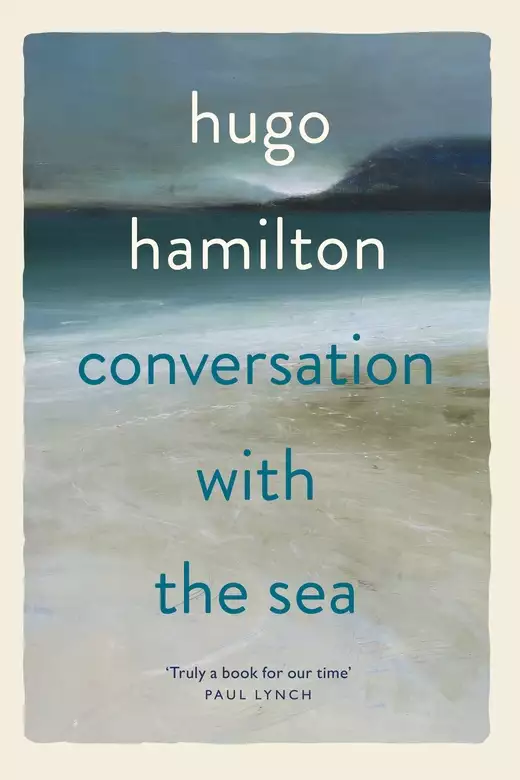
Fleeing his failed marriage in Berlin, Lukas Dorn revisits the West of Ireland, the place of his honeymoon two decades earlier. While his former wife is being cancelled at work and his daughter is arrested at a street protest, he tries to make sense of his broken life with his journal as his sole companion.
His inherited memory of the Nazi Holocaust comes face to face with the present when he meets a refugee from a recent warzone. As Lukas communes with the elements in this wild coastal place, he is forced into a confrontation with the past that will carry him to the edge of existence.
Conversation with the Sea speaks with heart-rending tenderness to the present moment, as it explores truth, illusion and the deadly silencing of war in a captivating tale of love in a time of displacement.
Release date:
August 28, 2025
Publisher:
Hachette Books Ireland
Print pages:
272
* BingeBooks earns revenue from qualifying purchases as an Amazon Associate as well as from other retail partners.
Arrived late afternoon. Blinded by the sun on the water. Could have driven right off the edge into the sea.
He parked the car and checked in at the guesthouse. His room overlooked the ocean. With the window left open he could hear the softly spoken waves unfolding on the shore. And once he had unpacked, he went straight out to walk along the beach. There was nobody in sight. He had the entire coastline to himself. Everything so still. So empty. So big and wide and for ever. The sunset lit up the sky in what he referred to in his journal as a red heart. A pumping red heart over a pumping red ocean. It turned the houses in the village behind him pink and the mountains a kind of burgundy. The cliffs on the far side of the bay became a red-bricked wall with ancient lines of distress left over from a time of great geological change.
This will make everything right, he said.
He could not be sure if he actually said it out loud or inside his head. His mouth was open and he found himself in conversation with the sea.
This will turn it all around, he said.
The sea listened.
He had come to stand at the edge of the world and look out across the Atlantic. Back to the place where they had spent their honeymoon together. She had now left him. She had moved out and taken their daughter Emilia with her to live in another part of Berlin and he had come to the west coast of Ireland to be healed by the vast distance that lay before his eyes. Things are a bit fucked-up back in Berlin right now, he said to the sea, and the sea replied in agreement that there was not much you could do now but listen to the waves and watch the colour of the sky changing and remember how to love the world.
I wish I could have persuaded her to come, he said. It might have brought us together again.
The sea looked sad.
He picked up a stick and wrote her name in the sand.
Katia.
The waves came in to erase her name even as he was spelling out the letters. That was the nature of the sea, to sweep everything aside and leave the sand clear and untouched for the next day. He asked if the sea could remember when they were on their honeymoon standing in this exact place in the copper sunlight and she took off her shoes and said the water was icy. He said to the sea, as if the sea had no memory, that she held her dress in her hand and said the sand was a piece of her childhood coming up through her feet. Her smile came ashore and the waves were up to her knees, do you remember that?
The sea remembered everything.
We know you, the sea said. Lukas. Lukas Dorn from Berlin. You haven’t changed a bit. Big smile. Eyes full of trust. Navy overshirt with a journal in the right-hand pocket.
That’s me. He laughed.
Luki.
He heard the sea using his family nickname, the name his mother gave him. His love name. What Katia used to call him in her phone messages, in whispers, in cries. The sea spoke to him as a friend he had known a long time ago and it was no time at all because the sea had been waiting for him to come back. The sea continued being the sea, not any older than it was before, living in a timeless time, while he lived in a time that was curtailed by time and everything was ultimately converted into memory. He had come to stand inside his own memory, watching the waves polishing a couple of pebbles, delivering them right up to his feet and taking them back again.
He turned and walked up to the village to get something to eat. He went into one of the pubs and found a round table where he sat down and was given a menu. The food was basic. He had fish and chips. He had a pint of Guinness and looked around to find that nothing had changed.
Everything was the same.
The same barman. The same faces at the bar. The same joke behind the bar that he could never remember. The same photograph on the wall of a turf boat making its way across the bay with brown sails. The same round table where he had sat with her back then and where he sat now by himself beneath the same old map with the names of all the places where they walked together. An ordnance survey map with the long beach where they stood kissing each other as the sun went down and the mountains were so sharply defined against the sky you could have cut yourself.
The musicians came in and took up a table reserved for them in the corner. The first squeak of the accordion. The pluck of fiddle strings. A short drumroll that sounded like it would be followed by a circus act. And once the musicians got into full swing, he watched them playing their high-speed tunes with a force that seemed so effortlessly authentic.
The woman who played the accordion had pink fingernails. Pink fingernails on black buttons, he wanted to tell Katia, if only she still wanted to know. He wanted to let her know it was a black-button accordion with golden sound vents and pink fingernails tapping the notes out like an urgent message to the heart. He wanted to let her know that nothing had changed. He was sitting at the same round table underneath the map of the island and the sea was asking for her.
It was late by the time he left the pub and so dark on his way back to the guesthouse he could hardly see a thing. His eyes were unable to adjust to the night. The stars made him stagger. He had no sense of direction other than the sound of the sea and he made his way slowly along the path with the light of his phone illuminating the ground.
He came face to face with a silent horse. The horse stood with its head leaning over a wall, watching him approaching step by step with the blue light showing the way. The horse waited until he was right up close and reared its head up at the very last minute when it was clear that he was not familiar. And it was only then that he jumped back, when he saw that the horse was not part of the wall but a living thing with one big glistening eye looking down at him. Nostrils flaring as they did in paintings of horses. They both took fright at once. Invisible hoofs galloping away through the night. A man with a phone in his hand and a translucent face.
His appearance on a sightless summer night full of memory with the stars out and the surf crashing on the beach frightened the horse and frightened him in turn. He was frightened by what frightened the horse. Something inside him, something he brought with him to this quiet place that must have caused the horse to panic, leaving him behind on the path like an apparition, he wrote in his journal.
The horse was gifted with subconscious sight. It had the ability to reach inside his head and see all those disturbing facts he carried in his memory. All the noise of the city and all the fucked-up things in his thoughts made the horse seek the shelter of darkness. This sensitive creature could not only forecast hurricanes and earthquakes and bog fires underground, it knew the inside of a man’s head. His life story. His emotions. Sorrow. Joy. Love. Doubt. Guilt. The horse had access to parts of his mind that he could not even reveal to himself. All the ongoing uncertainties, the scary things, the stuff you kept to yourself and couldn’t say.
It was not the arrival of a stranger on the path, not the fraudulent blue light of a mobile phone acutely shining upwards into that big horse-shocked eye but a hunch, a fact, a hidden piece of information in the backroom of his mind that became so alarming.
He heard a snort some distance away. He heard the sound of a hoof stamping on rock. The horse was observing him from that infinite darkness as he continued making his way back to the guesthouse. He saw the headlights of a car pointing into the sky, sweeping across the coast. The stone walls began to move. His shadow creeping along the path. And in his sleep, he heard the waves coming up to the foot of the bed.
At breakfast the following morning, he laid his journal out on the table. He removed the strap that kept it closed and took up the pen clamped inside to write down how glad he was to be in such a quiet place, looking out the window at the sea.
The woman of the house brought a pot of tea and said it looked like a great day for sightseeing.
You’re not a surfer, are you?
No, I’m not a surfer, he said.
They had a lot of surfers coming to the beach now, she said. It’s popular with surfers from all over the world. Some of them wear Bermuda shorts over their wetsuits. They go up to the pub in their bare feet, so I’m told.
She laughed and he smiled back.
Smell of cooked breakfast, he wrote. Tea. Toast. Brown bread. Four golden envelopes of butter. Marmalade. Noise of plates and spoons.
The woman of the house came back at one point to ask if he wanted more homemade brown bread and he said it was the best homemade bread in the world, but he had plenty right now, thanks. He had just covered a slice with a thin film of marmalade and was about to bring it to his mouth while the woman of the house stood by watching him. He hesitated and put the slice of home-made brown bread back on his plate.
She picked up an empty plate and casually placed her hand on his shoulder in a manner that was both intrusive and kind-hearted at the same time. He found himself being gently pinned down in his chair with a physical intimacy that almost brought him to tears. She might as well have been his mother, waiting until he finished the slice of bread in front of him. She left her hand subconsciously resting on his shoulder and began telling him how during the winter, this winter gone by, she said, a storm had lifted the sand from one end of the beach and delivered it right on top of the house.
He twisted his head around to acknowledge that information with a look of surprise.
Wow, he said.
Wow, indeed.
She described waking up one morning to find the house entombed. That’s the only word for it, she said. Entombed. We were like the pharaohs. We could not see out the windows, everything was dark. We couldn’t open the front door. I swear to God, we were trapped inside – they might have found us mummified in a few hundred years. We had to get out through the kitchen window at the back. My husband spent weeks carrying the sand back to the beach with the help of some of the locals, you’d think he was an archaeologist.
He saw her husband passing by outside with a bucket.
Other guests came in for breakfast. They were obviously surfers, in bare feet. A man wearing chequered shorts. His partner had ‘Everything Is Possible’ printed across her chest and her eyes were remarkably blue, aquamarine.
The woman of the house took her hand off his shoulder and tapped it twice in a gesture of conclusion. Adding that the sand covering the house was probably one of those weather events they have been getting more of in recent years.
She walked over to ask the surfers what they wished to have for breakfast and told them it might be safer, if you don’t mind, to keep the shoes on around the house because of the boiling hot tea. God forbid if something spilled on those lovely feet.
Lads, she called them. As if there was no gender distinction in her house.
The bread on his plate had vanished. He must have eaten it without awareness. He turned to his journal once more and made a quick note – weather event. House entombed. Archaeological dig.
It was as though his mind would fall apart if he didn’t lay out the facts in contemporaneous order. His journal had become his only companion. He would have liked to tell Katia about the sand covering the house like a mausoleum. And the sand on the floor in the hallway like sugar crunching under his shoes. And the woman of the house telling the surfers off for coming to breakfast in their bare feet. But Katia was not his first receiver any more. He was no longer reporting to anyone but his journal.
He made a note about the woman of the house putting her hand on his shoulder. Woman of the house, he wrote, is quite motherly. Dressed more like a woman going out for the evening. Blue cardigan. White blouse with the collar turned up. Silk scarf tucked in at the front. Light fragrance. Possibly lily-of-the-valley. Tilts her head to the right when she smiles. Speaks with the commanding voice of a schoolteacher.
And while he was making these notes, certain that she was unable to read German, she seemed to suspect that he was writing about her. After delivering the full breakfast to the surfers, looking down to make sure she didn’t step on any toes and saying, Mind, the plates are hot, she passed by his table again and stopped to glance over his shoulder.
Don’t forget to mention the brown bread, she said.
Bread, he said.
Five stars, she added, with a laugh. Briefly touching his writing arm before going back out to the kitchen.
He drew five stars on the next page, just in case she came back to check.
When he was going out walking later on, he stopped in the hallway to hang up his key. On the hook with number nine written underneath. There was a small desk in the hallway with a bell and a hand-sanitising dispenser. Also, a stand of postcards with places worth visiting on the island, such as the beach where he and Katia had once stood with the sun going down. Beside the postcards was an honesty box. The time of postcards was gone since people sent their own pictures on their phones, more often of themselves with the sun going down.
On the wall behind the desk, he saw the same ordnance survey map that was hanging in the pub, showing the places identified in the postcards.
And just inside the front door, there was a large portrait of a German writer who had once stayed at the guesthouse, way back in the last century. The writer wore a black beret and had a cigarette dangling from his lips. The beret gave him the appearance of a revolutionary figure, standing in the middle of the road at a time when there was no traffic. An outmoded sort of guerrilla intellectual.
The writer had published a famous book of travel essays, which was like series of postcards sent home. He could remember reading those essays about the writer and his family arriving on the island in a pre-television age when the place was a paradise outside time. When life was like a postcard and the bus to Westport was full of emigrants leaving every Friday and the bus driver had to wait with the engine running for the last embraces before he could finally drive off. There was a passage in the book that he loved, about the island doctor going out in a storm in September to deliver a baby and his wife anxiously tracing the route with a red fingernail along the same map of the island in their home, and the doctor hooting his horn coming back through the village to let everybody know it was a boy.
And just when he was about to go out, the woman of the house came in the front door with a small bunch of wildflowers. She smiled and stood blocking his way as though she wanted to know what brought him to the island, apart from coming to see if the scenic beauty of the place was still the same as it was in the last century when the German writer with the revolutionary beret was there.
When he didn’t volunteer anything about himself, she asked him if he would like a scone to take with him. He thanked her. . .
We hope you are enjoying the book so far. To continue reading...

 Please log in to recommend or discuss...
