“Forget the rock and roll, this debut is about sex, drugs and a serious obsession with cleaning.” —ELLE
“[A] gem of a debut novel...funny, vibrant, and utterlyunpredictable.” —Service95
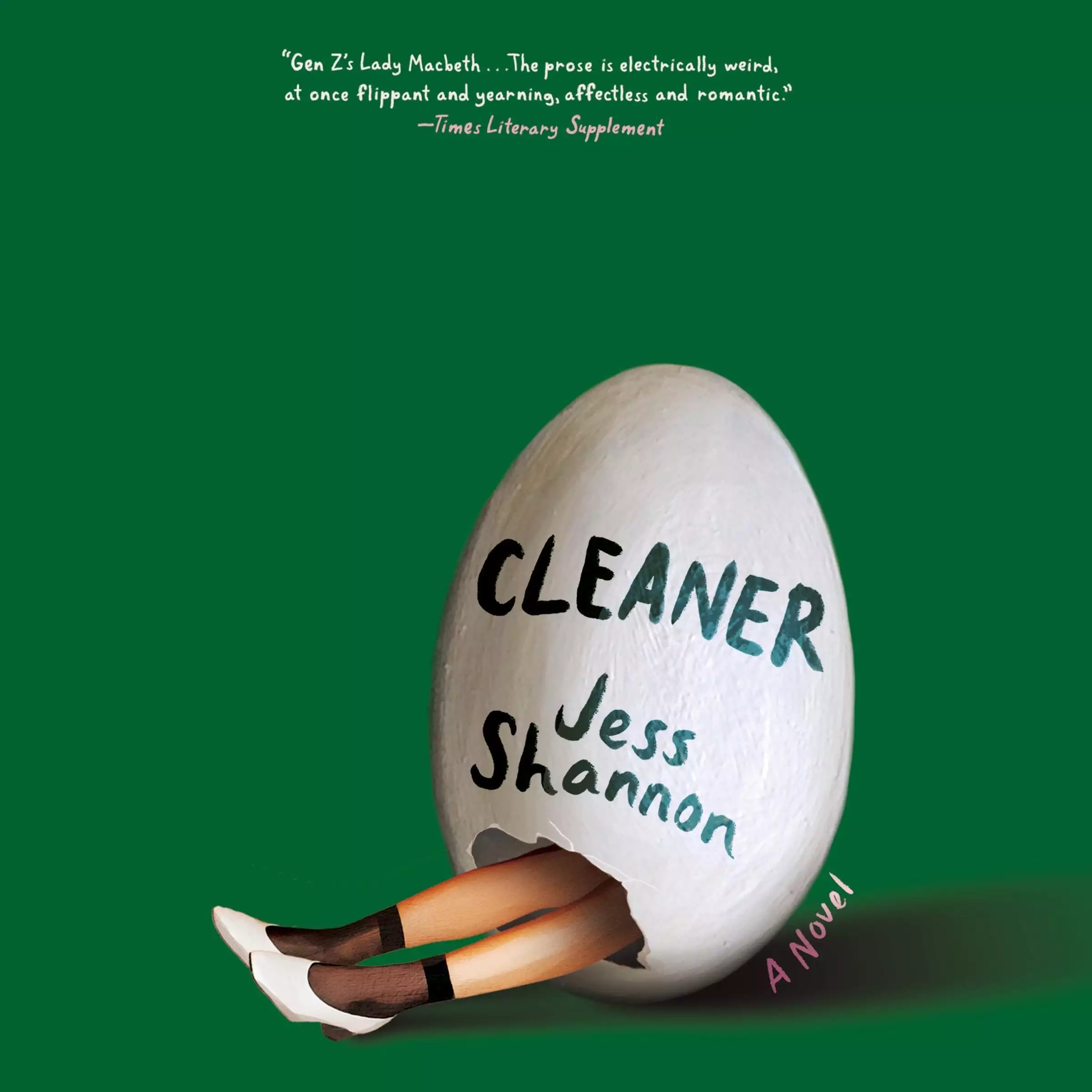
A disaffected young woman’s work as a cleaner takes her on an increasingly surreal search for a creative fulfillment, gainful employment, and the meaning of life in this sharp, tragicomic debut—perfect for fans of Melissa Broder, Jen Beagin, and Alexandra Tanner.
A young artist returns to her childhood home, with a host of degrees and diplomas in her back pocket. But when forced to confront the reality that the world sees no use for her scholarly exploits, she must find a job—and quickly.
Overqualified, underemployed, and idle, she starts a job as a cleaner for a gallery, where she meets another aspiring artist—Isabella—and they begin a passionate affair. Isabella could not be more different from the cleaner: she’s elegant, successful…and living with her filthy rich boyfriend Paul.
Isabella sneaks the cleaner into her life by hiring her to scrub the apartment she shares with Paul. Little by little, the cleaner relaxes into the comfort of her new surroundings. But when Isabella leaves the apartment one day and doesn’t come back, the cleaner is left to decide whether to back to her old life—or stay and step into Isabella’s.
Release date:
February 17, 2026
Publisher:
Scribner
Print pages:
224
* BingeBooks earns revenue from qualifying purchases as an Amazon Associate as well as from other retail partners.
Chapter 1 This story doesn’t have a beginning. I just sat on dining room chairs with my legs swinging like anyone else; grew possessive over junk plastic, shoveled chicken nuggets down my throat at birthday parties, and spent enough time gazing quizzically at the sun to grow yearly, like any uniform sapling. I outgrew clothes and shoes faster than my siblings and felt guilty for it, conscious even then that childhood was a wasteful inconstant medium. At school I excelled for want of a peculiar, comfortable love from my parents, proving, perhaps, that a plant that’s desperate to be measured grows more. I equated nurture with expectation. And so I studied ruthlessly, endlessly, until I found myself in my mid-twenties, crowned with an obscene amount of paper, proving my brain had grown beyond capacity, and with an ungodly amount of student debt. (Shit.) When the last certificate plopped through the letterbox onto a pile of takeaway pizza menus, I was disillusioned with the whole thing, and not much more than nonplussed at the triangular crease in the top left-hand corner from the steady grip of the postman, where, I assume, he had positioned his thumb. The poor choice of font did not upset me, nor, indeed, did the quality of the paper, which was not unlike single-ply toilet roll. Back in my bedroom, standing adrift on the only spot of carpet unobscured by dirty laundry, I thought about hanging this thing up nicely in a frame on the wall—that was what proud people did, of course—but I was deterred by the grayish leak creeping down from the ceiling I had yet to ring my landlord about, out of fear of making unscheduled phone calls. The wall was wrong. I could’ve texted the landlord, of course, but the wall would still be wrong. The certificate would have to stay in the envelope and be lost under the bed. A bed that was not even mine. (Shit.) I looked upon what I had created here and saw myself stuck inside a vortex of my own messes. My small room seemed to be visibly clouded by the stink of my body and the stink of my superfluous thinking. After spending two months in my bed, I grabbed the nearest jacket and rushed out onto the street, gasping theatrically for air. The shock of sunlight made my eyes stream with tears. I plugged my earphones in and began walking through this city I had been living in for years but somehow knew nothing about. I did not stop until a man called out to me and I was caught short by the reality of real nighttime, when only moments before I’d been transfixed by a great wash of pink over the spire of an old church. I’d been walking for hours, my stomach was gurgling; another day had died right before my eyes. This man who had brought me to my senses cried something not untrue about the state of my body, which I noted down verbatim on my phone, as had become an unorthodox habit of mine. I turned back the way I had come through the wide city streets and reached the door just as the sun rose, crawling into my bed at about 6 a.m. I awoke, damp and groggy, sometime after 5 p.m., only to drink cup of instant coffee after cup of instant coffee, grab my jacket, and repeat the whole pointless excursion all over again. I woke, I walked, I lived on deli sandwiches in recyclable paper and I watched each watery sunrise until my lease on the flat ran out some weeks later. My other housemates were long whisked away by beckoning purpose. Alone, I spent a sad afternoon sweeping the carpet in the absence of a vacuum cleaner and depositing bin bags of things I couldn’t fit into my suitcase at various charity shops. With my certificates packed neatly in my bag, I trundled home on the train to my parents’ house,resigning myself to the fact I’d never get my deposit back. I swapped the city I found for the city I came from. There, I spent a month or so night walking through my old childhood haunts (the chip shop where I got slapped once, the library where I discovered reading) and faced my parents’ bleary-eyed questions by day, when I’d knock on the front window to be let in at dawn, like some sort of sloping street cat pushing its luck: Hold me, feed me, I have never known the joy of attention! After about a week of this, my limp, doughy parents tentatively suggested I find myself some employment—You could work nights?—which I ignored. I asked them instead what I could do for them, but they were happy, which was a shame. It surprised me. I found myself for the first time intensely jealous of what cannot have been a particularly exciting life. I was the most educated person in the whole family and I could offer them nothing. In fact, I was the taker. As the weeks plodded on by, it couldn’t be denied that they were taking a heavy loss in permitting my presence in their world again. I was a black hole sitting on the sofa. A sharp increase on the electricity bill. Food was tasteless, water acrid in the knowledge of being nothing more than a clever shit-and-piss maker. But even this was not true, as I had to ask them how to go about redirecting my mail. Kids these days! Why didn’t I know how to do anything? I stood next to my now comically tiny father at the end of a supermarket checkout, minding the trolley that he wouldn’t let me push. My toast kept being cut into quarters. In the shower I stared at pin-sized splodges of shampoo in my palm before massaging it guiltily through my hair. I asked: Are you sure there’s nothing I can do while I’m here? My mother put down the book she was reading and eyed me properly as I squirmed at the dinner table: You could start with the washing up. The washing up? I found myself stood in front of the sink with my sleeves rolled up, glassy-eyed over a pile of clean plates and pots and pans lined neatly on the draining board. The first piece of serenity I’d had in months. It was so simple. It wasn’t that I’d never cleanedbefore—of course not—but somehow the conditions had always been wrong. Cleaning had always been a nuisance because I’d always be thinking about my work too intently to use it for good, to do it with any kind of focus. Perfection was always somewhere else. But now it took nothing to put my brains, as it were, into my hands and think about the art of each movement. So simple, and yet I found myself light limbed and coiled with energy. Frenzied with inner peace, I emptied the cupboards and drawers of utensils to rewash them with these new hands. When I was happy with my work, I took a clean, pressed tea towel and began to dry and put away, but the cupboards were not right; in fact, they were so wrong as to be edged with gray-black grime. The only right thing to do was empty them fully and dust and polish and shine. To stack the soup tins and pasta packets neatly. To sweep the floor and collect with a dustpan and brush. As dawn broke in through the smeared window, I saw myself reflected in the morning as I wiped it with distilled vinegar in firm, dainty circles. I was a fool. All those hours spent wandering the suburbs on my legs when I should have been using my hands. When my mother came down the stairs, the line of her mouth curved into a smile when she saw what I had made: Well done, darling. I made us coffee and eggs and toast and burnt a little sandpaper patch on my tongue for my impatience. After I washed up again, I made a start on the dining room and living room. The immediate problem was not dirtiness, as I’d assumed, but bulkiness and clutter. This second phase required the unearthing of my professional eye, much to my shy delight. The solution presented itself in the form of tucking away family photos and moving all furniture notably inward toward the nucleus of the room. By midafternoon the house was entirely changed, and my father was nestled in a plumped-up armchair, huddled over a copy of some book he’d forgotten he owned and was delighted to rediscover. I felt like David Hockney. I spent the afternoon vacuuming in laps around the house and seeking any hidden dust with a damp cloth. Popular hideouts included the tops of wardrobes and the lip of the doorframe. By 9 p.m. I was somewhat delirious and had to be shepherded to bed by my mother, who tucked the covers up to my chin and kissed my forehead for the first time in years. I disintegrated into sleep. The next morning, I woke to the sound of rain battering against the window and my mother bent over the pile of fresh laundry I’d been looking forward to sorting: Sorry, she grinned, I was inspired! In the living room the furniture had migrated back to their unenlightened positions. I gritted my teeth and made for the toothpaste flecks on the bathroom mirror to calm myself. Any relief evaporated upon colliding with my father on his way back from the supermarket, just as I was heading out with a reusable shopping bag. I was going to do that! I said. Overcome with what appeared to be an irrational fury, I stomped up the stairs to my childhood bedroom and slammed the door with a satisfying bang. Screamed into a pillow. Eventually I conceded there was not very much else to clean or sort in this place (my parents were monk-like in their material happiness), but I decided this was no longer a concern. I was an adult. I snapped open my laptop and by noon had created accounts with several promising private cleaning companies. By 3 p.m. I had an offer for an interview at a new art space that had popped up on the High Street. I closed my laptop and wept, stupefied by the miracle when I considered how many hours and days I had spent trawling for work without success in the field I was supposedly an expert in. How many emails and speculative applications were sent into the void. How guilty I felt for badgering the faculty of my university via email for something, anything, please? Kind regards. The next morning, I got up bright and early, dressed in comfortable neutrals, and made my way into town. I found the place easily and knocked on the front glass for the young woman at the desk to let me in; turns out she was the owner, barely in her early twenties. She explained her family owned the premises, that it used to be a hairdresser’s, but after that business had folded, they’d been unable to find a replacement. In a surge of inspiration, she’d ripped out all the sinks and mirrors and begun using the space as a shop/studio/gallery. They’d had a lot of interest, particularly from some older members of the community who’d taken to knocking on the window and shaking their heads at the nudes very much on display in the window. What did they expect? It was a nude-art gallery celebrating the female body, of course there was going to be tits in the window. After chatting some more, it turned out we both went to the same university. Oh gosh, what a coincidence! So, really, we’re just looking for someone to give the place a once-over every morning and evening, help set up tables and chairs, and maybe stick around after the life drawing class we run on a Thursday evening—the chaise longue the model lies on requires a steam clean. What do you think? Sure, I said. And that was that. She showed me to a little stock cupboard full of supplies, paper towels and bottles of this and that, and off I went. I raced around with a little Hoover, wiped down the mini pop-up bar stocked with Sainsbury’s prosecco, and even spruced up the faux leaves and neon lettering in the selfie station. Love your body! I was out the back door before midmorning with a full day’s work behind me just as the first customer began browsing and hounding the owner with a monologue about how much he loves BBW. I was paid cash in hand and used my first wages to buy a coffee and aMcDonald’s breakfast. Brilliant. No fuss, no faff, no forms, and I took an immense amount of pleasure in holding what I had earned in my hand before nipping to the bank to deposit it. There was an authenticity to the whole endeavor that salved my brain against the stresses of a modern planet, everything important is stored in the ether of the internet, blah blah blah. I walked home not happy, exactly, but placated. I managed over the next couple of weeks to pick up similar roles in a local estate agency and a continuing-education college, but the art gallery was my favorite. I loved chipping dried paint off the lino, I loved swirling sponges round the rims of champagne flutes in the mini-sink, and I loved cleaning the paintbrushes in white spirit and lining them up neatly to dry. And so I might have continued there had it not been for the Thursday evening I was working at the studio, when the owner rounded the corner in a panic while I was emptying the bins. She was in a flap; her model had canceled on her at the last minute and none of her other contacts were available. Lovely, whiny posh girl. What the fuck was she going to do? She looked at me. Later, I found myself holding a glass of prosecco in a champagne flute while the paying guests filed in and set up their pencils and charcoals. All these people were very interesting to me: sharp-suited women, floaty weed-smelling women, a white man with dreadlocks, a horny bumfluff boy starting university soon. I didn’t see Isabella at first—she must have been hiding toward the back while I was “networking” with the owner by the steam-cleaned chaise longue. Hiiiii, are you the model? I’m the model. Once everyone was sat down, I went into the disabled toilet to get undressed. There were no clothes pegs, so I had to fold my clothes and prop them on the cistern of the toilet. I stashed my jewelry away, donned the blanket given to me, and walked out into the middle of the room. There were going to be several timed sessions with different poses. Little five-minute sketches that built up tofifteen-minute sketches that eventually worked up to a fifty-minute drawing. I let go of the blanket and stood very still. The owner made very intense eye contact with me: So, if you want to lift your arms above your head to start, I’ll set the timer. I locked my hands over my head and picked a spot on the wall. Like this? Sure, whatever’s comfortable. It was nice to hear the crowd sound of moving pencils again, aninsect-like scratch. It had been a long time since anyone had really seen my body. I hadn’t seen it for a whileeither. I only ever caught the blur in the bathroom mirror or acknowledged the terrain in the shower. Left to its own devices, it had grown and changed of its own accord—reforested. In my peripheral vision I could see all these heads bobbing up and down as they looked at me, looked down to their sketches, and then looked at me again. I closed my eyes and breathed deeply. A cheap speaker in the corner blasted “Chasing Cars” by Snow Patrol. The owner giggled: Sorry, I clicked a random ambient playlist. Nobody answered her. My upper arms ached. When the timer went off, I was arranged differently, told to stand with my hands by my sides, then the artists were told to switch utensils, and the process began again. I picked a different spot on the wall to “Somewhere Only We Know” by Keane. In all the rush I’d not had time to switch the heating off and I could feel my cheeks getting very warm. Still, it was better than being too cold. Okay, this time you can only draw with straight lines! Timer buzz. Okay, now this time you’re not allowed to lift your pen off the page! Time seemed elasticated; every sketch session felt like an hour in itself, but eventually I was draped over the chaise longue for the pièce de résistance. This was the most uncomfortable position—the novelty had long worn off. My back was twisted and, no matter how I arranged my limbs, something was twinging. Would you mind not moving so much, please? I thought about Kate Winslet in Titanic, and predatory Hollywood, and how shit it was to be a body. I might as well have been tired and naked and staring into space on the sofa at home. The timer went off for the last time and everyone clapped. People thanked me very seriously and wished me congratulations. No, thank you, I said. I felt so much more naked having to look at everyone’s work while they smiled, childlike, behind their sketchbooks as they waited for my opinion. I was still actually naked, though, and there was an old lady banging on the shop window, mouthing that I was a whore, so I made a move toward the bathroom to get my clothes back on. However, anytime I made any headway, the next artist would stop me with another glass of prosecco to mansplain how they rendered the texture of my pubic hair. The secret of working with charcoal is that you have to spray the page with hairspray when you’re done so that it won’t smudge. Thank you, that’s a great tip! Forty minutes later I was still stood under those hot lights in a semicircle of artists determined to put the world to rights. I’d beennaked for hours and now I was expected to form a competent opinion on the climate crisis? And Coldplay was playing: Your skiiiiiiiin, oh yeah, your skin and bones… No more. I really should put my clothes back on, I said, I’ll be back in a moment. I sped away as fast as I could. But in my desperation to get away, I wrenched the handle so violently I broke the lock on the bathroom door, and that’s when I burst in on Isabella. Every day I’m thankful she was doing coke and not actually using the toilet. If she had been using the toilet, I know this little path I’ve trodden would not have been found. I’d have looked away and apologized, blindly grabbed my clothes, and left the building immediately, never seeing her again. That eventuality was an insurmountable faux pas, whereas catching her crouched over the toilet seat in this way bound us together in a way that was adhesive and inevitable. It doesn’t sound romantic, but it was. It enabled her to say the words: You’re not going to tell on me, are you? in a low, gentle voice. (Oh God, those words!) I shook my head and said, I won’t tell on you, cataloging a version of her face, voice, and hair inside a corner of my brain to keep. Not love at first sight, just a picture worth saving. She sniffed a little andarranged another line with what looked like a Bootsloyalty card. I knew nothing about drugs then; the small dusting round her nostril was nothing less than planetary, orbital to her features and the promise of something hidden behind them. When she wiped her nose, I wondered how it would’ve looked under a microscope; such gentle, careless destruction. She stared back at me for a moment and, in a small bolt of confidence, I wondered what she might be thinking, if she thought I was interesting too. Then I remembered I was naked. Do you mind if I get dressed? I asked, pointing to the pile of my clothes still propped on the cistern. She smiled and drooped her head back down while I wrestled painfully with my parachute pants. I saw then that she wasn’t snorting directly off the toilet seat as I’d thought but off a pencil sketch she’d done that night. A sketch of me. When I looked at her again, she shrugged, giggled: it seemed more hygienic; you never know howoften these things are cleaned. I nodded, stupefied, resisting the urge to tell her I cleaned the lid of that toilet with my own hands because that was not a normal thing to say. And I must be normal. Isabella smiled again, told me that her name was Isabella, and asked if I wanted a line. Sure. I knelt down. She pushed the page toward me, and I loomed over this image of myself like God, my very own personal God. Pervy autosexual God. My gaze refocused. I didn’t love what I saw on the page, but that’s what made me like it more. It was only a sketch; she’d missed out my face, half of one of my arms, but somehow caught the tilt in my head and the awkwardness of my posture that I’d always hated in photographs. I was simultaneously flattered and hurt to see so much of myself—enamored and heartbroken in equal measure. But trailing my nose up the pencil line of my leg and hip was exciting, even if coke proved slightly underwhelming in the way so many glamorized rich-person pursuits are. Cocaine is the new caviar. Or, rather, the new avocado; everyone eats avocado. When I sat upright again, Isabella and I laughed together for the first time. Leaned in. All in all, I think that short ten, twelve minutes we spent in that bathroom was the purest time we spent in each other’s company, the happiest convergence of our fate threads or whatever. No awkwardness, no expectations, no mystery. I hadn’t met Paul yet, and she didn’t know I was too strange to keep jobs and friends. A sorry truth exposed almost immediately when the owner walked in on us fucking against the bathroom wall. Poor girl: OhmyGodOhmyGod. She slammed the door closed again. For a moment I wondered whether we might as well carry on, but then there was this curt little knock, a clipped voice: Have you stopped now? Yes. The owner reentered, facing her body almost entirely away from us and keeping her gaze fixed firmly on the wall. Ironic. The conversation didn’t last long: Can you both leave the premises, please? Isabella: But we’re celebrating the female body. Yeah… no. She turned to me: You’re fucking fired. And then she left. Isabella was understandably confused: You work here? As we put our clothes back on, I told her, not entirely coherently, that I was the cleaner. That I clean places for a living. Her eyes flashed a little in comprehension. Oh, right. We marched sheepishly across the artist swarm through what sounded like a heated cultural appropriationdebate—ACTUALLY, the Vikings used to—and left through the front door. It was well past sunset now, and the hot sky had blended into a soothing blue, hugging the corners of the buildings, the curly streetlamp. The shouting grew louder. I realized I’d done my shirt buttons up wrong and quietly redid them. Through the shop window we watched White Dreadlocks Man pour prosecco over Skinny Charcoal Mansplainer while the owner looked on in abject apathy. I felt for her then. She looked angelic and sad, eclipsed in canary-yellow lighting; Joan of Arc but with a broomstick for sweeping smashed glass. It was quite a spectacular scene. Witnessing the destruction and the trashing of the place, I was almost glad to be fired. When the fight finally died down and the guests streamed out drunkenly onto the street, drifting over the road on their separate ways, the lights went out: blink. I turned to Isabella: That was weird. She shrugged, placed her hand lightly on my forearm, the crook of my elbow. Can we go back to your place? No… I’m living with my parents at the moment. (Translation: I’m living with my parents for the foreseeable future.) I broke her eye contact and rubbed the back of my neck, cleared my throat. Maybe we go back to your place? Uhhhh… she mumbled. I’m living with—a zooming motorbike cut her off but I filled in the blank well enough. She had a boyfriend. (Translation: I’m getting revenge on him / I’m experimenting / I’m not the love of your life.) Do you have a car? No. Do you have a car? No. We stared at each other—a foot of distance now between us—and sighed for the lost moment. A fat raindrop wriggled down the back of my neck as the heavens opened above our heads. I was suddenly very cold and very sober. We moved under the shelter of a nearby bus stop and pressed ourselves against the heavy-duty plastic. While observing the downpour, I plotted carefully in my mind the series of events that led to capitalism ruining my sex life. How are you getting home? Bus. The 11? Yeah. Cool, I’ll wait with you, I said. She fished her phone out from her back pocket and started scrolling. A softbaby-girl voice: You don’t have to wait, I’ll be all right. The rain turned to hail. I spoke into her ear over the rumble: Well, I’m not going anywhere in this! What? I’m not going anywhere in this! We stood there for something like five minutes and didn’t say a word, no sign of the bus. I slid the rings I’d stashed in my pocket back on my fingers, one by one. Still, nothing further was said. The longer the silence went on, the more upset I became. It’s not that I necessarily be- lieved in monogamy or soulmates—and God knows I’d had my fair share of one-night stands with people who’d wanted nothing to do with meafterward—but I lived with my parents now. I couldn’t know the next time I would be touched by someone like this. I felt the death of my youth on that street corner; I’d had her breath in my mouth and now we were in the rain entirely separately? She was watching a Gordon Ramsay compilation video on Facebook. I thought to myself: It doesn’t matter who she is, if I don’t touch her now, I’ll never know intimacy again. I’ll spend the next ten years in my childhood bedroom swiping left because there’s no breath through a screen. Excuse me, I said. It’s raining and I’d like to kiss you. She looked at me, and I was so tired and self-conscious now, but I put my cold hand on her neck and pulled her lips toward mine. Let a little warmth rest inside my belly. Listened to the rain soften and mute and the last trickle of the gutter splash and gurgle down the drain. I pulled away. The electronic bus timetable was saying we were out of time. I removed my hand from where it had drifted along the contour of her shoulder and told her, very directly, that I’d like her number, please. She laughed, the timbre of it reminding me of her long-term, very serious, probably-going-to-Italy- in-the-autumn-to-have-him-propose-by-the-Trevi-Fountain, boyfriend. It doesn’t matter, I said. Unlock your phone, please. For the first time all night she looked nervous, not of me I don’t think, but of the possibility of me. My presence in her brain. I slid along the bench to give her some room: It’s up to you. We both heard the chug and whine of the bus rounding the corner, but I didn’t force it further, only waited quietly. As it pulled in to the curb, she pressed her phone into my hand, and I caught a glimpse of her screen wallpaper: this boyfriend, nondescript, in a white shirt and tie. I didn’t have the time to winkle anything interesting out of his face or expression. The last passengers were stepping off the bus and Isabella was tapping her foot impatiently on the pavement. In a divine spark of inspiration, Iadded myself in her contact list as “Cleaner”—it’s always good to think ahead. I sent myself a text and felt the buzz in my pocket confirming I had a means of reaching her again. Isabella grabbed her phone back and left without so much as a look in my direction. The doors clattered shut behind her and she was driven off, off, away into the night. For a moment I felt like my grandfather in his youth, depositing a woman carefully onto public transport with the promise of maybe taking her out again sometime. There was something old-fashioned about walking alone on the pavement with my hands in my pockets, kicking my boots in shiny puddles. I found myself inexplicably nostalgic for a certain kind of life punctuated by glowy streetlamps and the spin of a hoop skirt. A life that would never apply to me. I meandered through the suburbs in this dream, only to be broken out by the shout of a man from a nearby Ford Focus: Oi, baby, where was I going this time of night? Among other things. Fortunately, I was close enough to my parents’ house to grip my backpack tightly and run, run, run without stopping for breath. I crashed in through the front door sometime after 1 a.m. and met with the red-eyed grimace of my father on the landing. Sorry, I said, I got caught up at work. He immediately turned his back on me and shuffled back to bed with a sigh. If only he knew. Sat on my own bed, with the weight of all the thoughts pooling in my head, I let myself fall back onto the pillow as if I were in a film. Looked into the ceiling as if there was a camera there. Damn right I’m at the end of Act One! That’s what you call an inciting incident! I picked up my phone from the floor and sent Isabella a text: Hope you got hoe safe x. It wasn’t until the next morning I realized I’d mistyped “home.” She hadn’t replied anyway. No matter. It was still only 5 a.m. I launched out of bed and forced myself to pause and admire the sunrise peeking over the anemic tree in the garden. Today would be an exercise in tempering impatient tendencies, I thought to myself. Practicing calmness and neutrality in the face of immovable time was essential; the trick was single-minded action. In the kitchen I stayed with the egg I was boiling. In the bathroom, I stripped out of my pajamas in front of the mirror, watched the obscuring of my reflection in the steam pluming from the shower before allowing myself to get in. I cleaned the house from top to bottom (sans vacuum because it was before 9 a.m.—my mother had made a new rule), but somehow I was still sat on the wall outside work for forty minutes waiting for the caretaker to open up. I had an early shift at the continuing-education college, which, u
We hope you are enjoying the book so far. To continue reading...

 Please log in to recommend or discuss...
