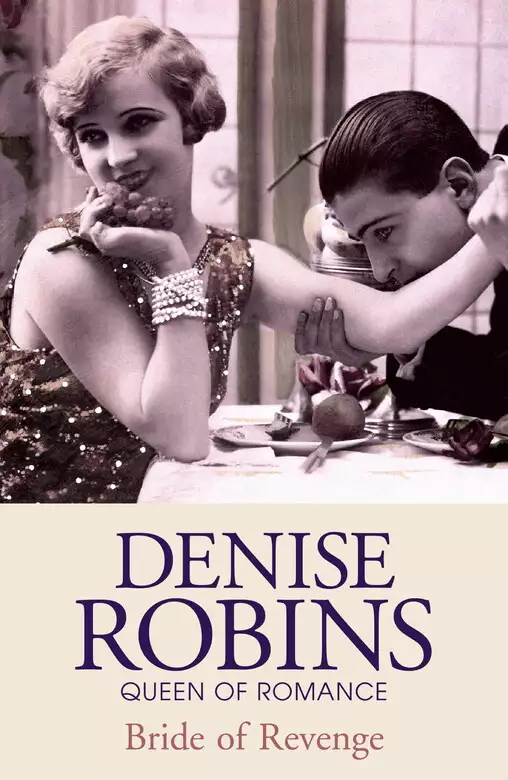
After her aunt's death, Thea gladly gives up her dreary job in the suburbs to travel to the island of Biscany. She is sure she will be looked after there by handsome Bevil Royce, with whom she had had such as passionate love affair during his stay in London. But the pretty but penniless little typist had been merely a temporary whim of the worldly Bevil - and now he is engaged to the chic daughter of a wealthy and influential baronet. Then, through a strange act of fate, Thea finds herself under the protection of the new Governor of the Island. Charles Fettermore is a deeply embittered man who has his own reasons for wanting revenge on Bevil Royce. As she becomes the focus of a deadly rivalry between the two men, Thea realises that she will have to make a vital choice...
Release date:
May 29, 2014
Publisher:
Hodder & Stoughton
Print pages:
192
* BingeBooks earns revenue from qualifying purchases as an Amazon Associate as well as from other retail partners.
ONE summer’s morning in the middle twenties, Thea stood on the quay and looked with intense interest at the island of Biscany. The small steamer had just landed her there. And now, for the first time, she was seeing this wonderful island of which Bevil had told her so much. Sunny, happy Biscany, lying off the south coast of Cornwall. Bevil’s home. To Thea it was an enchanted isle. A small town, built on the slope of a wooded hill, curving down to the harbour. White buildings – nearly all white – relieved by the green of tall, straight pines which grew down to the water’s edge.
It might have been an island in the Mediterranean on this warm day of August. Brilliant. Beautiful. Blue sky and green-blue sea. Luxuriant foliage of trees and bushes. Great, pink flowering azaleas on the shore. The repose and dignity of tall white villas with emerald shutters casting their shadows on the margin of the water. Fishing smacks with crimson sails rocking gently in the harbour. Peace and plenty in Biscany. A peaceful community of English people under British rule and their own Governor. No income tax. Small rents. Cheap food. Rich pastures and a wealth of almost Continental fruit and flowers. A modern Utopia was Biscany.
Thea stared about her and sighed with profound pleasure. The warm sun caressed her. She stood alone on the little quay – a small, solitary figure with her suitcase at her feet. She felt intense excitement. For she would see Bevil soon. She had left home for good; burnt her boats; come to him. This eye-aching, vivid loveliness of the island before her seemed the outward sign of all the inward beauty and contentment which must inevitably be hers.
A dock-labourer, with a jolly face, and blue overalls as picturesque as his surroundings, came up to her.
‘Taxi, miss?’
‘If there are taxis in Biscany, yes,’ said Thea, with her sudden smile.
‘Taxis in Biscany! Why, o’ course!’ said the man. ‘There’s everything in Biscany, miss. Motor-buses, too.’
‘But not trams, I hope,’ said Thea gravely.
‘No. They’d ruin the look o’ the streets,’ said the man. ‘Noisy brutes – I hate ’em. I’ve seen ’em in London, I have.’
Thea hated the noisy brutes, too. They reminded her too painfully of the wretched life which she had put behind her. That wretched daily ride in the tram, grinding harshly along the lines, bearing its load of bread-winners to their appointed places of work. Thea associated the thought of trams with Brixton; a general stampede for a seat; frozen hands and feet in the winter; and, in the summer, heat, discomfort, headaches. …
She was glad there were no trams in Biscany, and that with any luck she would never sit in one again.
When she was in her taxi, driving from the harbour to the main thoroughfare, she noticed that there were flags flying from many house-tops and spread from the windows. A general atmosphere of festivity in Biscany. Shops closed and shuttered. Crowds in the streets. Children in white dresses. The Island was en fête. Why? Thea wondered. Was some religious festival taking place?
The taxi bore her swiftly through the street, and turned into a quiet road flanked by tall trees, leading up a hill. White villas with flower-filled gardens flashed one by one through the trees, as she passed by. She wondered if Bevil lived in this road, His address was ‘Villa Élégie, Biscany’. How often she had written that address. Sometimes happy, contented letters, expressing her love for him and her resignation to their separation. Sometimes rather unhappy, restless letters, in which she said she could not bear the life in Brixton and her job in the City much longer, and that he must, must send for her soon.
‘Villa Élégie,’ she murmured to herself. ‘It sounds so lovely!’
Then a little frown contracted her brows. She stared down at the imitation crocodile bag in her lap, and asked herself if she had been very wise to arrive like this without wiring or letting Bevil know that she was coming. Of course, she had written three days ago. In that letter she had told him that her aunt with whom she had lived in Brixton since the death of her father four years ago, had expired from heart-disease. Thea had been fond of Aunt Milly, and the old woman had relied on Thea to stay with her in her declining years. Out of sheer pity and gratitude for the home Aunt Milly had given her, Thea had stayed. Otherwise she would have long since run away from the awful routine of that life.
Aunt Milly’s sudden death precipitated Thea into action. She could not, would not stay in the dreadful, dreary little house a moment after the old woman’s funeral. Her small, stuffy bedroom, where one must lie and listen to the trams, clanging and grinding, half the night, had become unbearable. She had even grown to hate the office. Messrs. Pullen, Wise & Clinker – corn-merchants – Leadenhall Street. And Thea, typing, typing, typing all day. …
‘Miss Wood, one moment, please. …’
‘Miss Wood, Mr. Pullen wants you. …’
‘Miss Wood, are those letters done?…’
Slavery – routine. Nothing to look forward to. Only the tram-ride back to Brixton. …
Yes, Thea was glad there were no trams on this lovely island.
She had not heard from Bevil since she had told him about Aunt Milly’s death. Her letter should have been answered at once. She realised that. It had been rather a mad letter, begging him to let her join him in Biscany. After all, he had always said she could rely on his love and protection, because of all that they had been to each other. So why be anxious about her reception. He would be glad that she was free to come to him. She had no doubt at all in her mind that he meant to marry her.
The taxi turned into a stone archway and down a long chestnut drive; drew up before a white, Continental-looking villa with green shutters and a veranda. There were passionflowers curling round the pillars supporting the veranda roof. Masses of pink azaleas everywhere.
‘It’s a very grand sort of home,’ Thea thought, a trifle uneasily. ‘I wonder Bevil can afford to run a place like this.’
He had told her he was very hard up. Given his lack of means as one of the many reasons why he could not take a wife at once. Thea had believed him. She believed everything he said. But the general impression she derived from her first view of Villa Élégie was one of luxury – even of opulence.
She stepped out of the taxi and paid the driver, who carried her suit-case on to the porch. She said:
‘You are sure this is Mr. Royce’s home?’
‘Villa Élégie, Mr. Bevil Royce’s place. Yes, miss. I’ve driven folks here often. Mr. Royce, he’s very well known on the Island.’
‘Is he?’ said Thea.
‘The big banker, he is, miss – Mr. Royce.’
‘Oh,’ said Thea, in a tone of surprise. Bevil had never said he was a big banker. He had told her just that he was ‘in a bank’. Then she added: ‘By the way, driver, why is the Island so festive today?’
‘Great occasion, miss. The new Governor of Biscany is arriving in ’arf-hour’s time. We ain’t had a new Governor for twenty years. But old Sir George Torrance, he died a few weeks back, and the new one, Sir Charles Fettermore, is expected today. There’ll be a procession and a banquet at Government House – that big place standing on the ‘ill overlooking the harbour. And it’s bank ’oliday for us all.’
Thea nodded. She had noticed the long low-built, palatial residence on the crest of the hill. She had seen it from the ship as they steamed into harbour. It was a landmark, Government House. And the new Governor was arriving this afternoon. All very interesting. But not naturally, as interesting to Thea as her own arrival and the thought of Bevil.
‘You’ll hear the guns go off when Sir Charles lands, miss,’ said the taxi-driver proudly. ‘’E’s coming over from England on one of them naval cruisers.’
Thea thanked the man for his information and walked to the front door of Bevil Royce’s home. Her heart began to beat very quickly as she rang the bell. Would Bevil be in? What would he say when he saw her? How surprised he would be! and pleased.
While she waited for an answer to her ring, she found a mirror and powder-puff in her bag – hastily removed some of the travel stains from her face, and powdered her nose. Regretfully she drew her coat tightly about her thin, rather boyish figure, and wished that she were more smartly dressed. The blue coat with its imitation fur collar was two years old and very shabby.
She had nice narrow little feet. Bevil had often told her what pretty feet she had; what good ankles.
But she never could afford the expensive shoes which would have suited her. She was ashamed of the cheap shoes she was wearing today. Hated the idea of Bevil seeing them. Bevil, who was so very fastidious and loved beautiful things. …
However, no doubt he wouldn’t worry about her clothes. He would be so glad to see her again. He loved her, and understood how poor she was. He would forgive the shabby dress and the ill-fitting shoes.
The door opened. A butler, grey-haired, imposing, stood before Thea. She was immediately reduced to a state of embarrassment. She had not expected Bevil to have a butler, and it was a little unnerving.
‘Is Mr. Royce in?’ she stammered.
‘No, miss.’
The first disappointment. Thea swallowed hard.
‘When will he be in?’
‘Any minute now, I think miss. He just went down to the town in the car. Everyone’s very occupied today because of the new Governor arriving.’
‘I see,’ said Thea.
She felt a little bewildered. Bevil, with a magnificent villa, a butler, a car of his own, was a Bevil she did not know. It was all rather peculiar and disturbing. Why had he told her that he was as impecunious as herself, and working ‘in a bank’ in Biscany? Surely he hadn’t lied to her – deliberately kept her from knowing that he was a rich man – for some ulterior motive. She had made so many allowances for Bevil on account of his lack of means. If he were really a wealthy banker with a home like this, he could have married her long ago. Unless, of course, he had sprung a fortune suddenly since their last meeting.
‘Can I give Mr. Royce a message, miss?’ the butler inquired.
‘I – no – I’d like to wait if I may,’ said Thea.
The butler eyed her a trifle doubtfully. The young lady – he presumed she was a lady – looked very shabby. Not like most of the smart young ladies who came here. On the other hand, she was pretty. Bevil Royce’s butler had been long enough in service at Villa Élégie to be aware of his master’s penchant for pretty women. He coughed and stepped back a pace.
‘Come in, miss,’ he said. ‘If you care to wait in the drawing-room, Mr. Royce will be back shortly.’
‘Thank you,’ said Thea. ‘By the way, would you – er – just not tell him I’m here when he comes. I – I would like to give him a surprise.’
‘Yes, miss,’ said the butler. And to himself: ‘Lor’ save us. She’s another – potty about him! How they do chase Mr. Royce. It’s something to be handsome and have a taking way like he has.’
ONCE Thea was installed in a comfortable armchair in Bevil’s drawing-room, she felt very tired and depressed. Now that she was actually in Bevil’s house she felt not at all happy. She had been strung up to a high pitch of excitement earlier today before reaching Biscany. Like most women in love, she had been completely obsessed with the thought of her lover. The desire to see him again, be with him, feel herself safely under his protection, had outweighed common sense. But she now realised that she had been far from wise or practical to rush here like this, unannounced, and land herself on Bevil. How did she know he would not be angry?
On the other hand, it was difficult to imagine Bevil angry with her. He had always been charming and sympathetic. She was madly in love with him. They had been lovers for the last three months. And her passion for him had increased with the passing weeks, rather than diminished. She was certain of the sincerity of her feelings for him and of his for her. When he had said he could not afford to marry her and help her support poor old Aunt Milly, it had never entered her head to doubt him. But to come here and find all this luxury and magnificence, and realise that he was a very important man on the island, filled her with disquietude. There seemed no doubt that Bevil had lied to her. To find Bevil out in a lie – a mean kind of lie, like this – was dreadful, when she loved him so much and had made a god of him.
‘Oh, well,’ said Thea to herself, ‘I suppose he didn’t want me to know he had money, and that’s that. I daresay he will explain when I see him.’
Nevertheless she looked without any real pleasure at the room in which she sat. Expensive Persian rugs on the polished pine-wood floor; satin-wood furniture of some early French period; petunia-coloured, thick silk curtains; tapestried walls. No pictures; very few ornaments. Nothing like the home Thea had dreamed of – a kind of Ideal Home in a Garden City, where she and Bevil would be divinely happy, and they would have a small garden to work in, and – perhaps – one daily maid as a luxury. …
That was the sort of home Thea had wanted. Her tastes were simple. She had always lived very simply. Her own home, in the lifetime of her parents, had been in the suburbs. She was almost entirely uneducated in such things as old furniture, modern art, the general culture of home-life in the upper classes. She liked to look at the beautiful things, without actually possessing any intellectual appreciation. She understood the attraction of luxury. Bodily comforts; things like soft beds, perfumes, silk underwear. But, because she had been a typist in a city office, earning thirty shillings a week and living in a Brixton villa, she had only wanted these things vaguely, without expecting to get them. Like a thousand other little typists who want them and stoically endure the hardships and lack of beauty in their lives. She was not a vastly ambitious person. Neither greedy nor discontented. Only sometimes she had indulged in day-dreaming; wished she were a film star, or the daughter of an earl. Then back she went, doggedly, to her own dreary life.
Her general outlook changed after she met Bevil Royce. Their meeting had been ordinary enough. In a dance-hall near Olympia. Nothing very romantic about it, although for Thea romance had entered her life from that hour.
She had been asked by a girl friend at the office to go to the dance, where this girl was meeting a ‘boy friend’. The ‘boy friend’ was a gentleman of leisure, amusing himself at the moment with pretty typists and waitresses. He brought with him another friend, a man of thirty-five – Bevil Royce; Bevil, over from Biscany on business, passing a dull hour or two at a place where one could pick up an agreeable acquaintance and dance.
Thea Wood, slim, built almost boyishly with her narrow hips and dark, cropped head, was an immediate attraction to Bevil. He had told her so later that night at the dance-hall. He liked her because she was not bold and didn’t giggle when serious things were said to her, or ask what the joke was when she was told one. He liked the almost childish simplicity of her; the rapt way her large brown eyes rested on him when he addressed her. She was no more ignorant of life than most modern girls who earn their own living. But she seemed respectable. There was something curiously virginal about her. He danced with her the whole evening. At the end of the evening Thea was in love for the first time in her life. Bevil Royce was extremely handsome, witty, and debonair. A gentleman. Without really understanding just that subtle difference between the man who was well-bred and the bounder who pretended to be, Thea knew it when she met it. Bevil Royce seemed to her perfect.
What Bevil Royce had actually felt for her she did not know. He told her that he admired her reserve and was greatly attracted by that rather aloof charm of hers. Her large, grave brown eyes, and her habit of flushing sensitively when she was spoken to intimately, appealed to him. He admitted that there had been several women in his life, but he was never attracted by the blatant, hard-smoking, hard-drinking girl of the day. Innocence always has it own peculiar charm for the man who has been round the world and found a strange lack of it.
Anyhow, whatever it was that drew Bevil Royce and Thea Wood together, they were deeply, mutually attracted, and after that night, at the dance-hall they met again.
Bevil stayed a fortnight in London and took Thea out every evening. He was always amusing and charming, and put her entirely at her ease. Long before that fortnight ended she was at his feet, adoring him, living only for the moments when he was with her. The first time he took her in his arms and kissed her she was terrified by her devastating feelings. She was natural, warm-blooded, unashamed of passion, but her fear was as primitive as the emotions Bevil Royce roused in her. She alternated between the longing to giving herself to him entirely and her reluctance to do so and make herself cheap in his eyes.
It became all very hectic and nerve-racking for her. She ran through the miserable gamut of emotions suffered by the sincere and loving woman in love. She could neither sleep well nor eat normally; she could not concentrate on her work. She was happy and contented only when she was with Bevil, and then the pleasure of their meetings was spoiled by the shadow of the parting which she knew must come inevitably at the end of the day.
Bevil told her that he was in love with her, but that it was impossible for him to marry.
‘It’s not because you’re only a typist, or any rot of that sort,’ he said. ‘It’s because of my own position. I had to neglect my work during the war and now I’ve just started in this – er – bank in Biscany. I’ve got to make my way before I can take a wife.’
Thea understood and made no demands. She never once suggested that he should marry her at once. She loved him with the tremendous faith and simplicity of youth. She was just twenty when she ran across Bevil Royce and her temperament was a trustful rather than a suspicious one.
When Bevil lost his head one evening, driving her in a taxi back to Aunt Milly’s house in Brixton, and besought her to go away with him for a weekend she was first of all appalled by the idea, then tormented with the wish to agree with his plans. He was a charming lover and knew exactly how to deal with women. He pleaded with Thea cleverly. He made her feel that he was not so much the man of thirty-five driven by desire for her as the restless and unhappy boy in need of her maternal arms, Although he was fifteen years older than she was he succeeded in achieving this res. . .
We hope you are enjoying the book so far. To continue reading...

 Please log in to recommend or discuss...
