'Boyhood is a complete triumph . . . it slaps our dull, sterile culture hard across the face with a studded, uncompromising literary glove' - IRVINE WELSH
'Reading Keenan is like reclaiming your own imagination' - LIAS SAOUDI
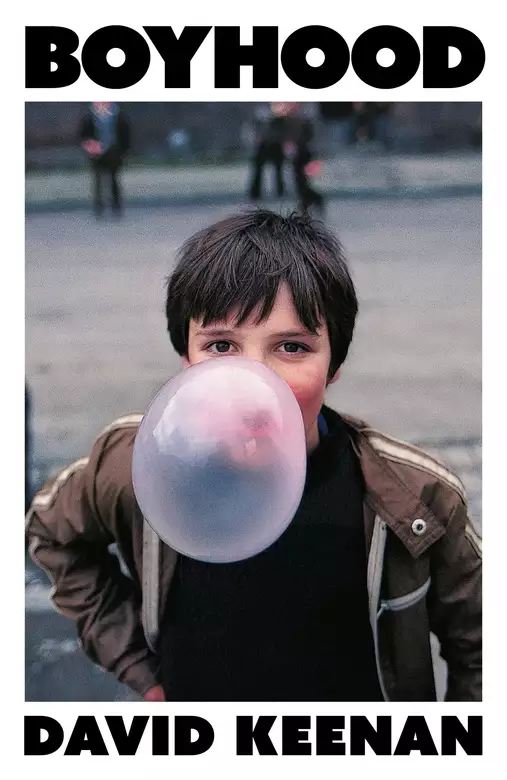
Boyhood opens in 1979 with the abduction of a young boy outside a Glasgow football ground. Nine years later, the boy's brother, Aaron Murray, is on the cusp of that moment when adolescence becomes adulthood. His own journey of grief and recovery has been guided by an angel, 'The Precious Gift' - perhaps imagined, perhaps real - who has blessed Aaron with redemptive, messianic powers. These have enabled him to see through the past and present, joining the dots between a vast array of characters; ballerinas, soldiers, poets, burlesque dancers, East End gangsters and the Vampire of Derry over five decades, all tied up in each other's fate.
As Aaron's visions span cities and decades, from wartime Paris to the Troubles in the 1970s, Mexico City in the 1980s to - of course - Glasgow, Boyhood builds to an extraordinary, intense, climactic moment of redemption.
A book of great joy, of laughter in the face of horror and delight in storytelling by the beloved and critically acclaimed author of This Is Memorial Device, Boyhood is a hymn to the resilience of youth, to the brave dreams of artists and lovers and a love letter to Glasgow - a city where magic happens.
'Boyhood is a marvel. Impossible to sum up, it is a true novel, jumping with event and spectacle and showmanship - while speaking in its own extraordinary voice of tenderness and violence and pity and love, along with the gorgeous great fun and wonder of being alive' - KIRSTY GUNN
Release date:
September 15, 2026
Publisher:
Orion
Print pages:
352
* BingeBooks earns revenue from qualifying purchases as an Amazon Associate as well as from other retail partners.
‘I sometimes think David Keenan dreams aloud. His prose has the effortless, enigmatic, unsettling quality of dream.’
Edna O’Brien
‘Sit back and marvel at David Keenan’s colossal ambition, at his singularity, at his monumental achievement.’
TLS
‘I wanted to live inside this book.’
Kim Gordon
‘At this stage of his game Keenan can make his books do pretty much anything.’
Irish Times
‘At times it feels a little like reading Yeats.’
Literary Review
‘David Keenan is a blazing, deviant, fearless force and just a total one-off.’
Wendy Erskine
‘A colossus of imagination.’
Lenny Kaye
‘David Keenan is the literary disruptor in chief.’
Spectator
‘Haunting, visionary.’
Guardian
‘A 21st century cult classic.’
Salena Godden
‘Remarkable … demented brilliance.’
i Paper
‘Keenan is a new kind of historian … extraordinary.’
New Statesman
‘This is visionary fiction, occult in intent, brilliant in execution.’
Irish Times
‘David Keenan is one of the few writers I know who had to exist because we could never have invented him … a wizard, a true star.’
Bruce Russell
‘David Keenan’s books are just off-the-charts mind-bogglingly brilliant.’
William Basinski
‘Every book by David Keenan is cause for revelry (at the hands of revelation).’
Daniel Lopatin
‘Read something by David Keenan and then come back with something as good as that – if you can.’
Stephen Pastel
‘One of the most exciting new writers around.’
Daily Mail
‘Buzzing with energy and manic idealism.’
Dazed
‘Keenan’s hot streak continues.’
List
‘As raw, warm, bloody and poignant as it is intellectually engaged.’
Scotsman
‘If you are someone who’s ever loved a small city local legend that got chewed up by the impossible-ness of their existence or evaporated in the mist of their own gorgeousness before they could become part of the bigger world, see (This Is Memorial Device) if at all possible.’
Mary Gaitskill
‘Brilliant.’
Stewart Lee
‘The sound of young Scotland distilled forever.’
Andrew O’Hagan
‘Compelling, funny, furiously particular and often profound.’
Alan Warner
‘Utterly definitive.’
Irvine Welsh
‘Savage and tender and poignant and mad.’
Lisa McInerney
‘Demented brilliance.’
Scotland on Sunday
‘There are some writers whose books disrupt you so profoundly that to encounter them is to survive a life event. David Keenan is one of these beasts. Read him.’
Lara Pawson
‘Don’t tell me Keenan has done it again … another classic.’
Scotsman
‘This Is Memorial Device was my favourite book of the last decade.’
Andy Bell
Think of all the wee starving punters in Ethiopia, this older man, come out of nowhere, said to him, as they were nearing the finish line, and that was when Aaron Murray first met The Precious Gift, when he was struggling on a sponsored run to help the wee starving punters in Ethiopia, through Glasgow Green, on 25 May 1986, the last day of his boyhood, or so he thought, because he could never imagine doing a sponsored run again after that, because he got into literature and smoking pot straight afterwards, and, of course, espionage, thanks to The Precious Gift and his introduction to what he called ‘remote viewing’, which was a term Aaron didn’t understand back then but grew to, after he was fifteen years old and left the old world behind him like a strange chrysalis, his father there crying in the street (it’s true his dad was losing his marbles) after he left for Glasgow University when he was seventeen and moved into a top-floor flat on Cresswell Street just off Byres Road with two other boys named Dougie and Si, where they shared the living room together, all three of them (there were three single beds in there), and Si insisted on falling asleep to The Alarm’s first album on cassette, the one with ‘Sixty Eight Guns’ on it, which was hardly falling-asleep music, and which often meant Aaron had to decamp to the kitchen and then creep back to bed once they were both out for the count (Si’s brother Steven shared the other room with Tall Tommy), which meant that Aaron would spend most afternoons between lectures at the cafe on the top floor of the Queen Margaret Union, or playing pool in the bar, which is where he once met a couple of guys from The Undertones and their manager Craig who were drinking in there ahead of a concert they were playing as members of some new band they were doing and there was The Precious Gift all over again, he knew them from back in the day, he said, what were the chances, and Aaron said to one of The Undertones, your friend here propped me up when I was flagging trying to run the world for the wee starving punters in Ethiopia, and they said, that’s just like him, The Undertones agreed, that’s just like your man The Precious Gift, they said.
At the Glasgow Garden Festival there is an attraction called the Clydesdale Bank 150th Anniversary Tower. It rises like a UFO to a height of more than two hundred feet. Only today it’s Scott Ruff and Aaron Murray in there and Scott is telling Aaron about all the women in his life – Scott is voracious – as he is sat back there among all the old women with his shirt unbuttoned to his navel he is talking about his chicks, the chicks man, he is saying, the chicks are out of hand, he is bemoaning, handsome Scott Ruff the gypsy, and he takes out a cigarette paper and he rolls it a certain way so that he can play it like a penny whistle, like a high keen penny whistle, and as the UFO rotates they can see all of Glasgow open up before them – it is a beautiful summer’s day in 1988, just after the rain – and the clouds part as they look towards Govan in the soft sun, and Scott Ruff plays a lament, although afterwards he said it was ‘Hot Legs’ that he played, ‘Hot Legs’ by Rod Stewart, and all the old women in their headscarves marvelled at such a handsome talented boy and Scott asked one of them to take a photograph of them with his new Polaroid camera and Scott wrote a message to Aaron on the Polaroid and gave it to him and ever since then Aaron has had it framed on his desk, so even though it’s all those years ago now, it still lives forever.
You’ve got to trap it. This is Aaron’s father Donald speaking now. Aaron and his father are sitting on a bench in the Botanic Gardens in the west end of Glasgow eating cheese-and-ham sandwiches that Aaron bought them from a newsagent on Byres Road. Trap it and never let it go, he is advising Aaron. Don’t let it fall through your fingers, he is saying. Hold on to it with all your might, he is underlining. He clenches both his fists in demonstration, like that. He is encouraging Aaron to start saving money. I wish I had a dad who told me that, he is telling Aaron as his father, that he wishes he had a father just like himself to repeat the things he says to himself. You’re going to miss me when I’m gone, he warns Aaron. Then: you’re not a fruit merchant, are you? What?! A fruit merchant, his father says. What’s a fruit merchant, Aaron asks him, though he knows exactly what he means. A three-speed, his father says, by way of clarity. You know, a three-speed gear, a queer. What?! Aaron says to him. You think I’m a three-speed? No, I don’t think, his father says, I’m just asking, because not that I’m against it, you understand, he is saying, Aaron’s father sat on the bench there in the park, it’s just that I wouldn’t wish that kind of life on anyone, because it’s tough, it’s a challenge, and there is a lot of … what do you call it, he asks Aaron, what is the word for it when people don’t like something? Prejudice? Aaron suggests, and then his father says, it’s just these boys you live with. It’s not ideal, Aaron tells him. I’ll give you that.
Aaron Murray hates the sounds of skateboards in the night. He really can’t stand it. It’s a pet peeve. Don’t ask him why. He is sat in the living room of The Precious Gift’s flat. The sound of skateboarders in the night stirs his memory and gives him the fear that he will fall from this eighth floor into the summer of his boyhood, is why, perhaps. The soft summer in which his mum and dad and his brother Nemo are holidaying in the countryside, at Rose Cottage, outside Rothesay, on the Isle of Bute. And in the field beside them, there are ponies, or maybe just tiny horses. In the summer of his boyhood Aaron’s father is lifting his brother Nemo onto the back of one of the wild horses and now it is running off. It is running off with Aaron’s brother on its back, Aaron and his father in desperate pursuit.
To the sounds of wild horses in the night, The Precious Gift is educating Aaron in all the wonderful knowledge of the world. He is talking about one of his favourite books, which is the Anabasis of the soldier Xenophon. What does ‘anabasis’ mean? It can mean a lighting out, The Precious Gift says. Or a retreat. He is drinking wine while he says this, in the low light of the late-night apartment. The solitary lamp casts strange shadows on the walls. It can also mean a movement from the exterior to the interior, he says. What is the Anabasis of the soldier Xenophon about? It is about a battle between two brothers, The Precious Gift explains. Do you have a brother? Aaron asks him. Yes, he says. What happened to him? I went to war with him, he says. Aaron is hanging on his words as The Precious Gift lights a joint and puts the Anabasis to one side. The Anabasis was written under a pseudonym, he continues. But I thought you said it was by the soldier Xenophon? It was written by Xenophon; it was a first-person account. But he chose to use a pseudonym. Why? Because he had to distance himself from the subject of himself, The Precious Gift says. And once more Aaron feels a strange sense of vertigo and a certainty that he will tumble into the past from this precarious vantage point in the air.
Do you know what remote viewing is? It is the ability to see anywhere in the world with your mind without travelling there. No, it’s not astral projection. No, it’s not ESP. This is what The Precious Gift did. He was part of a group of special remote viewers who helped solve crimes in Northern Ireland.
The Precious Gift lived in a flat on the Wyndford Estate off Maryhill Road, on the eighth floor of a tower block that was built on the exact spot where the high-ranking Nazi Rudolf Hess had been imprisoned during the Second World War, after he made a mad flight to Scotland to negotiate peace and betray Hitler, was what The Precious Gift told Aaron the first time he visited him, in this flat that was lined with books and with records and with encyclopedias. The Precious Gift was the kind to read an encyclopedia, like, for instance, The Encyclopedia of Jazz, alphabetically, from start to finish. He would bring up something like the Tree of Life and Aaron would say, what is the Tree of Life, and The Precious Gift would say, it is a dark tree peopled by angels. Or say he would say, like one time, he said, no one has ever listened to Trout Mask Replica by Captain Beefheart all the way through in one sitting, except for you and me, tonight. Make no bones about it, he said, Trout Mask Replica is the greatest album of the twentieth century. Though he had already said that about Hex Enduction Hour by The Fall and Marquee Moon by Television and Fun House by The Stooges and The Modern Dance by Pere Ubu and The Modern Lovers by The Modern Lovers and a bootleg cassette of Bob Dylan playing acoustic at Sheffield in 1966. As well as the first Suicide album. Or he would play Aaron what he called an ‘environmental recording’ of a rainforest in South America and light a candle and have them sit and listen to it in the dark. This is going to blow your mind, he would say. Make no bones about it.
Aaron Murray was becoming best pals with Scott Ruff, a flamboyant gypsy from a camp on South Street who always wore hats, like a battered old bowler, his old man’s bunnet, a beret with a scarf, only but Scott wore it more like Keith Richards, a long flowing scarf down past his navel (he would have his shirt unbuttoned to the bottom in the summer with this scarf), his old man’s bunnet at an angle, his old man who was known locally as the King of the Gypsies, or at least of the Glasgow gypsies, on account of the fact that he had won a bare-knuckle boxing bout, in a locked shipping container, in the pitch dark, parked on neutral ground somewhere in Bargeddie, against the King of Carntyne, who came out with brain damage and a skelly eye but who insisted, fair enough, it was a fair fight, he said, even though it was in the dark and no one could see a fucking thing, and here he was coughing up blood and saying it was fair enough, so it was, and that Dan Ruff, Scott’s dad, was the King of the Gypsies ‘fair and square’, Dan Ruff who had a massive head like a rhombus and who had once been fucked over the head with a fire extinguisher in a beer garden and his head didn’t even move on his neck, Scott said, he just turned round slowly to look at his assailant as if he had been slapped by a girl, he said, Scott who Aaron first met in a record shop on Park Road in the west end of Glasgow that was a well-known front for swingers and a pick-up joint, when they both went to grab a second-hand copy (Aaron on the advice of The Precious Gift) of the double LP Andy Warhol’s Velvet Underground Featuring Nico.
The first words that Aaron’s dad Donald Murray forgot, the first words that slipped through the slow-widening hole in his head, were ‘crowbar’ (he used the word ‘jackdaw’ instead) and ‘geraniums’. I know what I’m trying to say, his dad would say, pointing to the potted flowers that lined the windows of the extension at the back of their house, its fogged-up windows with blackbirds skipping past, the colour of autumn in the air, their warm, safe house whose name was Tara, in Mount Vernon, where Aaron grew up, and the abandoned sandpit next to it. It’s just that the words have gone missing, he would say. Now hand me that jackdaw. Then: Nephew. Illiterate. Incline. Insole. Then: Son. Brother. Then: Nemo. In dreams Aaron is walking backwards to return these words to his father. He is walking backwards in order to piece him back together. His father’s hand is shaking as he drinks soup from a flask and the hot soup runs down his chin. And now his short grey beard is dyed orange. On the bench in the Botanic Gardens, Aaron wants to ask him if he remembers. But memory now is a taunt, a goad, and he’s better off out of it. Then his father says: Aaron was just a little boy. And Aaron says to him, but I’m Aaron, you mean Nemo. And all his father says is, yes. Yes, he was only a little boy. And now Nemo is come back to them. An angel touched Aaron on the head when he was born, his father says to him, and he nods, to himself, and still, it is Nemo, come back to them once more.
Between Aaron and his mum Elizabeth, it was T. Rex that was their bond. Or anything to do with Marc Bolan, really. They collected Bolan records and memorabilia as their hobby together and in the summer of 1984 the two of them took the bus to London and stayed in a hotel on Kensington High Street where they shared a room with two single beds. In the morning, they walked to Notting Hill Gate in the sunshine, to shop for Marc Bolan records at the Music & Video Exchange there. When they arrived, the Exchange had only just opened, and the guy behind the counter asked Aaron if he was starting work there that morning. He wasn’t even old enough to be employed. He felt so cool. His mum was so proud. One day you could work in a record shop like this, she said. Together they bought an American pressing of Electric Warrior on Reprise Records as well as Dandy in the Underworld with the original cut-out sleeve and with a sticker on it saying ‘FACTORY SAMPLE NOT FOR SALE’ as well as a 7” single with picture sleeve of ‘Ride a White Swan’. They were so excited to buy some rarities. Afterwards they agreed to split up (Aaron wanted to visit a record shop in South London near Clapham Common) and meet again on a bench in Kensington Gardens to have lunch together, later in the afternoon. His mum was so impressed with him being so independent and brave and taking the Tube on his own to a record shop. He had such an odd feeling, a similar feeling to when he had traded his children’s library card for an adult one at Shettleston Library on the Wellshot Road, a sense of excitement tinged with sadness about all that he was leaving behind. Which made it all the more sweet when he got back to their bench in Kensington Gardens and saw his mum waving to him as she approached across the park in her long flowery dress and with her dark hair in a headband – her nickname among friends, he later found out, was Wonder Woman – bringing them tuna sandwiches that she had bought in the bakery, and two cans of Coke. Something about them being apart in London and then coming back together again was so wonderful. That night, while his mum had a shower, Aaron nipped over to the McDonald’s across the road. There were no McDonald’s in Glasgow until the summer of the Garden Festival, so it was a rare treat to order Filet-O-Fish and a Big Mac and two fries please – the dim lights in the night and the sweet smell of grease – even though the woman couldn’t understand his accent and kept saying, fush, fush, which Aaron and his mum had a laugh about when he returned, just in time to eat their joyful meals in bed and watch a horror movie on TV. When she phoned his dad, his mum talked about how adventurous Aaron had been, and he fell asleep as Elizabeth sat up in bed smoking and with the TV on low, reading The Women’s Room by Marilyn French. And now he is sat on a bench in the future, which is also the past, now, with his mum dead, and his brother disappeared, and his father a blank for a memory, and he thinks of that T. Rex song, the one his mum loved best of all and that she would play in the morning while getting ready on her old Dansette, the same one she’d had as a teenager, the one that smelled of burnt dust, that T. Rex song about dancing from the womb straight into the tomb.
I watched them advancing across the hills. Shadows, between the trees. Closer: whole battalions. Whole battalions moving stealthily through the forest, The Precious Gift is explaining. It was my first glimpse, is how he describes it. I was reading an account of the Maginot Line (which up until then might as well have been an imaginary line in my brain) when I saw them. I saw them coming through the impenetrable forest. The Ardennes. As a kid I was obsessed by war. But this was a vision (an invasion, I almost said an invasion, which is what it was, of course) that happened spontaneously. In an instant I glimpsed them, these soldiers, entering France. And I saw them from above. Like I was suspended above them. What is the angle of Christ in the painting by Dalí in the Kelvingrove Museum? That is where I saw them from. Pétain had declared the Ardennes impenetrable. The Maginot Line was the great fortification of its age. But still they came. Convoys of vehicles. It is 13 May 1940, Derry Library, in Northern Ireland – I was just a boy then – and I am watching the tanks advance across Europe like I’ve been nailed to the sky. That’s how I discovered my gift, he says. Or rather, how it was revealed to me.
There was also the story of how he first met The Undertones. The Precious Gift. This was when he was working for the secret service. Back when he was stationed in Derry. When he would drink at The Alcazar, this notorious pub that was basically just two Portakabins nailed together on top of a bomb crater where the previous pub had burnt to the ground. The Precious Gift would drink in there with a co-worker named Jim Monaghan. You had to take a piss outside because there were no toilets indoors. Even in the snow. There’s live music on. A band is loading in their equipment. Jim goes out for a piss. And never returns.
Can you see fear on their faces? The anticipation? Aaron asks The Precious Gift, about seeing the soldiers from above, live, as they moved into the Ardennes, back when The Precious Gift himself was just a boy. Can you make them out as individuals? Yes, The Precious Gift says. If you zoom in close enough you can make out the expressions on their faces. That’s like God, Aaron says to him, if he cared to zoom in close enough. I doubt God zooms, The Precious Gift says. He is more like, what is the word? Omnipresent.
The Precious Gift sits there for a good five, ten minutes more. Jim is probably having a bifter and making small talk with the band, he’s thinking. But after fifteen minutes there’s no denying it. The Precious Gift walks outside and Jim is nowhere to be seen. He sees some guy lifting a battered amplifier out of the boot of a tan Vauxhall Viva. It’s your man John O’Neill who – unbeknown to The Precious Gift at the time – played guitar for The Undertones. The Precious Gift asks him if he saw someone come out for a piss while he was unloading, tall thin fella about six foot two with a dose of acne and dark-black hair. Sure, I saw your man, John O’Neill of The Undertones tells The Precious Gift. A car pulled up and he got talking to the fella in the driver’s seat and then he got in. Then what happened? They drove away. Did you notice anything unusual about the vehicle? Yeah. They were driving in the dark with no lights on. Then The Precious Gift asked John O’Neill if he needed a hand carrying the equipment into the pub and John O’Neill said that would be grand and so The Precious Gift helped The Undertones carry in their equipment and sat through one of their first gigs, and thoroughly enjoyed it, even though in the morning it turned out that Jim Monaghan was gone for good and that he would never return to work or to his family about which, The Precious Gift eventually came to realise, absolutely no one knew anything.
A blackbird hops past with a worm in its mouth. A woman with long red hair smokes a cigarette on the bench next to them. Now Aaron’s father is telling him about his idea of perfect heaven. Do you remember, he says, the fox we found asleep in the long grass next door, when the neighbours had to leave their house? We climbed up on the fence. Do you remember me showing it to you? I don’t remember, Dad, Aaron is telling him. I don’t remember that at all. That’s my idea of perfect heaven, his father is telling him, and Aaron can’t even remember it. A fox asleep in the tall grass, and he can’t even bring it to mind. Then he remembers the night their neighbours were burnt out of their house. Rab Biggart of the bad bastard family the Biggarts, who lived in the corner of the estate, soaked a cloth in petrol, lit it and pushed it through their letterbox. Then their garden became overgrown, and a family of foxes moved in. Aaron can’t remember the fox asleep in the tall grass the way his father does. But what he can remember is much worse. Aaron and his friend Fat Gordon broke in a summer later. The family had obviously been living in complete poverty. The holes in the windows were covered with plastic bags. Plus, they were hoarders. In one room there was piled up all this old stereo equipment, some of which had melted in the fire. But the worst, by far, was the kitchen. They could smell something bad in there, but the door was blocked by the cooker, somehow the filthy old cooker had been moved and it was blocking the door, so it took them a while to manoeuvre it out of the way, but that’s when they saw it. There was blood all over the walls. Stinking blood. Animal blood. All over the filthy white tiles and running down. A family of foxes had moved in and taken to tearing each other to pieces. The smell of warm animal blood like metal, hot from the boiling. The mad eyes, staring. The stinking breath. Stinking. The blood boiling.
The boy soldiers. Tracking through the forest. Making their way. There is so much strange fauna in the forests of the Ardennes, the German word for which is Tierwelt, a tiny world of tears. The boy soldiers are marvelling at the Tierwelt, as they move silently through the forest in tanks and in the beds of military trucks.
Jim Monaghan, who has just gone missing outside of The Alcazar, was involved with Project Deep Run alongside The Precious Gift, a secret project that was based in an ancient fortification in Derry, run under the front of being a team of ‘topographical surveyors’, and where they attempted to map, in real time, the movements of paramilitaries using remote viewing.
Back at the flat on Cresswell Street, and the police have turned up. They arrive just as Scott and Aaron are walking up the stairs. It’s the police, the police shout at them, because these police are in plain clothes. What do you know about your neighbours? the fat plain-clothes cop asks Aaron. I know nothing about them, we’re not long moved in, he tells them. Except they don’t mind loud music and listening to The Alarm’s first album every night, he says, and the fat plain-clothes cop says, holy Christ that’s grim, and he shakes his head. What about that bloke’s haircut, he says. What bloke, Scott Ruff says, there’s more than one bloke with a murder haircut in The Alarm. I’m talking about the singer with the mad haircut. If you think that’s bad, you should see the barnet on the bassist, Scott Ruff says. Scott Ruff is standing there with his shirt unbuttoned and his hairless chest. Is that right? the fat cop says, and he shakes his head. Mental, he says. Anyway, mate, the thin plain-clothes cop says, they obviously bailed before we got here. Your neighbours, he clarified. Not those cunts in The Alarm. Here’s my card, he says. Get in touch if you notice anything untoward, he says, and he winks. On the card it reads ‘Private Investigator Luke G.B. Caird’. In the corners are the signs for the four suits of playing cards: hearts, diamonds, clubs and spades. They’re not even the actual police, Scott says when they get inside. What the fuck is that about? Pair of wide boys, Aaron says, the type of private dick that gets hired to follow unfaithful wives round Safeway, he says, and then they both forget all about it.
Attempts are made to locate Jim Monaghan. Remote viewings of Loyalist and Republican boltholes. The scanning of back alleys and waste grounds. The Precious Gift is warned not to return to The Alcazar. They could be onto us, he is cautioned. Make yourself scarce, he is told, and they send him on a holiday to Ayrshire, which stinks, there’s too many Ulstermen in hiding down there, it’s where everyone goes to make themselves scarce and The Precious Gift is getting the heebie-jeebies, and so he heads to Glasgow, where he secures a short-term rent in the east end in a tenement facing Tollcross Park where the flower beds are arranged in the shape of a great rose. That’s when he hears John Peel play The Undertones on the radio. Wow. They’re going places, he thinks.
But then I had to immediately travel back for a funeral, The Precious Gift says. Because they discovered Jim Monaghan’s body. Although, at first, they didn’t realise it. They found a body in the Prehen Woods. Project Deep Run. We regularly scanned the woods for bodies. As well as the back alleys and the lanes. And the rivers and the abandoned farms. And the bogs, the peat bogs. And the burnt-out cars. As well as the fields outside Derry, and the waste grounds near the small villages, the playparks there, which at the time were the run of a serial murderer dubbed the Vampire of Derry, on account of his draining the blood of his young boy victims, as well as his ability to evade capture completely. And someone spots this body. At first she thought it was a dead sheep. An animal carcass. Because it was bloated and in a semi-decomposed state. But when she zoomed in she could see it was a male. There’s the body of a human male in the bushes there, the remote viewer said, her name was Helen, and she circled the position of the body on a map. So we passed it on to the army and they sent some of their boys out there and make no bones about it, it’s the body of Jim Monaghan. I met his wife at the funeral. She said to me, what was he involved in? What is it that you do? She thought Jim was some kind of civil servant. She seemed to have no idea of what we were involved in. He had never squealed. I was impressed. I mean, I didn’t have a partner at the time, I lived alone in the countryside out Carndonagh way, The Precious Gift explained, so there was no one asking what I was up to. But a lot of the viewers were married. I always thought that was weird. It’s a young man’s game, really. That’s when you are at the peak of your powers. A young man’s game, Aaron says. I love that phrase. Me too, The Precious Gift says. I wish it could be a young man’s game forever. What age was Jim Monaghan when he was murdered? Twenty-three.
Aaron’s father was a young man once. It seems impossible to imagine. Because his father grew up in a time before young people existed, in a time when childhood careered straight into adulthood, kind of like it is now all over again. Whereas Aaron was born in the once-time of the young, the window of the young, the gasp. When his father was a boy, he sold firewood door to door in the east end of Glasgow. Aaron’s grandfather took Donald out of school and made him work, so he received no education. Early on, a customer, a retired teacher on the Shettleston Road, took Donald un
We hope you are enjoying the book so far. To continue reading...

 Please log in to recommend or discuss...
