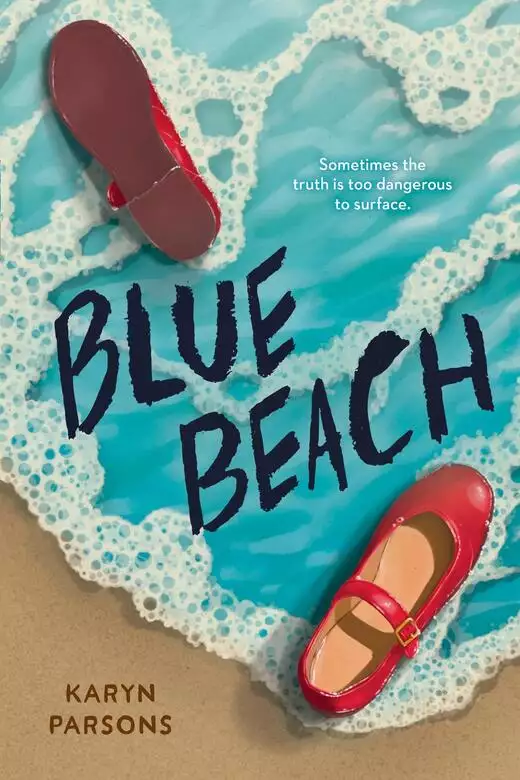
Perfect for fans of Promise Boys, this gripping historical mystery follows a teenager who finds a murdered girl on her family's California beach—a discovery that will reveal the racism rampant in her world.
Fifteen-year-old Blue Collins’s parents own the only Black beach in Santa Monica in 1929. She loves spending time there with her handsome friend Ben Clark. It’s a quiet spot where they can be alone and where Ben’s darker skin won’t be judged by onlookers—or Blue’s own family.
During a sunset rendezvous after a summer parade, the pair discovers the body of Dottie Whitehouse, a white debutante. Blue Beach is already threatened by local white property owners. Now their whole community could be at risk. In their panic, Blue and Ben move Dottie’s body into the waters of a nearby white beach.
Dottie’s body washes ashore, and it isn’t long before all eyes are on Ben. Everyone saw how Dottie teased him and how they shared smiles. And their history goes deeper than Blue ever realized. But to save Ben from the outraged white townspeople, she’ll need to do whatever she can to dig up the truth and prove his innocence. Ben isn’t the only one whose life depends on it.
Release date:
June 9, 2026
Publisher:
Little, Brown Books for Young Readers
Print pages:
304
* BingeBooks earns revenue from qualifying purchases as an Amazon Associate as well as from other retail partners.
The sun had dropped enough to cool the sands but wasn’t approaching dusk just yet. The day’s blue sky was shifting to gold, and with her pale eyes fixed skyward, the waning light warmed her blanched cheeks. A weave of knobby seaweed twisted through her apricot curls, then traveled down her limbs, wrapping her forearms like lace gloves. A Mary Jane shoe stayed fastened to her right foot, but her left shoe was gone, revealing matching scarlet toenails. Specks of sand freckled her cheeks and nose, mimicking a sun’s kiss that would never come. She lay perfectly still on the shore of Blue Beach, her body moving only as the tide rushed up and nudged her gently before rushing away again. A sand crab traveled across her hand, then burrowed itself into the wet shoreline. Seagulls dove for their dinner in the water beside her, but none disturbed her.
Summer had been her favorite season. While the winters were mild in Southern California and a heat wave could suddenly appear in fall or spring, it was only summer that signified “Beach Time.” Running barefoot on the sand, soaking in the sun, no school. Instead of being burdened by clothes that sealed her in with rows of buttons and by scratchy socks grazing her calves, she could wear flowy pajama pants or a tank swimsuit that allowed her shoulders to feel the sun.
And then there was the ocean. Diving under waves, bodysurfing. She was known to sometimes spend hours in the water, losing track of the time. Evenings at home would be spent in calamine lotion baths, attempting to soothe her sunburned skin. But it was always worth it. And a day at the beach wasn’t only full of fun and freedom; it calmed her. She would rest well after a day at the beach. Sleep like a baby.
But she wouldn’t know summer this year. There’d be no riding the waves on her belly, peeling skin, sandcastle contests, or snow cones. She’d only had the annual Poseidon’s Trident Parade commencing summer’s start. It had been festive and full of promise, but had ended hours earlier. The marching band and throngs of people were long gone now. Gone from Main Street. Gone from the side roads. Distant voices called the last of the children inside. For most, it was time for supper. Soon time for bed. Everyone had gone home. And everything had changed.
Some remnants of the parade remained strewn about. Red-and-blue kites crowded the gutters, candy wrappers littered the sidewalks, and confetti speckled the road like a birthday cake. One tissue-thin kite had ambled up the beach and come to rest in the crook of her arm, as though asking her to launch it skyward. To run with it until it caught wind and soared.
The sky was still golden, but dark was fast approaching without a single person on the sand as far as the eye could see. No one was coming for her. No one knew she lay here. On the edge of the shore, tangled in seaweed, missing a shoe.
I’m getting a pair of those.”
Even with the bevy of balloons, horns, and thrills of the annual Poseidon’s Trident Parade, all my cousin Rita could think about was clothes.
“They’re kind of flashy to me. Red?” I squinted again to get a better view of Dottie Whitehouse’s shiny shoes poking out from under layers of sea green tulle. Pastel squares of the fine net fabric traveled over Dottie’s hips and thighs, then narrowed at her knees and calves, making it look as if she had a long mermaid fin. She stood in front of a giant clamshell while a tiara teetered atop her strawberry blond waves. I guess she was supposed to be part mermaid, part Venus from that famous painting. With a basket of goodies under one arm, she flashed a megawatt smile and tossed handfuls of colorful hard candies and Hershey’s kisses into the crowd. Dottie’s float—a new one that everyone said had been created especially for her—was called “Queen of Summer.” By the time I could get a good look at her shoes, the float was already passing us by, and honestly, I really couldn’t care if they were red or purple, ankle-strapped or toeless. I went back to searching the crowd on the other side of the parade for Ben.
“Red is the whole point. It’s that surprise of color, you know? Everything else you got on is tasteful, sophisticated, and then wham! You hit ’em with the hot sauce!” Rita cackled.
“With the—? What?” I had to laugh. “You’re crazy, Rita!”
“I am, yes. But nobody dresses better!” She gave me a side wink and then motioned to the “Queen.” “Not even Snotty Dottie!”
Rita liked to pretend that fashion was just “fun” for her. A hobby. Nothing she gave much thought to. But the truth was Rita cared very much about her clothes and all matters of her appearance. She may have been the most headstrong woman I knew, opinionated and always ready to fight for what she wanted and to make sure things went her way, but she was consumed by what other people thought of her. Dressing well, who you were seen with—those were the things that mattered most to my cousin.
Clowns in floppy shoes and pointy hats cartwheeled, danced, and twirled members of the crowd round and round until they staggered. They left a trail of lollipops in their wake, and the kids dove into the street to snatch them up.
Where is Ben?
Rita must’ve seen me searching the crowd. “If you’re looking for that Ben Clark boy, just follow Miss Dottie. Seems he’s never far. I swear she’s got him and Jack wrapped so tightly around her finger.” She shook her head and cut her eyes at the Mermaid Queen. “I wouldn’t be surprised if she had a boy for every finger. Just for fun.”
I turned back to Dottie on her float, her pale green “scales” dancing in the wind. She was reveling in the moment, soaking up the admiring eyes, the smiles, and the shouts of adoration.
“She’s so pretty,” I heard several little girls, and women, in the crowd say.
Dottie threw back her head as if laughing at some imaginary joke and tossed candy to the crowd as if they’d supplied the punch line. Then she singled out someone in the crowd. Seemed to be playfully teasing them before tossing several candies directly into their hands. Into the hands of Ben. My Ben.
“I don’t know how you can be okay with that! The way she acts with him,” Rita snarled.
“What? C’mon! It’s not like he’s my boyfriend, Rita. We’re just friends,” I said. “Besides, it’s all her. He’s not doing anything.”
“White girl being all sweetie-sweet with a Negro boy? Girrlll!” Rita sucked her teeth. “You really are stupid if you think they’re just friends.”
“Anyone can see that it’s her. She’s a flirt. Everybody knows that.” Ben shoved something in his pocket, then stuffed a candy in his mouth. “He’s not doing anything.”
Dottie turned to the crowd on the other side of the procession. Her boyfriend, Jack Curtiss, was there. Raven-haired, with a chiseled jaw and imposing physique, Jack was a bit of a man-boy. He was known to be moody, serious, brooding. But as Dottie pelted him with candy from her float, he soon gave in to blushing and bashful grinning. Folks in the crowd joined in on the fun, grabbing the wrapped candies from their feet and tossing them at Jack. In no time, he was laughing like a schoolboy, grabbing handfuls of sweet treats and hurling them back at the Mermaid Queen.
“Well, no matter. He’d better watch out. Jack ain’t gonna stand for no Negro boy being sweet with his girl, even if she started it.” She shook her head. “Poor Jack. He shouldn’t have to deal with such nonsense. Troublemaker. Wandering eye. Whatever she is, he deserves better. Just look at him.” Rita let out a heavy sigh.
Dottie and Jack were going into their junior year at Lincoln High, both sixteen, like Rita. I was a year younger and would be a sophomore. And though Lincoln’s Negro schoolhouse was a separate building, it was still the same school. Even though we didn’t have classes together or socialize, in one way or another, we all knew each other.
Jack was still blushing as the float passed him by and he was left shoving treats into his pockets. With his cheeks bulging from candy, he raked a hand through his hair and did his best to return from giggly kid to mature young man.
“He’s sweet when he laughs,” Rita said. She seemed to be hypnotized by Jack.
I couldn’t help laughing. “Uh, I guess,” I said. “Got yourself a little crush?”
Rita’s head turned round sharp as a tree squirrel’s.
“What? Don’t be silly!” She leaned in closer to me. “Did I tell you I biked over to the mansion the other day?”
“You snoop! You’ll get caught!”
“Oh, so what?” She went on. “Don’t you know, I saw Dottie jumping out of the window onto the landing and then down to the grass like some feral cat! Sneaky, sneaky…”
“What? Why you wanna make up some crazy story like that?”
“Not crazy. I saw!” Rita turned to look at Jack again. “I was riding my bike by and, well, I felt compelled to stop and… Oh, that house is so gorgeous! Wide balconies, and you should see the flowers all along the grounds! Anyway, it was early morning, and I don’t know how long that hussy had been there.”
“Rita!” I chided.
“But girlfriend was sneaking out! Jumping out!” She laughed. “Wild one!”
Dottie seemed to have long forgotten her candy fight with Jack. Lost in her own world, she was smiling up at the sun. Eyes closed and basking in the day that seemed to be all hers.
“He shouldn’t be pouring his heart into a girl like that,” Rita said as she watched Jack move through the crowd and away from the parade altogether.
In the crush of bodies across the street, I found Ben again. I stared hard, hoping he’d feel my eyes burning into him. Look at me, Ben.
Rita caught me.
“I don’t know what you see in him, anyway,” she said. “He ain’t even cute.”
I feigned innocence.
“What? Oh, would you stop it? I told you we’re just friends,” I said. This time, when I looked back across the street and into the crowd, the most beautiful boy in all Santa Monica was looking directly at me. Ben.
My stomach went hollow, and I felt my cheeks flush. I did my best to tamp down the smile curling on my face. There was no way I could let Rita know how I felt about him. I knew he didn’t measure up to the kind of boy she thought I should be with. She’d do whatever she could to put an end to my seeing him.
Ben said he remembered me from all the way back in Mrs. Green’s third-grade class, but I don’t think I noticed him at all until last year. Even then, I didn’t pay him any mind until the first week of ninth grade. I’d been walking home from school with my friend Isabel, and after she’d turned off down Fourth and I’d headed straight for the beach and our bungalow there, I’d thought I heard footsteps behind me. I hadn’t thought anything of it at first, but after four more blocks, I’d gotten to worrying. Was someone following me?
I’d been just shy of our front steps when I’d whipped around and snapped before I’d even taken a look at him.
“You following me? You better think twice before you do. My daddy is in there, and he’ll come out and—”
“Whoa! Blue! Slow down!” Hearing him say my name had made me realize he was probably a schoolmate, and it was only then that I’d registered his face. “I ain’t following you!” He’d sucked his teeth and shook his head as he’d passed me on the beach walkway and slipped off his shoes. Watching him head down the sand toward the water, I felt my cheeks burn. I’d felt so stupid.
“Hey!” I’d called, but he hadn’t turned or looked back.
The next day at school, I’d spotted him as soon as I’d entered the classroom. Seated, with two of his buddies hovering over his desk, talking and laughing, he’d quickly turned his head when I’d walked in. I’d spent the whole morning trying to make eye contact, but he wouldn’t have it. Finally, at lunch, I’d approached him.
“Hey,” I’d said feebly. His buddies had cut their laughing short. Not knowing what to make of my sudden presence, they’d turned to Ben, who’d stared at the ground.
“Hey, yourself,” one of them had started, but then Ben had spoken up.
“Mike, Phil, I’ll meet you over at the grass, okay?” They’d nodded, nudged each other, and resumed their giggling as they’d stumbled off. Ben had finally looked up at me. “Yeah?”
He wasn’t going to give me an inch. It had been clear that I’d hurt him, accusing him of somehow looking to do me harm when all he’d wanted to do was enjoy the beach. With all the hassle he probably ran into on a regular basis from the white folks in town, he sure hadn’t needed me treating him like a criminal.
“Look. I’m sorry. I shouldn’t have accused you like that or spoken to you that way. I guess I must’ve got a little nervous or something. Nothing to do with you, just—”
“I’ve been going to Blue Beach since you guys opened it. Since I was little,” he’d said. Why hadn’t I remembered ever seeing him there? “But it’s okay. Thank you for saying all that.” He gave in to a small smile, and it was then that I first saw what warm eyes he had.
A couple of weeks later I’d been sitting on the back step of our bungalow, trying to cool my head after Rita had changed the buttons on a sweater of mine without asking me, when Ben had appeared on his way to the sand.
When he’d caught sight of me, I’d seen the hesitancy in his step. I think he’d considered changing directions but had realized it was too late for that. I had already seen him.
I’d sat up tall and waved.
“Hey, Ben!”
He’d nodded his chin toward me. “Hi,” he’d said, and maybe he hadn’t meant to, but he’d let himself smile.
At school, even with his buddies whispering and joking around, he always seemed focused on whatever assignment we were working on and deeply engaged in whatever the teacher was saying. There was a seriousness to his manner. But at the same time, a sense of calm. He wasn’t like any of the other boys I knew. Sure, he played ball and sometimes laughed uncontrollably with his friends, but there was more.
It’d seemed pretty clear that his time spent walking on the beach was his solitary time, that he enjoyed being alone with his thoughts. Not unlike lots of folks. But I’d thought I’d take a chance.
“Would you mind if I joined you?” I’d sprung to my feet but saw his smile fade a bit. “I promise not to be chatty or anything. I just could really use…” I’d gestured a hand toward our back door, but before I’d finished, he’d jumped in.
“Sure. That’d be nice.” He’d been smiling again.
We’d walked the length of Blue Beach, first comparing our childhood memories of the beach but soon talking about more serious things. I’d shared how having Rita around—loud, emotional, often disruptive to the entire household—made me feel the need to keep peace and order and not always speak up for myself at home. Ben had told me about his father. How he’d moved north to Allensworth to start a business. It had been on its way to doing well, and Ben and his mom had already started packing to join him when they’d gotten a call that there’d been an accident. Ben had said it was almost a full week before he’d understood that his father had died. It had been so sudden. Their packing had stopped. Relatives he didn’t know appeared. It had seemed as though there was always someone hugging him or telling him to go outside and play. All the excitement that had surrounded them in the weeks before had now been replaced by confusion and deep sadness. He’d been only six years old.
“People always ask me about my dad, but I just say he died a long time ago and leave it there.” He’d looked at his feet and laughed a little. “I don’t know why I told you all of that.”
“I like talking to you, too,” I’d said.
Once the sun had dipped into the sea, we’d turned back. I’d wrapped my arms tight around my body, the night’s chill sending goose bumps along the skin. I’d been able to see Ben holding himself, too. But cold as we’d been, I don’t think either of us had cared much.
As we’d approached my house, my mom had come out to the porch. She’d been wearing a starched apron and a tight-lipped smile. I’d seen that smile before. It was the one she wore when she disapproved of something.
“I was wondering what happened to you, young lady,” she’d said quickly, then had turned to Ben. “It’s late, you know.”
Ben had hesitated and looked to me, unsure of what to say.
“Oh, we just took a stroll down to the water. Watched the sunset. Did you see it? It was a beautiful one!” She’d nodded at me as I’d spoken, her eyes shooting over to Ben a couple of times. To his hair, his shoes in his hand. “Mom, this is Ben. He’s in my class.”
“Nice to meet you, Mrs. Collins,” Ben had said, taking a half step toward her.
Mom had flashed a bright smile. Lots of teeth but little feeling.
“And you as well,” she’d said. “Hurry in, Blue. I’ve already started dinner. Good night, Ben.”
Once inside, cheeks hot with embarrassment, I’d stammered on about how it hadn’t been that late, that Rita still hadn’t come in.
“I can see that you like him—” she’d started.
“I told you he’s . . .
We hope you are enjoying the book so far. To continue reading...

 Please log in to recommend or discuss...
