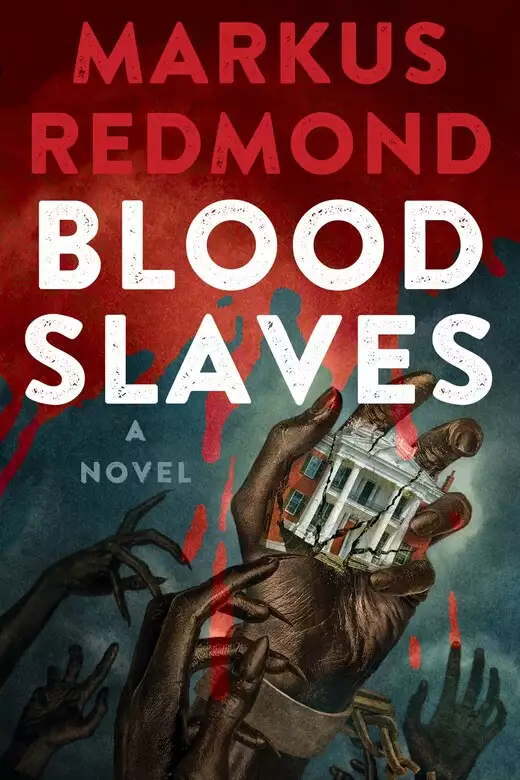
For readers of Victor LaValle, Tananarive Due, and Colson Whitehead’s The Underground Railroad, this ingenious reimagining of the vampire origin story set during the early days of American slavery blends alternate history with supernatural horror, as the last surviving member of an ancient African vampire tribe meets a slave desperate for freedom, and together, they lead an army of enslaved people in a cinematically blood-soaked battle for freedom and revenge.
What if nobody ever freed the slaves…because they freed themselves – 150 years before the Civil War?
In the Province of Carolina, 1710, freedom seems unattainable for Willie, for his beloved Gertie, and for their unborn child. They live, suffer, and toil under their brutal master, James “Big Jim” Barrow, whose grand plantation was built by the blood, sweat, and tears of the enslaved. To flee this hell on earth is be hunted and killed. Until one strange night Willie is offered a dark hope by Rafazi, an enigmatic slave with an irresistible and blood-chilling path to liberation.
Hailing from the Kingdom of Ghana, Rafazi is the lone survivor of the Ramanga, an African vampire tribe rendered nearly extinct by plague. Rafazi has roamed the world for centuries with an undying desire to replenish the power that once defined his heritage. In Willie, Rafazi has found his first biddable subject to be turned and to help in a hungry revolt. And Willie desires nothing more than to free his people from malicious bondage. Whatever it takes.
One by one, as an army of blood slaves thirsting for revenge is gathered, the headstrong Gertie fears that no good can come from the vampiric legacy that courses through Rafazi’s veins. Willie knows that only evil can fight evil. And when the woman he loves stands between the reemergence of the Ramanga and the justified slaughter of the oppressors, Willie must make an irreversible decision. Only one thing is certain: on the Barrow plantation, and beyond, blood will spill.
Part historical drama, part supernatural horror, and part alternate history, Blood Slaves is an ingenuous and defiant new creation myth of the vampire, one rooted in both justice and the sometimes-violent means necessary to achieve it.
Release date:
July 29, 2025
Publisher:
Kensington Books
Print pages:
400
* BingeBooks earns revenue from qualifying purchases as an Amazon Associate as well as from other retail partners.
Nothing was more delectable to his ears than the screams of terrified humans. Fear made blood rich with flavor.
And Rafazi was famished.
Through his red-tinted vision, he chased the fleeing people of the Ouahaza village. This was a favorite game of his kind: They would use their inhuman speed to whip the fear of their prey into a frenzy, blurring past them with the promise of violence before pouncing. It made the blood so much better when they finally fed.
Rafazi spotted a young man in the distance, running away with all his might. His filthy appearance told him the human farmed the land. The smell of his blood was intoxicating. Rafazi thrust himself forward, and within seconds, the farmhand’s throat was in his grasp. The young man screamed at Rafazi, and he laughed in delight. He knew he looked monstrous; his eyes glowed bright red, made even brighter by his engorged and extended brow. The veins in his dark face were transparent, making the blood coursing through them visible.
The man’s screams became whimpers when Rafazi opened his mouth, revealing it to be full of sharp, jagged teeth; the upper row framed by two longer, razor-sharp fangs. Rafazi dug the thick talons shooting out from the ends of his fingers into the sides of the farmhand’s neck, just enough to extract a sampling of blood. Rafazi ran his tongue across his talons, savoring the blood coating them, no longer listening to the farmhand’s screams.
Taking a moment to look across the village, now left in utter chaos by his brothers and sisters of the Blood, Rafazi reveled in what he’d become.
Four centuries ago, he’d been a small and broken man of fifty living in the Ukami village in the Kingdom of Nri, harvesting grapes for a callous winemaker who paid him meagerly. Then She changed everything. She was the most beautiful woman to ever bless his eyes. Her dark skin was rich and without blemish, Her hair lush and wild; Her voluptuousness took away his power of speech. He’d hardly believed it when She’d merely spoken to him.
She had been obviously wealthy and worldly, everything he wasn’t.
She was also dead.
Despite no longer drawing breath, She was far more alive than he’d ever been. Once the stunningly beautiful woman made him what She was, She left him in the care of others of their kind, then promptly disappeared. He would see Her every hundred years or so, whenever She felt a need. It was rumored She enjoyed spending time in the Kingdom of England, but he had no way of knowing for sure.
Regardless, he remained ever faithful in his devotion to Her, and rightfully so. Because of Her, the eternal power of the great Gamab’s blood, a greatness only Alkebulan’s divinity could provide, rushed through his veins. In death, She gave him life. She made him part of the Tribe, a community, a place of belonging.
Though the Kingdom of Ghana was the tribe’s home, they traveled far and wide into parts of Europa and even Anatolia. They pillaged and plundered their way through foreign lands, taking what they wanted and devouring anyone who tried to stop them. They experienced fine art, language, culture.
Above all else, however, was the congregation of power She made him a part of. In his former life, Rafazi was weak, stepped on, looked over. But his new tribe possessed power beyond human possibility. And now, so did he. Never again would he have to suffer humiliation or degradation at the hands of another.
He’d been reborn. He was free.
Some of the others in the tribe would grant the Blood to outsiders for the right amount of gold, but Rafazi never did. He never saw the point in creating responsibility for himself beyond the fulfillment of all his earthly desires for the price of forever feasting on the glory of blood. His bloodlust was his second master after Her.
Rafazi sank his teeth and fangs into the farmhand’s neck, and fresh, warm life entered his mouth. He gulped it down heartily.
So deeply engrossed was he in his own satiation, it took the rallying cry of one of his own to alert him to the danger upon them. Warriors brandishing blades of silver had charged into the village. Rafazi watched with trepidation as blood and blades flew. Having drained the farmhand he’d been feeding from, he discarded the body and backed away.
“A coward in life, a coward in death, eh, Rafazi?”
A surge passed through him at the sound of Her voice. He turned and blinked as though his eyes deceived him. The One who made him, the One he secretly pined after for centuries, stood before him, as beautiful as ever. Her skin, the deep rich color of brown scapolite, enthralled him now as much as it had at their first encounter, as did the red glow of Her eyes. He’d learned many languages in his travels—another perk of the Blood—including the one She spoke to him in now. He remembered Her telling him on Her last visit it was one of Her favorites.
“ While your brothers and sisters meet their doom, you run and hide,” She noted.
“No,” he said, racking his brain for an excuse his Maker would find pleasing. “I was . . .”
“You were worried for yourself. I made you, Rafazi. I know your blood. You cannot lie to me. And I have never faulted your selfish nature.” She paused. “But there is a plague coming.”
“A plague?” he scoffed. “ What plague can harm us? We are above human illness.”
“And yet their tainted blood poisons us. This is no mere fever, famine, or pestilence. I have never seen an affliction like it. Though death comes slowly for the humans who carry it, drinking from one who does leads us to our immediate destruction. Whosoever drinks from any human infected by it will be rendered into an immobile stupor, leaving the senses dulled and powerless against warriors wishing to separate our heads from our bodies. I fear it is a plague beyond this world’s making.”
“By what force?” Rafazi asked her.
“I do not know. It is beyond the power of man. It could be the work of the gods.”
“Are we not gods above men?”
“You fool! We have been granted this power by the gift of Gamab’s blood. Could it not be taken away if we are deemed unworthy of it?”
The distress in Her voice shook Rafazi to his core. Never had he seen Her as he did now: frightened and tainted by remorse.
“For century after century, we have exacted nothing but our own pleasure at the expense of our own ancestors,” She mused, even as battle cries filled the air behind them. “There is not one among us who was not born human, yet we devour our past and use mortal blood to sustain our future.”
“But this is the fate of our kind. Their blood is what sustains us,” Rafazi argued.
“We are but things of death stealing life. As I stole yours.”
“My life was no life.”
“And yet, it was yours, and I stole it away from you. I decided your fate. I did not have the right. This plague has come as a reminder: We are not gods, Rafazi. Still, so long as we exist, we must protect ourselves.”
“How? If we cannot feed, we cannot fight off their silver, and we will perish!”
“ Which is why you must instead partake of the beasts, as the humans do, to sustain yourself. It is rumored some infect themselves with the plague to prey upon us. You must alert your brothers and sisters not to drink from any human until this plague passes, and you must join their numbers in a display of fierceness, and strike fear in the hearts of those who continue to hunt us!”
Rafazi knew himself. With his inhuman strength and speed, avoiding silver blades was possible, so long as he had sufficient blood, and the best kind was human. Though he had battled against humans in the past, he did not prefer to. He was not one to lead others into war; and despite the remorse his Maker expressed for their nature in light of this plague, Rafazi was not ready to depart his existence.
As a human, he’d been terrified of death. Having survived it, he was even more determined to hold onto his existence, right or wrong. He was still haunted by the short moments of black he was engulfed in before being reborn, and he’d vowed never to see such darkness ever again.
He reveled in the velvety softness of Her hand against his cheek and closed his eyes in rapture as She drew closer. His lips parted and quivered with his desire for Her. He desperately wanted to hold Her, kiss Her, but he didn’t dare.
“ Tell them,” She whispered. “Perhaps there is a way our might can serve this earth, but only if we survive, by the blood of Gamab.”
“By the blood of Gamab,” he whispered back, but he could already feel the wind from Her blur speeding away. “Jenue,” he breathed devotedly as She disappeared.
A guttural scream turned his attention back to the battle, where Rotina, the leader of their tribal band, was ripping the head off a warrior who had slashed her with his blade. As the other warriors came for her, she flipped the head she held and cradled it against her as she sprouted large, fleshy red wings from her back. Her wingspan was so great the warriors were sent to the ground when she flapped them and rose into the air, causing them to cry out in terror.
Rafazi saw her grimace in pain from the gaping gash in her side, but Rotina was the eldest and strongest among them. Had she not been able to escape the pursuing blades, she would have been done for, but once she could ingest the blood from the warrior’s head she carried, she would heal and lay waste to them all. Once the battle was over, he would share his Maker’s news with Rotina.
She would know what to do.
Rotina suddenly seized up in midair, and the head she’d been drinking from tumbled from her grasp. Her wings flailed wildly, and her red eyes went black before her head slumped, and she stopped moving. Stiff and lifeless, she slammed to the earth below. The warriors rushed to her, slicing her to pieces with their blades. He now knew the warriors’ blood carried the plague.
Rafazi reared back in horror as others of his tribe who were feeding on both the villagers and warriors succumbed to a similar fate, right before being decapitated. There was nothing left for him to do but save himself.
If he could.
There was no way to know if the farmhand was infected. Stricken with dread, Rafazi used the speed of his blur to disappear into the night.
IN THE FOLLOWING MONTHS, more and more of his brethren and sistren fell victim to those afflicted with the plague and the warriors who came afterward. Rafazi abandoned his tribe, choosing to pass for human. He fashioned a beige, thick flax fiber cloak, stitching plates of metal in it to protect him from the deadly rays of the sun.
With the plague spreading, no human blood was safe, and he grew weaker. The temptation of blood was too great to stay among the humans for long, so he took refuge underground, feeding on whatever creatures he could find to sustain himself, but it was never enough. Whenever he surfaced, it seemed warriors weren’t far behind.
Without being able to replenish his strength to fight back, Rafazi fled to the sea, swimming as far as the Isle of Fogo to bury himself. The molten rock flowing underneath the island’s surface threatened to end his existence, and he contemplated letting it before the desperate need for survival overtook him, and he swam back to the mainland.
For the next three centuries he remained on the move, growing weaker with each passing year, becoming a shell of the being he once was, surfacing in the wilderness at night to search for the blood of lesser beasts, then retreating below the earth’s surface before the rise of the sun. He received no visit from his Maker and presumed Her dead, as he did all his kind.
She had been right. They were paying for their hubris. He was truly alone in the world now, with no knowledge of whether the plague still cursed the living. But in its absence, human blood ruled his every thought.
One day, a rumbling above piqued his curiosity, and he could hear screams, both of fright and anger. The scent of horses was abnormally strong, as was the odor of blood—so much blood.
Human blood.
Rafazi’s eyes flashed red with hunger, and sensing night ’s fall, he surfaced, unable to resist the pull of what he had denied himself for so long and was, finally, ready to perish for the taste of. The power once seen in faces like his own was replaced with fear of the enraged pale faces he saw ransacking the village he stumbled upon. The pale-faced men were rounding up the villagers, putting them in chains, and setting huts on fire.
Those who fought back were met with swords, wasting their life blood to water the land they called home. Rafazi rolled out of the path of a charging horse, clutching his cloak closely in fear as he tumbled. He was weak and delirious with hunger. And though the living before him seemed healthy enough, so had the humans he had watched his kind feed from before their tainted blood sent his brothers and sisters to their doom.
“I found another over here!” A man with pale skin sat atop the charging horse, which now hovered over Rafazi as the man called out to his companions. Rafazi knew his blur would be no match against the horses the pale-faced men rode. Having grown too weak to hunt larger animals, his diet had consisted of insects and rodents for years.
He was quickly surrounded and pulled to his feet by a band of raiders in red coats who locked his wrists in iron cuffs. He so desperately wanted to plunge his teeth and fangs into any one of them, but he was outnumbered. He was sure doing so would result in lethal retaliation.
“Thought you could hide from us, did you?” one of the pale-skinned men remarked before shoving Rafazi face-first into the dirt.
“If he’s too feeble to walk, he’s too feeble to work,” Rafazi heard the man on the horse say. Looking over his shoulder, he found the barrel of a miniature cannon pointed at him. It was unlike anything he’d ever seen, but he was well aware of his weak state and his will to remain in existence. So, slowly, he pushed himself to his feet.
“I can walk,” he said, taking in the shock spreading across the pale men’s faces.
“ Where did you learn to speak our language?” one of them asked.
“I have traveled.” His simple response elicited a round of hearty laughter from the men as they pulled him toward other chained prisoners.
“Well then, you’re about to do a lot more.”
They ran for their lives. Their legs ached, their chests heaved, and their lungs burned, but they pressed on.
“C’mon, Willie! We ain’t gots much longer now!”
Willie pushed his brawny frame forward, the sweat on his brow proof of his effort, but still he lagged behind Charlie’s longer, leaner physique.
“Y ’done say that two times! I’s runnin’ fast as my legs’ll carry me!” Willie panted, pushing himself harder to catch up.
Willie and Charlie. These were not the names either man was born with, but the monikers they were assigned because their white captors were unwilling to pronounce their real names. They were the names they had met each other by on the Barrow Plantation where Willie had been enslaved for the past seven years. Charlie had been traded to the plantation last year. Willie had heard the whispers about Charlie’s past: his capture after trying to escape the last plantation he was on, his obstinate attitude, his tendency to fake illnesses to avoid work, his murmurings of running away.
Charlie was, in many ways, Willie’s opposite.
Willie had been a slave for eighteen years, two years longer than he had been free and more than half his life. He knew of the severe punishments reserved for those who tried to flee.
Unlike Charlie, Willie did his best not to provoke the overseers of the Barrow Plantation, but his efforts to keep quiet and productive did not stop the Barrow Plantation’s chief overseer, Monroe, from tormenting Willie every chance he got.
Enduring cruelty was a reality of life for Willie. But when Monroe had grabbed Willie’s basket of rice stalks, tossed them across the wet paddy, declared he hadn’t met his daily harvest requirement, and used the falsehood as justification to punch him repeatedly while the other overseers held him down, Willie started listening to Charlie’s whispers.
“ We’s can be free,” Charlie had breathed in Willie’s ear as the slaves shuffled off the rice paddy after the incident. “You think these whip-crackers care ’bout ol’ meek Willie? ‘He work so good and don’t kick up no fuss,’ but what good it done you? You ain’t gonna win. Ain’t none of us gonna win. You gots to take freedom, Willie. Ain’t nobody gonna gives it to you. I say, gives me freedom or gives me death!”
Freedom. What had been a way of life for Willie in his younger years was now something he ran through the wilderness in the dead of night for as an adult. As if he were stealing it instead of it having been stolen from him. For a brief moment, under the light of the moon and stars, Willie felt as if he were a boy again, running wild in the night with the other boys to see who among them was the fastest. The urgency in Charlie’s voice, however, reminded him of the greater purpose of this run. As did the ache in his expanding lungs with each step forward he took, fighting to keep pace with Charlie.
“Don’t stop, Willie!” Charlie called back. “ We’s cain’t stop! We’s gots to get past them red oak trees up yonder, and we’s home free!”
Willie’s nose scrunched up from the pungent smell of red oak hanging in the air. The path to sweet freedom was through the sour odor of those trees. The irony was not lost on him. It seemed somehow fitting.
“What gonna be waitin’ for us up North? If we ain’t nothin’ but niggers down here, what we’s gonna be up there?”
An all too familiar sound echoed through the night air, stopping both men cold.
“Bloodhounds!” Willie hissed as quietly as he could. The vicious barking of multiple dogs was getting closer. “We’s gonna get caught! I knows it!”
“No, we’s ain’t!”
Willie and Charlie darted through the woods at top speed. Willie ran with a specific desperation, one he felt in his veins. It was the same desperation that had surged through his being when he ran toward his burning home in his native village in the Kingdom of Ghana, intent on rescuing his mother and sister. The same desperation he had felt burning through him when he was stopped short of reaching them by the white raiders who pulled him farther and farther away from them. The same desperation in his father’s eyes before they widened in death as a ruthless raider’s blade entered his back and pierced through his chest, drenching his agya in blood.
The fast clomps of horse hooves stomping through the woods joined the evil cacophony of the barking bloodhounds. Willie fell farther behind Charlie as they plunged deeper into the wilderness.
“ We’s done for, Charlie,” Willie whined breathlessly. “We’s cain’t outrun no steeds! If ’n we go back now and . . .”
“You hush up with that go back talk!” Charlie cried out. “I ain’t never goin’ back! Keep goin’, Willie! We’s gonna make it! Don’t stop!”
Charlie swerved to the right. A bloodhound broke from the pack and chased after him.
“Charlie!” Willie hollered.
A second bloodhound leapt onto Charlie’s back, tackling him to the muddy earth, its jaws snapping ferociously. The pack moved in, and within moments, the mud turned red as the dogs feasted on the slave.
Willie had heard of slaves having their toes cut off for running—or worse, of slaves disappearing in the middle of the night, never to be heard from again—while the overseers congratulated themselves for “teachin’ that nigger a lesson.” He’d seen the wounds and welts of those who had been savagely beaten within inches of their lives for trying to run. But he had never, with his own eyes, witnessed the brutality these dogs were commanded to perpetrate on one human being by another.
Charlie’s screams were reduced to horrifying gurgles as the bloodhounds ate the life from him. Willie’s knees wobbled, and the sick in his stomach built as one of the bloodhounds turned to him, snarling, its snout reddened by Charlie’s blood.
Willie forced his legs forward again, and the hound chased after him, its barks ringing in his ears. His heart was beating so hard and fast in his chest it pained him, but his fear fueled him.
And then a sharp whistle cut through the air.
Willie skidded to a stop in the dirt as Monroe Washington, the chief overseer of the Barrow Plantation, angled his horse in front of him, blocking his path. The slight white man with his thinning brown hair sneered down at Willie with a face full of angry wrinkles. His cheek bulged with his ever-present ball of chewing tobacco in his mouth, and his lips and chin were stained with residue from years of constant spittle. His vengeful face was the one Willie saw more than any other, but still he winced at the sight of the man. The abruptness of stopping, mixed with the fear pulsating through him, caused Willie to double over and empty his stomach.
“Aw, now! That ain’t no way to greet me, boy!” Monroe raised his foot and kicked Willie in the face. Willie fell to the ground hard, cradling his bloodied nose as four other horses, all ridden by field overseers from the plantation, encircled him.
“Well, well, well. ” The words slithered lazily from Monroe’s lips. “Did y’all decide to go out for a midnight stroll?” Monroe spat a glob of brown spittle into Willie’s eye while the other overseers laughed. Monroe smiled at Willie’s humiliation as the slave attempted to wipe away the spittle but was stopped by a whip lashing across his chest. Willie looked up to find the handle of a leather whip in Monroe’s hand.
“Don’t you wipe it away,” the chief overseer barked. “Hell, dark as you is, ain’t like you can see it!” Monroe cackled, and the other overseers followed suit. “I’m a might surprised to find you out here, Willie boy. Ain’t like you to be ornery like this one here.”
Willie ran the tips of his fingers along the fresh welt forming across his chest and winced from the pain. Charlie’s gurgling could no longer be heard, and Willie’s vision blurred with tears.
“Don’t you start cryin’ yet, nigger,” Monroe taunted him. “I ain’t even got started. Tie him up!”
Two of the overseers quickly dismounted and moved toward Willie, who, in his desperation, leapt to his feet and made a break for it. The overseers were right on his heels and tackled the slave to the wet earth, punching and kicking him before one planted his knee on the back of Willie’s neck, forcing his face into the muddy ground. Willie worked his face back and forth in the mud, struggling to find an air passage while the other overseer tied his wrists behind his back.
“It ’s your lucky night, boy,” Willie heard Monroe say as rough hands yanked him to his feet by a tuft of his hair. The foul stench of Monroe’s tobacco filled Willie’s nostrils, and his stomach churned again. “Your master wants you alive, unlike your buddy there. Now, let’s pay last respects.”
Monroe dismounted from his horse and yanked Willie toward Charlie’s remains as the bloodhounds, their mission accomplished, circled the leftovers of their meal. Willie struggled against Monroe’s grip, and the overseer pulled a second weapon from his waistband in response, a flintlock pistol sword—a simple hand pistol with a long, thick, sharp blade attached at the bottom of its barrel. With one hand clasped around the back of Willie’s neck, Monroe placed the blade at Willie’s throat, paralyzing the slave where he stood.
“Now you quit all that fussin’ and fightin’, or you’re liable to get yourself cut somethin’ awful,” Monroe hissed in Willie’s ear. “You gonna stand there like a good lil’ nigger’s s’posed to and look at your dumb, dead nigger friend, so’s it can be a lesson to you ’bout what happens when you decide to go stealin’ what ain’t yours.”
In a simple, involuntary act of defiance, Willie shut his eyes.
“Open up them eyes of yours, boy!” Willie heard Monroe’s words a second before pain rang through his head as the overseer bashed him in the temple with the butt of his pistol. Willie heard the hammer of the gun click. “I said, open ’em!” The threat of Monroe’s demand opened Willie’s eyes, forcing him to bear witness to the carnage of Charlie’s body.
Willie trembled at the sight: Charlie’s dead eyes were open wide with terror from the attack. His body was ripped and mangled, the work of the bloodhounds that even now continued to tear lazily at Charlie’s dead flesh.
Willie’s eyes burned, but there was something else beginning to rumble inside him, something he hadn’t felt since he was torn from his family nearly two decades ago.
“Well, boys, looks like we ain’t gotta feed the dogs tonight!” The overseers once again laughed at Monroe’s words while Willie’s whole body shuddered. “ Well, go on,” Monroe told Willie. “Pay your respects.”
What was there to say? This man, Charlie, who wanted nothing more than to live his own life, no longer had one.
“Nothin’?” Monroe snickered. “Fine. I’ ll go. Here lies one dead nigger.” Monroe spat tobacco residue onto Charlie’s corpse. “Good riddance.” The overseer turned to Willie again. “Now, I know you niggers is savage and can’t understand this, but civilized folk pay last respects to their fallen. I’m givin’ you one last chance to be civilized.” Willie’s jaw tightened, but he felt the rumbling inside him swell. “No?” Monroe asked. “All right, but don’t say I ain’t give you the chance. Tie his black ass up behind me,” Monroe instructed the overseers as he walked to his horse. “It’s time to take him back and teach him a lesson of his own. Ain’t nothin’ better than beatin’ a good nigger gone bad.”
Willie took one last look at Charlie. “You free now,” he muttered under his breath to the dead man as the overseers pulled him away. Willie felt his inner being detach. His childhood had been filled with men and women of strength and vigor, dignity, and grace. They were people he had looked up to, who looked like him. Never did he imagine he would see those proud people suffer such atrocities at the hands of Europeans, nor did he think others of their own kind would aid in this heinous endeavor.
Looking back at Charlie’s corpse, Willie imagined what the man’s life would have been if he had never been brought to the shores of this New World. What would have become of Charlie had none of this ever happened? He wondered if there would have been more dignity in Charlie’s death.
As the overseers tied him to the back of Monroe’s horse, Willie could only look back over his shoulder at Charlie, left for dead in the woods without a second thought. Willie’s breath came faster, and the rumbling within him continued to grow. His fists clenched as his thoughts flashed back to watching his family die in his native village.
But it was of no matter.
In this world, Willie’s thoughts didn’t count for a damn thing.
James Barrow walked through the grand foyer of Barrow Manor with his twelve-year-old son Thomas in the wee hours. While young Thomas was yawning and rubbing his eyes as he tried to keep step with his father, all six feet, three inches, and three hundred and fifteen pounds of Big Jim—as he liked to be called—was alert as he marveled at the magnificence of his home.
Barrow Manor was the premier symbol of James Barrow’s wealth and was as well-known throughout the Carolina Province as the Governor’s Palace, partly because of the entertaining the mistress of the house, Big Jim’s wife, Charity Barrow, liked to do.
But even she was unaware of the full grandeur of Barrow Manor. She, like anyone privileged enough to have stepped within its walls, knew of the manor’s pure calcite marble flooring tiles from Italy, the curved double staircase in the entryway inspired by palaces Big Jim had seen in France, and the pearl-white façade that seduced the eyes of all who looked upon on it. But what few knew of was the maze of hidden walkways leading to hidden rooms behind the walls. They got little use, but Big Jim liked knowing they were there, savoring the fact. . .
We hope you are enjoying the book so far. To continue reading...

 Please log in to recommend or discuss...
