*As featured as an editor's pick on Radio Four's OPEN BOOK*
*One of the Guardian's books to look out for in 2024* "An immersive feminist novel that meshes the personal and political to moving effect" Preti Taneja, Financial Times
"A brilliant novel of the Palestinian diaspora. Funny and gritty, and bursting with life and humour" Ahdaf Soueif, Guardian
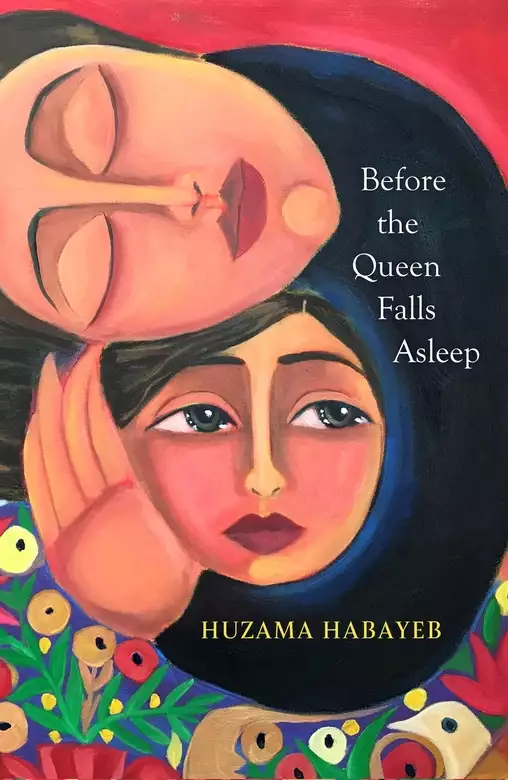
Born a girl to parents who expected a boy, Jihad grows up treated like the eldest son, wearing boy's clothing and sharing the financial burden of head of the household with her father.
Now middle-aged, each night Jihad tells her daughter a story from her life. As Maleka prepares to leave home to attend university abroad, her mother revisits the past of their Palestinian family, tenderly describing their life in exile in Kuwait and her own experiences of love and loss as she grows up.
Huzama Habayeb weaves a richly observed and affectionate portrait of a Palestinian family displaced from their homeland, exploring with humour and poise the love and betrayal that pursues Jihad and her family from Kuwait to Jordan to Dubai. This is a novel whose words will resound long after you finish the final page.
Translated from the Arabic by Kay Heikkinen
Release date:
March 28, 2024
Publisher:
Quercus Publishing
Print pages:
288
* BingeBooks earns revenue from qualifying purchases as an Amazon Associate as well as from other retail partners.
I had not thought that your second departure would be very hard on me, intolerably harder than the first. I had not anticipated that it would bring me so much sadness, that it would sicken my body and trample my insecure existence with a heavy, negligent tread, that it would cut so deeply into my spirit. After all, I had prepared myself for your departure, that self that incites to harshness and ostensible callousness, by inventing quarrels and bickering during the last few days before you left – quarrels of the kind that harbour mounting intensity arising from nothing, absurd, painful rudeness, and unjustified flares of rage. Quarrels that are a rebuke to the self, to my own self, a deepening evocation of pain in the heart, in my heart, loaded already with many times more than its capacity to comprehend absence. As usual before a difficult departure, I unloaded my accumulated wrath with the world on you, pouring out my resentment of the intransigent arrangements of life onto your own arrangements, which you wanted to keep far from my own. I struggled to love you less, but all I could do was to love you more.
“I hate you.” You said that to me in a voice that tattled anger, your eyes shooting out burning rage.
“I love you.” I whispered it in my heart, covering my face with both trembling hands so I would not see you while you hated me.
Then you said, “I hate you, I hate you, I hate you!” grinding your feelings and gnashing your teeth – those very teeth that had made me drag you to the dentist two days before you left, so he could clean the plaque from their roots, after I had scolded you for not taking good enough care of them. Then I closed my ears so that my troubled spirit would not be able to hear “I hate you” repeated three times, emphasised by the eruption of your young body, still childishly disdaining all rules of adult nutrition.
At your first departure, I shed burning tears for an absence I had not yet experienced or prepared for, one likely to bring yearning yet unknown. “It’s only a few months and I’ll be back with you,” you said, struggling with a tear stuck at the edge of your eye. When my sobs became audible, mixing with airport announcements asking travellers to make their way to their flights, you hugged me, becoming a youthful mother. You borrowed my clinging arms and impressed your body on mine, your body bored and hurrying to slip away from my embrace, mine worn out from weeks of preparation for your departure. You spoke with a smile that held some disapproval of my weeping, which embarrassed you amid all the people in the airport, who enjoyed the dramatic scene of the touching farewell: “I’m going to study, I’m not going to war!” Then, when you succeeded in freeing yourself from me and passed through passport control, you half turned and from afar gave me a look that crushed my spirit for days to come. You were afraid, really afraid. But the childish pride dormant within you, so gentle secretly but outwardly rebellious, kept you from saying, “I’m scared.”
At your second departure, I wept hotly for absence I had experienced, absence that delighted in its deed as it distanced itself, not looking back, striking to the depths of life, of bodies, of souls yearning to meet, absence rooted in the routine. It was not yet routine for me. Its obdurate and probable unrequited yearning seemed improbable to me and unbearable, utterly improbable and un-bearable. I swallowed the sobs rising urgently from the heap of bitterness accumulated in the valley of my soul. I strangled them before they reached my throat, which I constricted violently. But I could not strangle my tears. They flowed densely and slowly, thick and freighted with sadness unrelieved by any hint of joy, sadness of the kind that turns into a permanent condition of daily life. We were in the same airport; perhaps we met the same faces as before, though neither they nor we remained in the other’s memory. For airports are repositories of absences and passing lives; meetings and embraces in them are only temporary victories or the reflections of recorded defeats, since there is no true, stable victory other than departure. What grieved me was that your face turned less towards me and more towards passport control. When my tears would not stop flowing you shot me the reproachful look of a child who has grown up a little, saying with a touch of toughness, “It’s only a year and I’ll be back with you.” How can the trip stretch out longer, and yet the thought of it still seem reasonable and less painful? It’s not because the first departure was less anguished, but because the second, with its proposed absence of a year, could be expected to be the norm. Does one trip pave the way for another? Do we practise on a shorter trip so we can bear a longer one? Or do we become professionals at leaving and travelling, as we have become professionals at living in cities that are not ours, in homelands that belong to others and that spit us out when they tire of us? Have I ever told you how much it angers me to come across the phrase “The time has come to leave” in wretched, meaningless writings? As if leaving is assumed to have a time. Leaving, little one, for people like us, for people who are hereditary refugees like us, spans our lifetime, and it may even overflow our lives and go beyond them.
I wanted to keep you as long as possible in the ambiguous space for leave-takings in the airport, while you wanted to disappear quickly into the distance. You were listening more to the announcements urging travellers to head for their flights than you were to my advice, repeated for the millionth time. You weren’t listening to my disjointed, breathless, disorganised phrases, which fell from me and scattered in every direction on the floor while I futilely tried to gather them and put them in order. My words during the very last moment before your departure were not intended for their content so much as they were to cover an imminent collapse that was stealing into my joints and gnawing at them with increasing speed. I did not collapse, however. I believe the reason was related to my broad experience in enticing sadness and having compassion for it, related to being accustomed to living in its frustrating, demoralising climate. My feet carried me to the scene of the expected parting at passport control. “Don’t cry!” you said to me; “I won’t,” I replied, nodding, but the tears did not listen to you. “I love you,” you said, embracing me quickly. “I love you more,” I said, trying to prolong the embrace. You moved away. I waited for a look from you, by which you would sign the painting of your second departure as you had the first. But you did not turn around, you did not send me so much as a glance I could lean on during days at odds with each other, as sunrises with sunsets. To console myself for the fact that you did not look back (unintentionally, as I hoped), I tried to convince myself that like Majnun’s beloved Laila, “your tears flowed only from afar”.
When I got home I closed the door and turned the key twice in the lock. Then I leaned my back on the door and gave my soul over to collapse.
I collide with your smell, playfully present in the house. I listen to your talk that does not want to end, then suddenly you disappear, just as you used to alternate between appearing and disappearing when we talked in the kitchen while you made me a cup of tea with mint. I would be looking for something in a kitchen cabinet, and when I raised my eyes I would not find you; only the tail-end of your endless talk would be clinging to the tea bag plunged in hot water, coloured by the radiant green of the mint leaves. Then I would hear a voice or what seemed like a group of emotional, entangled voices. I would imagine that you were conversing intimately with your leaping imagination. You don’t know that I observed you at times during the manifestations of your sudden disappearance in the middle of our talk. Once it was as if you were speaking to someone in the empty space before you, then your eyes darted and your head lifted as if you heard a story you had yearned for, or had stumbled on a great discovery. You turned in a circle, trying to embrace the surprise that had struck you, so that it would not strike any being other than your own. Once you stood at the window of your room, inclining your head to one side, humming a song whose echoes slumbered within you, like an old woman cautiously, selectively spooning out her secret memories.
I put my hand on my cheek. “You forgot your favourite cork sandals,” I say to myself. The remains of a drink stagnate in a glass standing on the edge of your desk; you’ve become addicted to iced peach tea. Your little silver earring lies abandoned on the computer table. You’ve hated earrings ever since you were little, and now that you’re older (though not very old), you still resist adding any adjustments or embellishments to your clean look. Your fresh, girlish form refrains from any artificial luxury, refuses the cosmetic lies of adults. Even now there is a struggle when Evie, the Indian woman skilled in hair removal, places you in the beauty salon chair to shape your eyebrows, left in their natural state. You used to kick and rebel, unleashing a torrent of Arabic invective, drawn from the dictionary of childish anger, at poor Evie: “Damn her father, inshallah she’ll die!” Evie would laugh, sensing your rebellion, then put her hands around your lovely face, reddened from fury and the pain of plucking the small, sensitive hairs. I bought you pink lipsticks and others that were transparent and shiny, just to protect your lips that cracked quickly in the dry air, or to add a touch of colour and shine to them; but you did not use them, leaving them to dry out. I bought you a hairdryer and two styling brushes, but you let your hair dry in the open air after washing it. If your hair rebelled and raged, you tied it all uncombed in a wild ponytail, or twisted it quickly into a braid that was neither in the middle nor on the side. I bought you hair clasps, slides, coloured ribbons, and small combs studded with beads and crystal stones; you filled your drawers with them and made do with black metal hairpins, pinning your hair back any which way, for you would never allow a single stray lock to impede your eyes as they advanced slowly over a painting by Frida Kahlo, from a volume of her work that you refused to lend even to me, or while you savoured the flavour of a work by Andy Warhol in the huge, daring volume I had given you for your eighteenth birthday.
You had not hidden your desire to own the book, that enormous volume bearing the title The Giant, gaily acknowledging that it was nearly half as tall as you were and half as heavy. I had sneaked back to the bookshop in the market one evening without your knowledge; I was frightened both by the size of The Giant and by its price. I returned home weighed down by it, and put it on your bed while you were in the bathroom. I expected you to be surprised by it. I expected that you would shout, as you usually did when something unusual in life, in your view, surprised you with joy. You entered your room; I stood outside. There was a moment of silence, and then a cry flew from you that pierced the very ears of the sky. You ran towards me, leaping, spreading your happy being all around me. You were joyful in a way I had never before read in your eyes or your body. You picked up the huge volume and clasped it to you. It was too heavy and you fell over on your back, with the giant weighing down your chest and covering you. You laughed, you laughed a lot, and long, and loudly; you laughed until you choked. At that moment I hated my life less. And only at that moment, I loved my life more.
I enter the kitchen, smelling something scorched in the heavy, enclosed air. You had eaten your last grilled cheese sandwich before you left. I scrape off the remains of the burnt bread and the melted cheese from the toaster. How many times have you forgotten your sandwich, leaving me to rush towards the odour of burning bread and melting cheese, while you were absorbed in some beautiful or exotic scene on YouTube, or in a pirated version of Vittorio De Sica’s film Bicycle Thieves on some Internet site, or in the translation of lyrics by Jean Ferrat, at the request of Friends of Poetry on Facebook. I pick up the remains of your “crime”, which you’ve left in the toaster, and spread them in front of you. “Look at that!” I say to you. “Look at that!” you say to me, pointing to a web page showing a black-and-white picture of Bobby Sands. With the ardour of a believer who has just found the superior qualities of a new religion, you talk about the Irish resistance fighter and leader of the hunger strike movement in 1981. After the strike had gone on for sixty-six days, Sands died of grief, injustice, and emaciation, at twenty-seven years of age. You open your eyes wide, as wide as the horizon, as you describe the popular anger aroused by Sands’s death, as if you had been part of that anger. I ask you about the burnt sandwich, and you join the thousands of Chilean activists who were taken early on the morning of the military coup against the elected president, Salvador Allende, and brought to the Stadium of Chile in Santiago in 1973. The Chilean singer and poet Victor Jara was among them. In tones of mourning unaffected by the passage of time, you say, “They beat him, tortured him, and crushed his hands, which had played the most beautiful songs on his guitar.” From the heart of the events, which your spirit has lived through moment by moment, you tell me how his torturers mocked him, asking him to play his guitar when he was stretched out on the ground, and how Jara challenged them by singing part of “We Shall Overcome”. In the end, they fired all the rounds of their machine guns into his body and threw the corpse into the street. You read me part of a poem Jara wrote just before his execution, writing it on a scrap of paper he hid in the shoe of a friend who had been with him in the humiliating march to the stadium. Hope retreats from your voice as you enter the seasons of black sadness. Then you claim that something has got into your eye, as you rub it and keep the tear you’ve hidden from falling.
“And the scorched sandwich?” I ask, irritably.
“So what? Is it the end of the world?”
I talk to you about the mistakes of revolutions; you talk to me about the crimes of regimes. I warn you about embracing puritanical ideas that cannot be shaded, and you warn me about wearing shades that don’t suit me. “Fine! What do you think of this shirt on me? Is it pretty?” You shake your head, unconcerned. Here I must admit that you lead me more than I lead you. You pull me out of the dictates of my reality, to which I’ve submitted, and return me to the age of dazzling dreams, if only for a time. For days and weeks I surfed the net to find the song “El Aparecido”, in all the versions available. The one I liked best is the one sung by Victor Jara; I downloaded it from YouTube, accompanied by an album of pictures of Che Guevara from the era of his quixotic rebellion, from the dream to the nightmare, ending as the song finished with a picture of him shrouded on a stretcher after his execution, giving his torturers the exact same look as had Christ from the cross. I wept for him with a broken heart, as if he had died yesterday.
You don’t like crying, at least not in front of me. If tears should overcome you, you take refuge in the nearest shadows to conceal them. But you don’t know that I see you. I can make out the water in your eyes about to spill onto your face, I sense your tears wanting to speak while you silence them. You mock me, the weeper, with my appetite for tears at any and all times. I weep over a song with an anguished melody, without understanding the lyrics. I weep over a film, even if it has a happy ending. I weep for a worker washing cars, his face burnt from the embrace of God’s own dispassionate sun, eyes yellowed from successive hardships in an extremely rich emirate. I weep over an old man in his sixties with one leg and a worn crutch, dressed in camouflage pants left over from bygone military service, selling lighters and cheap packets of tissues and balloons in the shape of rabbits that don’t hop and birds that don’t fly, at a traffic light in a kingdom that houses all the contradictions on earth. I weep for a little boy who has spread a display in front of him on the pavement, offering keyrings and cheap leather wallets and fake Ray-Ban sunglasses, while he leans his shoulders against the wall of a mosque and lets his head hang down like a heavy fruit on a thin branch, in a city that has deviated from any rational historical context, where a handful of cursed people are crammed into a cramped life. I imagine this little one dreaming that he’s sleeping in a bed, covered by a blanket with pictures of cartoon characters, in a room overflowing with stuffed animals. I cry over him and over the dream I have imagined for him. I weep over a woman standing in line at some bakery in Cairo, who calls to witness the correspondent of one of the droning satellite news stations, in a rush to move on to someone else, showing him the few loaves of bread she has bought at last, after waiting for six hours – loaves from which the embezzling baker has stolen the subsidised flour, the water, and the flavour. “Who can put up with that, O Lord!” The woman’s face indicates that she’s from one of the dingy quarters of Cairo. She knocks the loaves of bread together like dry firewood, then she asks pardon of her Lord, in spite of herself, fearing that her ingratitude for the blessing will lead to some harm for the heap of hungry kids waiting at home. Lifting her face to the sky, she says, “There is no power or strength save in God alone! May God repay the cheater!” I weep over the remains of cheap sandals tossed heedlessly in a market in Baghdad, after their owners have been blown to smithereens in a daily explosion. I weep over images from the serialised drama of our massacres, with multiple episodes and seasons. I gather them in private collections that I return to more than to the family albums. Perhaps I’m unconsciously waiting for a massacre reinforced by accompanying images that are models of disfigurement and repugnance, a massacre I’m anticipating and rushing, so I can add it to my accumulated archives of weeping.
When the massacre of “Operation Cast Lead” fell on terrified bodies in Gaza, I was beset especially by the images of the children who were killed. It was one of the campaigns of liquidating the Palestinian body during which the ceiling of life was lowered in unprecedented fashion. I was besieged most by images of those who had died with their eyes open, eyes filled with heedlessness. I collected the pictures of children who had passed away with their eyes open, like someone who collected rare stamps or someone who picked up shells with strange, unusual shapes from the seashore. These pictures alone establish the fact that God, if He wills, is capable of not existing. One picture in particular, of a girl in Gaza, brought me an era of weeping. She was ten, a little younger or a little older, wearing a cumin-coloured blouse that was split open at the waist where the shrapnel had stolen from her all time to come. She was stretched out on a metal table in one of the hospitals in the Gaza Strip. She leaned her head towards me, looking at me, scrutinising me with brown eyes that retained their glow even after her tender life had faded from her body, which had not yet blossomed. Perhaps the little one foresaw that the picture would fall into my hands; she aimed at me a look of censure and blame for a sin I was certain I had committed, as certain as she was.
You also wept, in your student room thousands of kilometres from my bedroom where I sought shelter, exhausted from sobbing alone, after seeing the pictures of our dead of all shapes and sizes. You wept without letting me or anyone see you weep. I knew that from your Facebook page, where you posted a picture of the Gazan child who went to school at the end of the season of harvesting youthful Palestinian bodies; he was sitting at his seat in the first row and sitting beside him was a piece of cardboard bearing the name of his classmate who had died. Behind him were classmates next to other pieces of cardboard with full, three-part names that had disappeared forever. The child was hanging his head and covering it with his hands, crying for the companion with whom he had shared sandwiches of zaatar and olive oil, or on prosperous days, sandwiches of labneh and cucumbers. He did not want anyone to see his tears.
I was at work, stealing a little precious time to visit your page, when your head appeared to me, bent over, in class, covered by your hands. You were avoiding looking at me or at your classmate, of whom nothing remained but his full, three-part name on a piece of cardboard. I feigned a sudden attack of sneezes, covering my nose and half my face with a tissue. In front of the computer screen my tears flowed behind my glasses. I bowed my head and covered it with my hands. I did not want anyone to see me cry.
Who knows, you may discover that you are a weeper like me, even though you resist crying. Just as you have inherited my stubbornness and foolishness, perhaps you have inherited my easy tears – easy, but not light or to be taken lightly. You saw me one day crying in front of the film A. I. Artificial Intelligence, the only film I ever liked by Steven Spielberg. (As a director he was untouchable, even when he approached controversial topics like Munich in a way that did not completely condemn the Palestinian, though without incriminating the avenger, who flagellates himself after every justified operation to kill a Palestinian. He had the grace to give the Palestinian a palpable, lifelike portrait that makes him more than a mere name on a list of those to be liquidated.) You were astonished, not just because I was crying, but because it was the third or fourth time that I had cried over the same film. I became burdened with feelings previously unfamiliar to me as I watched the desire of the mechanical child, David, for the love of his human mother, who had adopted him from the factory of mechanical children with advanced feelings. Then she abandoned him to his tragic fate in the forest, to be crushed by humans with true feel. . .
We hope you are enjoying the book so far. To continue reading...

 Please log in to recommend or discuss...
