- Book info
- Sample
- Media
- Author updates
- Lists
Synopsis
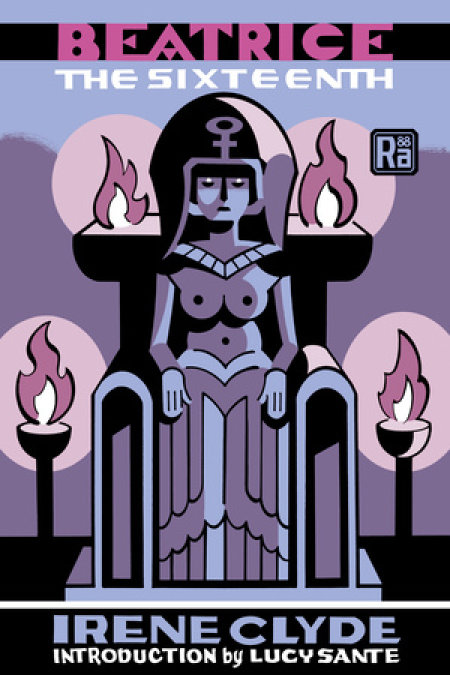
A pioneering feminist adventure in an alternate world—before the concept of gender.
Introduced by Lucy Sante, author of the acclaimed memoir of transition I Heard Her Call My Name, this pioneering 1909 feminist utopia is productively discombobulating. When Mary Hatherley, an intrepid British explorer, is kicked in the head by the camel she was riding through the Arabian desert, she finds herself transported to what seems to be an alternate version of Earth. Arriving in Armeria, she discovers a society in which the very concept of gender is unknown. Like Mary, the reader will become disoriented, but enjoyably so: By avoiding the use of gendered pronouns, the story’s author—herself a gender-fluid activist—challenges our assumptions about gendered social paradigms.
Release date: March 31, 2026
Publisher: The MIT Press
Print pages: 344
* BingeBooks earns revenue from qualifying purchases as an Amazon Associate as well as from other retail partners.
Reader buzz
 Please log in to recommend or discuss...
Author updates
Beatrice the Sixteenth
Irene Clyde
Desert so far as the eye could reach. Only, on the skyline, a tuft which might be a clump of palms. Overhead, the sun industriously burning up everything visible.
I raised myself on my elbow and looked round. Then I remembered what had happened. The blow from the camel’s hoof had stretched me senseless. Of course I remembered. But where was my Arab escort of the morning? And who were these unknown figures standing round me?
My first thought was for my revolver. But it had disappeared. Nor was it possible to think of flight from the surrounding assemblage.
So I spoke to them in Arabic. Who were they? Where was my escort? How far was it to Wady Keirân? Were they friends? None of them answered, and they talked among themselves in a tongue which was certainly not Arabic, nor Turkish, nor Persian. Who were they, these clean-shaved, fair, smiling people—all in kilted brown robes with a broad yellow stripe across the front? It was useless to speculate. The nearest to me proceeded to make signs in the burlesque manner of those who are not accustomed to it, and it was clear enough that the party wished me to proceed with them. There was, indeed, nothing else for it. I joined the caravan, only too thankful to be in no worse company. A smile is a sign of good intentions all the world over.
Most were walking, of the twelve or fifteen who made up the party. A few pairs of mules supported full baskets between them, and some of these had riders. Science asserted her sway, and I endeavoured to find out something about the language spoken by my companions. Addressing myself to a tall, striking-looking personage, with a profile like an old cameo of Odysseus which once hung near my fireplace in a Surrey house—far away now—I began to acquire a few nouns and verbs. But my education had not proceeded far when night overtook us, and the caravan prepared to bivouac.
I know no more of what happened that evening, for sleep came suddenly and irresistibly, and I sank into the folds of a rough, soft rug, as a child nestles into its pillows.
By early morning we were moving. But the palm-like tuft on the horizon grew no nearer after three hours of steady walking. We halted for a meal of flat cakes and excessively sweet wine, and proceeded on our way, a seat being found for me in one of the mule-baskets, for my head still ached violently. Gradually I fell into an uneasy doze, with that accompanying sensation of uncertainty and danger which is so disquieting when one sleeps on a journey. I could have felt certain once or twice, in a dreamy way, that something had passed my lips. But I wakened fresh and alert towards evening, when I found no preparations for resting, but the whole company steadily pressing on. There must have been a halt during the day to enable them to walk as they did. For myself, I lay down in my capacious basket, wrapped my rug more closely round me, and watched the moving figures in the bright moonlight, until a deep, restful sleep came upon me, which lasted until morning.
And then I saw the explanation of the palm-like tuft against the sky. There towered before us a magnificent obelisk, the very base of which was the size of a palace. Perfectly simple, its entire plainness had a unique and lonely grandeur. Its solemn finger, as we neared it, pierced more and more into the blue. It was the discovery of an eighth wonder of the world. But how had it remained so long for unsuspected in solitary majesty? As I thought of the generations of Arabs who must have so well guarded the secret, of the many explorers who must have passed within an ace of finding it out, I could not repress a smile. The impulse was infectious. The kindly faces of my conductors beamed with pleasure, and the very mules seemed to start with fresh energy.
I soon saw why. Seven or eight miles away, so far as I could judge, appeared the serrated edge of a low range of hills, towards which we were evidently directing our course, to everybody’s high satisfaction. An hour’s further
journey, and the stony desert melted into fresh green pasture. Feathery-topped, graceful trees appeared; the scorching heat itself gave place to a pleasant coolness; one caught sight of figures moving behind the foliage, and paddling light craft past the rushes. Finally, we stopped at two huts, for no reason that appeared. Here there came out to us the most surprising ostlers that, of many strange beings, it had been my lot to meet. Tall, lithe, brown, with a swinging step and a free carriage—so far they were commendable, but not uncommon. The singular thing to me then was their extreme beauty, and the fact that everyone of them was clothed in ivory silk, of a perfectly Grecian fashion.
These remarkable personages performed our mules’ toilet, watered and fed them, and offered us various kinds of fruits and honey, which most of my companions were nothing loath to accept. Still, when all was disposed of, and even conversation flagged, we waited on. It occurred to me that some of the white-garbed people might know a little Arabic, and as I was increasingly uneasy as to my whereabouts, I selected a particularly intelligent looking subject to inquire of. But my inquiries were met with a bland stare of regret, and a minute later with a response delivered with a stately kind of diffidence, as though the speaker thought it right to answer, but hardly expected to be understood. Nor did I understand for a while, but some familiar chord in my memory was set working. Bits of old school day learning came back to mind, and as the strange people chatted with each other, I knew that their speech was a near relative of Latin, with a strong infusion of an element more resembling Greek. The blood rushed to my head—I could understand them; I could speak to them!
Only the first and third declensions and conjugations were used. The words were not spoken according to any modern system, though very nearly as in the Italian method. And to those broad vowels for classical speech I was well accustomed from days long past, when I had pored over Cicero and Horace, with some big Scottish cousins in a Dumfriesshire garden. When shall I ever forget those old Dumfriesshire mornings? The low, incessant undulations of the mossy, bent-covered earth; the damp pools; the distant mountains; the silver Solway, shining far away like the glint of its own salmon! And inside the red-brown walls of the garden, a tangled maze of larkspur and snapdragon and marigolds, and a dozen more flowers whose names we did
not know, nor cared to; for we three were in the Senate watching Cataline, or listening with Plato to the last words of Socrates.
“Ulinde venitis?” The words forced themselves to my lips, and no sooner were they spoken than there ensued a most laughable scene of confusion, everybody joining immediately in animated colloquy, difficult from its rapidity to understand—the more so as my first friends did not speak the Italo-Greek dialect among themselves, but a language entirely different and totally unintelligible. And, besides, the traveller I addressed, after a sharp turn with an emphatic nod to a neighbouring muleteer, began to reply to my questions. The pronunciation was not quite easy to follow, but in a few minutes I had made out that my acquaintances were merchants, bringing country produce to town across the desert, and escorting travellers, who had business or other engagements in the city. Of these there were five or six among their number.
The city, they said, was large and populous, though its extent seemed to me exaggerated; still, I knew the wide area an Eastern city will cover. The people were engaged in trade and in manufactures, so far as I could gather; they were acquainted with the arts, and were hospitable to strangers. But when I inquired their relations to the Turkish authorities and to the desert tribes, the most impenetrable density met every question. “Arabes,” “Syria,” “Alexandria,” “Parthii,” and “Nilus”—a shake of the head met every reference to these, and the eyebrows would rise inquiringly and innocently, without a quiver.
“It is all very well,” I thought to myself; “our excellent friends have reasons, doubtless for keeping their own counsel as to their knowledge of the world and the best thing I can see at present is to humour them.”
Accordingly, I waived the delicate subject, as I inferred it to be, and proceeded to inquire, what was my next point of concern, how they had come across me. But I did not succeed in obtaining the least clue to my position. They had stumbled on me lying absolutely alone, and had not been much surprised, as travellers were frequently found to be overcome by heat or weariness, and for this reason generally availed themselves of the merchants’ escort, and travelled in their company.
“And were you not struck by my odd appearance? Had you ever seen a European before?” I asked.
No; they were well aware that foreign nations had each their own customs. Very likely their own seemed absurd to strangers. I glanced at the ivory silks, and then at my own tailor-made garments, and I hardly felt the comparison justified their surmise.
I changed the subject. What was the name of the great obelisk we had passed? Was it on a bird, then, they said, that I had ventured to cross the Stony Desert, without knowing the use of the Index Maxima? If my guides had abandoned me without explaining its use, nothing could be bad enough for them. Words failed to express the hopelessness of the position in which they must have left me.
“But I was not intending to come here; I was going to Wady Keirân,” I explained; whereat, the polite stare of incomprehension again and an awkward silence. I would have inquired the name of the city, and how far we were distant, when two horsemen came briskly up, and were at once surrounded by the travellers. These five new arrivals were well armed, but, so far as I could see, not with rifles. They were certainly nothing like Bedouins; for one thing, although they rode easily and well, they had not the air of being constantly in the saddle. Their long dark cloaks covered their dress, but the metal helmets which they wore had so classical an appearance that I half expected to see them arrayed in corset and lorica, like a Roman eques. Their real attire, however, turned out to be a much simpler dress; and the idea faded which for a moment had possessed me—that these people were the relics, preserved like flies in amber, of some Romano-Syriac civilisation. Still, I was no nearer as to what they were.
The new-comers scrutinised carefully all the members of the caravan, and continually referred to parchment rolls which they carried with them. They talked for some time to the principal spokesman, with an air of friendly authority. Suddenly the young looking of the two dismounted, and came swiftly, but quietly and naturally, to where I was standing.
“Let us sit down and talk whilst matters are being arranged.” My arm was taken, a pair of eyes looked into mine, and I found myself resting on the spicy herbs with a hospitable figure beside me.
“You see, we generally require strangers to be provided with credentials before they are admitted into Armeria. Otherwise, they have to spend some time in quarantine outside the gates before they can be let in, so that we may make inquiries about them; but I am expecting that, you being evidently from very far away, and having hurt yourself and—and—needing care, we may take you in without waiting. (Can you understand me? I am afraid I speak too fast. No?) Have you friends in Alzôna?”
I explained that I had no intention of visiting Alzôna, and that where I wanted to be was Wady Keirân. Much, therefore, as I desired to see the beauties of the city in question, I would not think of the laws being stretched to enable me to do so, and would be much obliged to be put in the right track as soon as convenient.
An impatient movement of the graceful figure, otherwise so courteous, warned me once for all to give up speaking of Wady Keirân.
“You will come to Alzôna first,” was the persuasively uttered reply. “There are doctors there, and—I hope I haven’t been rude!”
Well, if people thought me a lunatic, at least pro tem, I must just make the best of it. Very likely I should be no worse off by going. And the voice in my ears was very persuasive, and, I began to realise, very sweet.
I thought I would take the edge off my presumed lunacy by a little rational conversation on the subject of the Index Maxima.
“When was it built?” I said. “And why do you not use the compass?”
“Everybody hasn’t got a compass,” was the laughing reply. “And sometimes it is dark; then, you know, the light shines from the top, when you could not see a compass-card without a fire. But the obelisk was built five hundred years ago. Without it, we could have scarcely any intercourse with Zûnaris—and no figs.”
Five hundred years! How easily traditions are distorted! The monument must have been five thousand years old.
A shout from the crowd, however, recalled us at this moment to the huts, in front of which the train was duly marshalled to proceed. A horse was
found for me, and I noticed that it was kept carefully between those of the new-comers, who brought up the rear of the procession. For a few minutes we passed through a belt of trees, and then emerged on a plain, across which, not half a mile away, rose a solid mass of buildings, whose square towers hung over long ranges of battlemented wall and rows of pinnacled rampart. The material of which it was constructed seemed to be a dark grey stone, so far as I could judge at the distance. On the first glimpse of it, the merchants showed the liveliest signs of pleasure, pointing to various features of the place, and talking volubly to each other, with considerable urging of the mules.
“That reminds me,” I said, “of the scene there was when I first spoke to your countrymen.”
“They had been debating greatly,” the elder horseman replied, “as to whether you were a native of some civilised country or an outer barbarian. Your clothes, they thought, argued the latter, though”—politely—“every nation pleases itself; but your manners were, of course, not those of a barbarian. As they are inveterate lovers of an argument, and argue all the more to prove themselves right the more clearly they are shown to be wrong, your knowledge of our language started the game afresh; and if we had not come, they would certainly have been disputing now.”
“Then, they are not of your own race?” I observed.
Here the younger horseman struck in: “I hope not! Good creatures they are; and, for all their arguments, they never quarrel, which, they say, spoils the zest. Still,—of our race!”
“If you are such a stranger,” said the other, in explanation, “you do not, perhaps, know that Alzôna is the capital of a State, say eighty by one hundred miles in extent; that the kingdoms of Uras and Kytôna lie next it on the east, and a series of little States—we call them the Mountain States—on the south, together with the Hyroses Mountains. Then, on the west are Cryosis, Agdalis, and Cranthé; beyond them, others for a thousand miles. Eastward, past Uras and Kytôna, there are others too, but they do not reach so far. And these States are a group by themselves, so that for any stranger to come from outside their limits is a novelty indeed. Only we have these merchants, who come to us from Zûnaris; and the people of Orôné, far to the west, make
voyages to sea. For the rest, the desert and the mountains form impassable barriers—or, at least, there is no temptation to cross them.”
I could not believe my ears. A kingdom eighty miles square, here! It was simply impossible. As for the other countries, they must be distorted versions of the well-known divisions of the map. The sea to the west was natural enough. And I did not doubt that the geographical ideas of these people were considerably confused, and far from being anything like as accurate as Strabo’s, say, or Ptolemy’s. But a kingdom eighty miles square!
Still, there was the mass of buildings before me.
“And how are you governed in your city?” I proceeded.
My companion’s head was thrown back a little.
“We are free,” was the answer.
“But is there no Sheikh, Consul, Decemvir, at the head of things?”
“Yes, certainly. We have our queen.”
“And who is she?”
“Beatrice the Sixteenth.”
A dynasty in this out-of-the-way corner of the globe, then! And probably a more or less veneered version of an Oriental Court.
“I do not know,” went on the elder of the riders, “whether you have queens in your country. But our line has lasted, as history tells us, seven hundred years, when the royal family of Uras first gave us a sovereign. And now we are not the best of friends with Uras.”
“I hope you are not bound for Uras,” said the younger horseman abruptly.
“On the contrary, nothing is farther from my wishes,” I returned, though I had qualms of conscience, for I did not know but it might turn out that Uras was Persia, or Bassorah, or Aleppo.
“Uras has behaved disgracefully badly; they are not treating
us rightly——” But a sign from my right-hand neighbour checked the political confidences which were impending.
Just then a sight presented itself which for a moment did not strike me in its full significance, but which immediately began to produce in me a sensation of bewilderment, culminating in a physical shudder.
Before us ran, in placid flow, past the now imminent walls of the town, a river, which was spanned by a fine stone bridge, and whose waters were broad and deep.
Wild surmises crossed my mind. An affluent of the Tigris? An arm of the Persian Gulf? The Euphrates? I knew perfectly well that all these were impossible. A river where no river could be, it seemed. I did not notice the boats on its surface, nor the vegetation on its banks; my agitated thoughts made me dizzy. With an effort, I refused to dwell on them. Feeling very much like bidding farewell to Europe forever, I watched the caravan file over the bridge. The two youngest travellers; the mules, in pairs, with their drivers; the merchants, with their staves, in stately order; the other travellers who accompanied them; we three on horseback—so we moved on to the causeway, and ended the last furlong of our journey.
Imagine a long, low, square room, with walls of polished black wood. Give it a ceiling of gilded arabesque and a floor of red cedar, on which are inviting masses of bright mats and rugs, and tall bronze vases, with taller palms and lilies. Let there be a low table near the centre for all the furniture, save that round it are set forms, on which sit a dozen silent figures in scarlet. Light there should be in plenty from a large curiously-wrought lamp that swings above the table, and from numerous lamplets on slender pillars in various parts of the room. Add a very tired, very dusty, English-clad traveller, prone in a corner. Such was the picture that the chamber presented where the solemn question was argued of my admission to Alzôna. I am told that when a member’s exclusion is debated in the House of Commons the individual in question politely withdraws meanwhile, out of an altogether touching consideration for the feelings of those speakers who are unfortunately compelled by conscience or party to deprecate his claims to a scat. But it was far from the designs of the Alzônians to lose sight of me for a moment; only they discussed the matter in low tones—mainly, indeed, in silent contemplation of maps, with a word or two interjected occasionally.
Counsel was not darkened by this queer process. It was not very long until the bright, grave figures gathered themselves up, and, with half-Japanese coos of salutation, glided out of the apartment. My friend of the horses came up to me—the younger, whose name, it seemed, was Ilex.
“Come, that is well! This is the Palace of the Warders; and Brytas and I, who are on duty, can entertain our friends here; so I can find you quarters without a minute’s trouble. The inns are closed: my own house is miles away—three, I think—and people will mostly have gone to bed.”
An arm was put round me, and we wandered across the room to an opening, where a heavy curtain, pushed aside, admitted us to an open passage, which led between two wings of masonry to a low flight of steps. All was entirely silent. At the foot of the steps we entered a small covered courtyard or large balcony, with a massive and rich balustrade to the right, over which the sky could be seen. It was a faintly moonlit night, and there seemed to be a perfect forest of treetops outside. A sudden fright seized me next. I had thought we were quite alone, when Ilex’s call, “Is there a light in your quarters?” brought a sharp and startling response from quite near me, and I saw a dim, gigantic body two feet away, which turned out to be a fully armed sentinel.
Ilex thrilled with a sympathetic vibration.
“How stupid I always am! I really am not fit for my place.”
I had no time to reply. We entered a garden crowded with flowers, though it must have been near the summit of the building. It was much lighter than the dark balcony, and just at our right was a door, at which we stopped. It opened at a touch. We were in a small room, furnished almost as little as the immense hall we had left. But the walls were covered with soft hangings of dark blue cloth. In an alcove a brazier was rapidly heating an urn; a kind of bureau in the centre was uncovered, disclosing in its various divisions spices and eatables of different kinds; a rich service of plate and dishes of fine porcelain stood between it and the alcove.
“Brytas has done what I said: things seem all ready for us,” observed my companion, putting off the scarlet robe of state and laying it on one side. “We shall have coffee in a minute. In the meantime—a carusna?”
This, I found, was a banana, and by the time it was eaten and the coffee made, Brytas, under which name I recognised the other rider, came in. The orthodox thing appeared to be to lie on the woolly rugs and cushions that spread the floor. Both my hosts threw themselves down without hesitation, and I followed their example. We sat by the glowing embers, and ate and drank I do not in the least know what—only it was all delicious—Ilex sprang up and cleared the things into a corner, and produced
a little cithara.
“Brytas plays so well.” And, indeed, for the next half-hour the room was full of the sweetest tinkling music, elaborately Æolian—the very lace-work of cord and plectrum. The performer ended with a quiet smile, put the instrument down, and would not play more. It was extraordinary how this matter-of-fact official personage, from whose face the light of youth had faded, had the power to call up such fairy-like visions at a finger’s touch. For there was nothing of romance in the conversation we had after that, or such as there was was dropped in sportively by Ilex. We talked of the ways of the city—of its market days, its twenty Governors, its wide orchards, its walls and terraces. And they told me of its fertile environs, and of all the towns that flourished in its territory; of the arts, and the special excellence of each. I heard of the neighbouring kingdoms again—of Uras and Kytôna, Cranthé and Agdalis. I listened with vain expectation to their stories of the western sea and the outer barbarians.
I thought, with a rush of sudden emotion, of the river, swirling like an oceanic torrent, as I had seen it sweep past the wall, in such mysterious volume.
“Where does it rise?” I asked.
“That is unknown to us,” Brytas answered. “But it flows eighteen hundred miles from the east, and divides us from the desert. All past the northern boundary of Uras and our own country it runs, and past them, through other lands, to the sea. In the upper part of its course it traverses barbarian countries which are pretty well known; but eighteen hundred miles from the sea it flows through the Pass of Hylis. Beyond that are fierce barbarians, whom we keep safely on the farther side, neither venturing amongst them nor letting them come through.”
Well, was my knowledge of Greek numerals hopelessly muddled? And could I be putting hundreds for twenties? Or what could the explanation of these extraordinary stories be? Were my hosts playing with me? Were they the credulous victims of unscientific travellers’ tales?
None of these seemed a fair way of accounting for their statements. Besides, there was the river itself to be accounted for; not to speak of the city, which was a trifling circumstance compared with the other matters, but
nevertheless, in its high civilisation and its artistic refinement, would have appeared a sufficiently surprising discovery to me two days ago.
Reduced to fruitless conjecture, I determined to leave the puzzle alone, and to try to obtain camels and make my way across the desert northwards, by sheer persistence, when I had no doubt I should sooner or later arrive in Turkish or Persian territory. It was obviously desirable to make the best use of my time meanwhile in becoming fully acquainted with the customs of the strange race among whom I was so unexpectedly a visitant.
“Have you many poor?” I asked; “and are they contented?”
Ilex looked at Brytas and smiled a little enigmatically.
“Is it permitted to ask,” said the latter, “whether the poor are numerous, and how they are dealt with, in the honourable stranger’s country?”
“In theory,” I said (and I am sure I don’t know how far I was speaking the truth), “no one need starve—actually starve—in England. If you are very badly off, you first of all try to raise money from your friends; then you live in a smaller and meaner house, you wear old rags, you eat dry bread and tea . . . finally——”
“And all this while,” said Ilex, “your friends come and talk to you and bring you presents—do they?”
“I am putting the case,” said I, “that you have exhausted your friends as a source of revenue. I think the next thing is the minister or district visitor. They will bring you round tea occasionally, and help you to buy rugs, which they call ‘blankets.’ (Tea is a warm drink, slightly stimulating; you haven’t it here?).”
“No—not by that name,” said Brytas. “The minister—is he paid for this service?”
“Well, no; he isn’t, exactly. At least, he is paid, but not to do this—that is, he needn’t do it . . . and yet he is supposed to do something in that way . . . then, after that—or if you don’t behave—for in that case the minister will not have much to do with you unless you are so bad as to arouse his professional interest; for his real business is to cure badness—after that there is nothing for it but to go to the Relieving
Officer and the Guardians.”
Ilex and Brytas both sat up, with sparkling eyes. “A special officer who can cure badness! What a wonderful country yours is! We thought you were just an atom patronising, and really we were so absurd as to laugh at that; but if in your England you have physicians who know how to treat the soul, it is certainly we who are foolish! Here we have only the old empirical methods—the judge, the prison, the kûrbash . . .”
“I wouldn’t distress myself, in your place,” I returned. “The persons I speak of generally regard this mission of theirs as secondary to the inculcation of particular theories about religion, and they have not yet worked out any system of therapeutics which they can get put into practice.”
“Not even an approach to a system?” said Ilex, with disappointment.
“Not even an approach to a system.”
“Tell us, then, of those noble officials you have—the Relieving Officers and the Guardians of the Poor! I suppose they relieve and guard you, as their name indicates.”
“I’m not sure, when I come to think of it, that Poor Law Guardians isn’t the right name; and in that case it must be the Poor Laws, and not the poor, that the Guardians are supposed to protect. At all events, you may safely discard the idea, which I am sorry I have misled you into entertaining, that their main object—they are excellent people—is a sympathetic apportionment of relief to the victims of poverty. No; the Relieving Officer is merely a name for the servant of the Guardians; and the Guardians have to consider the ratepayers’ pockets. If they decide to afford you two shillings a week, well and good; if not, you go into a kind of gaol, which it is not so easy to get out of.”
“Without having done any wrong?” said Brytas.
“Good and bad alike?” said Ilex.
“They don’t call it a gaol,” I said hurriedly; “and many Guardians will give the two shillings, as often as the Inspectors will let them. I don’t understand the theory of it. The idea is, if you can work, you ought to go to something like gaol if you don’t.”
“But if you can’t?” said Ilex.
I gave up the Poor Laws in disgust. How little one
knows about things so commonplace as workhouses and rates!
Rates and taxes were a great bother to my new friends. So they are to most people; but I mean that it was impossible to make these see the theory of them. Every explanation ended in some such observation as:
“But I should have thought plenty of people would have liked to pick out the decent poor people, and keep them in their train”; or—
“But why should I take Chloe’s money to keep Doris with?”
We did not go very deeply into the problems of government.
“Are the countries round about much like this land of Armeria?” I went on.
“Hardly. I think you will find marked differences in outward appearance and in character,” said Brytas. “But in civilisation and progress we are all on about the same level, I suppose. Well for instance, you go to Brûna, in Cranthé: you find you must take your red dress off, because you are not a literate in the seven classics; you find all the inhabitants assembling—every night, that is—and performing military evolutions in phalanges of separate castes; you find everybody speaking in a voice that sounds like a knife-edge. Quid ergo est? What does it matter? They think no worse of you because you do not know the seven classics, and parade in proper costume with a spear in the evenings.”
In conversing thus, my attention was struck by the metal coffee pot, which was beautifully worked, and would have done no discredit to Birmingham.
“What a fine design you have there!” I said; “is it old, or are such things made here nowadays?”
“I will introduce you to-morrow to the maker of it,” said Ilex quickly. “And as you admire it, I have no doubt one like it will be forthcoming for you.”
It occurred to me unpleasantly that I had not a sixpence, my letters of credit being with my lost effects. I felt this ought to be explained at once.
“I couldn’t pay for it,” I said. “You see, unfortunately—most unfortunately—my party have gone off with my money. That is, whatever their
reason for leaving me, they have taken my goods and all I have with them. So I must be indebted——”
“Oh, but,” said Brytas, “the metal-worker will ask you to take it as a present. It is not everybody who appreciates good work.”
“It strikes me,” I said, “that a good many people simulate appreciation very assiduously, if that is the principle on which he does business.”
Brytas looked blank. “Why should they? To be given things they don’t want and don’t care for?”
“No,” I said. “To be given a serviceable coffee pot.”
“Nobody need be without a coffee pot; you can get them for next to nothing.”
“Not such handsome ones?”
“Oh, well! But isn’t it far pleasanter to have your own eightpenny pot, that you made or chose yourself, than play on a person’s confidence in that style? I don’t see quite how it would work. Anyhow, your admiration is genuine, and you needn’t scruple to take the thing—provided it is not in your way.”
Here Ilex insisted that I must be getting tired, and conveyed me across lofty saloons of varied size—some traversed by colonnades of pillars, some fitted with a raised daïs, others with latticed galleries—to a tiny courtyard of fairy-like delicacy. It was not more than twenty feet square: in the centre a fountain’s sparkling jet threw drops of crystal over dim sprays of green; at the sides an arcade of graceful Arabian arches formed a covered way. We went along the cloister to the left, and, halfway to the end, we came to an opening in the wall, where a flight of easy stone steps admitted us to the roof. Above us towered a huge mass of masonry, but on the city side there seemed nothing to impede the prospect. A few steps farther on a low escarpment of the lofty towers stopped our further progress. Ilex opened a door. A faint scent of cedarwood met me as the air of the chamber mingled with the night breeze.
“This is where I think you will sleep best,” said my companion, entering, and motioning me to follow. “This door on the right leads into another room, which is also for you. In the morning I will be here early, because my own room
room is next—just here.”
With an elaborate salutation, half inclination, half wave, my strange conductor departed into the semi-obscurity of the starlight.
I was standing at the door of my new quarters. But I could not, for a few minutes, settle indoors. I remained outside, glancing down at the half-visible silver of the fountain. Then I turned my eyes upwards to the stars.
They were totally unfamiliar to me!
With the stars of both hemispheres I am as well acquainted as with the alphabet. In Brazilian forests I have lain and watched the Southern Cross. I have steered my course by Orion in Arabian deserts, and marked the southing of Arcturus in California. At a glance, I knew that these were no stars of mine. No one who has not used the stars as familiar and unfailing guides—perhaps a professed astronomer or a child may have the same feeling—can picture what it is to such a one to see the heavens spangled with strange, unknown constellations.
Where was I? Who was I? What was this place?
I half expected to see the strange stars start from their orbits and dance like meteors in a sudden delirious whirl on the palace.
For a few moments I suppose I half fainted, for I remember thinking that this had actually happened, or begun to happen. My nerves had been shaken by the accident and the startling events which succeeded it. The relaxation of the past few hours had been followed, now that I was alone, by a reaction. I quickly stepped into the room and closed the door, which was fastened by a flat staple of bronze. The furniture was scanty, but I had no inclination for examining it. In the centre of the floor was a bed, covered with rugs. Its four posts were of the slenderest bronze, and attached to them were curtains of thin gauze. Throwing my things off, I lay down, but without much hope of rest. I thought it better to leave the lamps unextinguished. As I lay, all was quiet, except for the fountain, scarcely audible, and for a soft but penetrating musical note, which sounded at long—or what seemed long—intervals.
The rafters of the ceiling were coloured a dull
red, with a few gilded bosses. In some odd way they recalled to me the dark beams which ran across a farm-kitchen’s open roof that I knew well as a child: memories of thirty years ago floated back to me, and, thinking of them, I fell asleep.
Morning came, and with it the sounds of loud music close by. I dressed and looked about me, the strains still proceeding and growing louder. Small windows, high up, and a break in the ceiling, admitted light. The lamps burned dimly in the brightness. By the bed stood an immense earthenware basin, very shallow—in fact, saucer-shaped—supported by a low column spreading out at the foot. This was filled with clear water. A little table carried a dish of the same dull earthenware, in which was some fruit. On the panelled walls hung a few musical instruments and weapons, which I promised myself to examine more closely. I ventured to peep into the adjoining room, which I found to be still smaller. A kind of couch occupied most of the space, but there was also a cabinet, filling one end of the apartment, and full of cupboards, somewhat after the Japanese fashion. Writing materials were set out here, and there was a plain seat of cedar placed conveniently. A large palm was the only other thing that I noticed.
The music was culminating in an intense crash. I half opened my door. Immediately outside Ilex was waiting for me. As we met, the sound became quieter, and gradually stopped. The players vanished down the stone steps.
“I didn’t know,” said Ilex, “whether you wanted to be disturbed. But I thought you had better be awakened whilst I was still here. Do you mind?”
I explained that I had been awake for sometime, and we passed into one of the largest of the saloons we had traversed the preceding night. In the centre, an island in that immense room, was a small oblong table. Near it stood Brytas and a younger officer.
As they greeted us with the polished salutation, which I did my best to imitate—though I saw the new-comer had some difficulty in keeping from laughing—servants in short kirtles began to move towards us from the sides of the room, where, in pillared recesses, were tables covered with the materials of our morning meal. As we sat down in the seats of citron-wood, Ilex explained that the stranger was, as I understood, a supernumerary official, waiting in readiness to take the place
place of either of them, if need be.
“And this morning, Cydonia will have the distinguished honour of taking you through the city. You ought especially to thank us, Cydonia, for giving you this privilege! I wanted particularly to go with the stranger myself, and hear what she says of our ways.”
“I know well enough,” said Cydonia, “that so you would, if you had the chance.” At which laughing reply Brytas refused to smile, but said to me at once, as though the matter were of the first importance:
“I hope you will not forget to consult the physician. That is the thing you must do before anything else. The royal physicians will be at the Council; but Athroës, in the next street, is an excellent authority, though too careless of Court favour to be celebrated. Go to Athroës. Then you will know what to do.”
I observed that I had some knowledge of medicine, and was a fully qualified practitioner, but they still insisted on the visit. Of course, I knew the value of an independent diagnosis, but I had no idea of placing myself in the hands of an empirical Syrian. Nevertheless, it was a good chance of securing some drugs. Mine had gone the way (whatever way that might have been) of all my other belongings.
Brytas finished breakfast quickly, and departed. Ilex stayed a few moments longer, and left me in charge of Cydonia.
“Wouldn’t you like,” said that functionary to me, “to change your dress for one of ours? If you will take my advice, it would really be better. We shall get along so much more easily so.”
I had no objection, and was accordingly provided with a tunic and outer robe, and duly instructed as to the mode of wearing them. A servant carried them into a latticed balcony, and left me to my own devices for getting them on. The tunic was easy; it was already fastened by clasps at the shoulders, and all that was needed was to slip it over one’s head. But the voluminous folds of the robe gave me endless trouble. In the midst of struggling with it, however, I had to stop to admire the lattice-work. Its tracery was admirable, and the invention displayed in varying the forms little short of
marvellous. Through the long gallery each square panel of latticed wall was a fresh delight.
I could not manage the robe. When I tried, having got into it, to fasten and arrange it, its folds caught me, and twisted me, and tripped me up, and enveloped me, and altogether took charge of me, in a disconcerting fashion. I got it fastened somehow, the zone tied on somewhere, and the long skirt, by dint of hard effort, raised to my ankles. All that remained was to replace shoes and stockings by sandals.
Cydonia met me with a smile of pleasure. My inextricable folds were speedily reduced to order by a practised hand, and I saw that I was dressed precisely as a Greek of two thousand years ago. It was then that it came back to me with a rush how I had found the stars strayed from their places the night before. Could it be true? A small matter distracted my attention; a servant was presenting me a rich, ample mantle of brocaded velvet, ...
We hope you are enjoying the book so far. To continue reading...