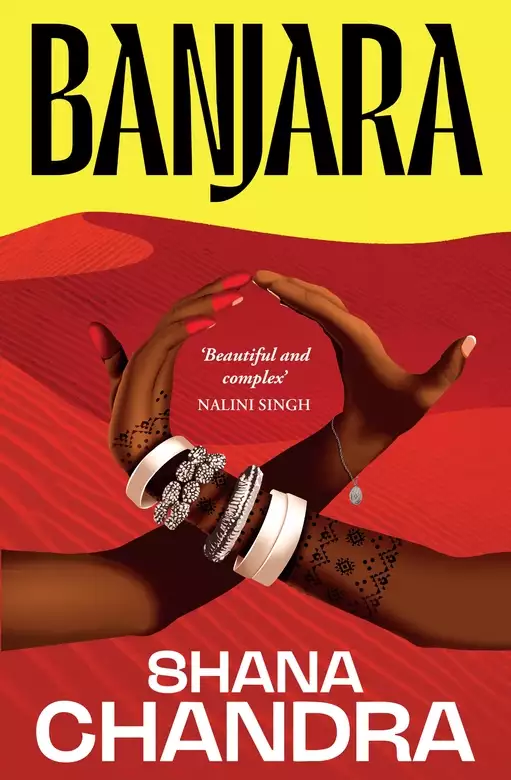
A powerful literary debut from an astonishing new Kiwi voice, focusing on the Indo-Fijian indenture system and how it affected generations across the Pacific.
Rajasthan 1888: Avani Rathod, a nomad of the Banjara community, is summoned to teach a blue-eyed colonial officer the trees of her region, but instead is misled into indenture to the sugarcane plantations of Fiji. While on the voyage that leads her away from her ancestral land, Avani's baby forms in her belly and she forges close friendships with the other women bound for the Pacific - bonds that will be tested once they reach the islands, under the suffocating colonial powers.
Aotearoa 2016: Avani's great-granddaughter, Meera Chand, seeks the true history of her ancestors - the forgotten and displaced Girmitiya. Meera's search for her great-grandmother's origins leads her to a region of India, where she learns the rhythms of Odissi dance and where she meets up with her former lover - the man she can never have, but whom she can't forget.
Set in Aotearoa, Australia, India and Fiji, Banjara is an essential reimagining of Indo-Fijian Girmitiya history, and a love letter to our ancestors whose stories live on in our genes.
Release date:
April 14, 2026
Publisher:
Hachette New Zealand
Print pages:
336
* BingeBooks earns revenue from qualifying purchases as an Amazon Associate as well as from other retail partners.
Have you ever tried to gouge the bare earth with your hands? It is harder than you think. Especially when you feel blue eyes on your skin.
My nani’s voice coils around me, up from the earth, with each scratch I make. Our people – the Banjara – are made of the red dust of Rajasthan. Though we roam and we roam, it is this land we are moulded from.
‘The desert is part of me too,’ I whisper back.
The little brass bell prises loose from my anklet, round like a tamarind seed, split like a soap nut shell. I cradle it in my palm, then slip it into the dirt cavity and seal it quick. The dust bleeds from the cracks in my skin. My fingers are full.
The first time I see him, he does not look at me. Even though he is there to watch me. It’s me who should keep my eyes lowered. But I can’t. Each time I turn, I see. Rolled-up sleeve. Pink skin smothered with curly hairs. Cheek flushed from fire.
The crooked khejri tree next to him leans one way then the next, keeping its leaf-clouds from drifting away. The black horses tied to its trunk whinny softly, tossing sand with their muzzles, trying to find clumps of stray dhaman to eat. Their coats are shiny as if they have been polished, just like their owners’ boots. Our drumbeat begins, and the white bunting of the tents starts to quake.
We have been summoned to dance for them. We are not dancers by trade, we are cattle herders and salt dealers, but when they command, we comply. They get bored at night, these officers in the desert. Their wives are at home in the cities, cooling their foreheads with the fans we embroidered for them. I’ve heard the memsahibs have punkah-wallah too, who silently sway cloth sheets back and forth, bringing wind to the women’s faces. The ladies have boots by their petticoated sides to throw at their punkah-wallah if the swaying stops. They do not deserve our labours. I buried the bell to keep a note safe, so they won’t hear the full sound of our ghungroo when we spin.
‘They’re pretending to be snakes,’ says the one with the barren head, his tobacco smoke forming spirits, his rifle balancing against the carved arm of his chair.
What he does not know is that the language of our sowing, raking and harvesting is held in our dance. It is another tribe whose movements mimic the snake, whom they tame and charm. This man, if faced with a serpent, would have no idea how to escape its bite. He laughs, and the other men are quick to join in, exposing the ivory in their mouths. But not him. Not the one with the blue eyes who doesn’t look.
The second time I see him, his voice reaches me first.
‘Let me help you with that.’
I tug my orhni over my eyes and shake my head, but he pries the clay pot from my hands, letting his fingers sweep mine. He strings the lota to the tethered rope. But his knot is too loose. And even though I’m not meant to touch him, I nudge him aside, to tie it tighter. I feel him glance at me. When he lowers the pot, it pulses as it drops.
His back is towards me, sweat blotting his cotton shirt. Little yellow hairs, drowsy with the heat, cling to the base of his neck. His black boots form footprints that will stay in the sand long after he is gone.
When he hands me the lota, water splashes over, melting the crescents left by my bare feet. He is not used to savouring every drop.
‘What took you so long?’ My sister snatches the potful of water, eyes following me as I sit with her daughter to roll roti. I say nothing, but when she turns away, I place little bits of dough on Radha’s nose, and we giggle. Radha takes the cowrie at the end of my veil and puts it in her mouth to suck like always.
At night, as I put my ear to the earth to sleep, I listen to the breathing around me: my sister’s breath is slow and steady as if nothing can quicken it; her daughter’s is fast-paced, her husband’s is strong enough to quiver the curled ends of his moustache.
The fingernail moon shines through the open window of our mud hut.
It beckons to me, so I rise and dip my finger into the clay pot, into the moon flickering on the water’s surface.
I take one drop of water and slip the wetness under my tongue.
The fresh morning air is still cold with the moon’s milk. The tang from our night fire in the courtyard is strong, smoke whispering from the sweet dung and wood oil. We have only one cow now, Basant, but so do the other families here, and we share their dung to fuel our fires, strengthen our hut walls and fertilise our few crops. In the olden times, when we used to travel, each of our tribes would have thousands of oxen whom we would protect with our lathi, daggers and dogs, and who would protect us and our sacks of grains and salt on the road. At night, we would stack those sacks as a barrier around us, our families forming the heartbeat inside.
Passing Basant, I pat the white ridge on her back, her warm ears as pink as his when I saw the sun through them. The bell at her neck, the same as the one I buried, chimes. I stride out past our tanda, and the sewan grass that binds the soil together. No-one is at the well when I reach it. I check for his lingering boot prints, but there are none.
My clay pot, heavy now with water, balances on the crown of my head, my indhoni tucked in between. The coiled plant fibres cushion my lota, so I can carry it to Banjara Devi with ease. By the time I reach the hill, a hump just like Basant’s back, the sun has risen to lick the bare portion of my own. The sacred river of the Thar, which dried up long ago, has left straw-coloured shrubs that quiver in the heat like his little yellow neck hairs.
As if my thoughts have conjured him, his back is towards me again. He is talking to the one with the barren head, whose voice carries to me first:
‘We’ll need to strip this too. The whole bloody place needs to be stripped.’
‘But how do we know this mesquite will grow?’
‘Do you know how much it costs to create a forest? It bloody better. Make it grow, or the colonel will have both our heads.’ He slaps at a mosquito hovering at his neck. ‘This heat will be the godforsaken death of me.’
An embroidered mirror from my ghagra reflects the sun into his eyes so they dart towards me. I lower my head and walk, like I’ve been told to.
I don’t look up again until I reach our Devi, bending my knees before the rock that holds her spirit. She has long been worshipped by our people since they first began to wander this grove. One of our ancestors, hiding from invaders behind this very banyan, sought a rock to use as a weapon. He held it tight-fisted, but veiled as he was by the tree’s branches, his enemy did not see him. In gratitude to the goddess for this concealment, he marked her presence with the large stone at the base of the tree. She guards this space where all our navel cords are buried, each of them intertwining to form nets so strong they tether us to this land.
I take some vermillion and, with my ring finger, sweep it over her, the one who keeps watch over us. I ask her to protect us now that the gora are here.
‘Ah … Excuse me?’
His voice spins me around. Our Devi dances in my chest.
In the haze of heat and dust, a glint of sunlight bounces off the round pendant swinging at his chest.
‘Christ! Are you all right?’ he asks, frowning.
It takes a while for me to realise he is staring at the vermillion on my finger. I wipe it on my ghagra and hold it up to show it is unhurt, clean.
‘Oh. Right. Ah … Do you understand me?’
My head moves side to side, so I hope he knows I mean yes, a little bit.
‘Great. Um … I need some help, um, with these.’ His fingers whisk at the leaves that surround him.
Help. I nod my head. I know that word. And I know my leaves help. I want to tell him how each tree has a spirit in it, that they must not be hurt because our ancestors are within them, and that is why they help us heal. But not knowing these words in his Angrezi, I brush past him to take a leaf of the yellow-blossomed khejri and rub it between my fingers so the juice spurts out. I sniff at its earthy scent and walk over to him.
His nose is so long, I admire it as he lowers his head over my palm. This is how I want him to understand the leaves first: through their smell. As if to answer my thought, he inhales deeply. I bend the leaf over my finger, the one he thought was bleeding, so he knows we use it to bind fresh cuts. Then I form the slither of a snake with my other arm. When it clamps onto my hand, I place the leaf there to show that the tree bark helps cure snakebites, too.
‘It’s a balm?’
I don’t know what he means, but I watch him take a leaf, rub it between his fingers and place it on his arm where a small cut is already sealed crimson.
‘Do you know all these trees?’
He looks around, his eyes stopping at the banyan, whose roots spread like veins through our land. I scratch a bit of bark and mime putting it in my clay pot, mixing it and drinking its juice. I pretend to cough then sip again, for longer. This time no cough escapes, and I place my hand at my throat so he knows it has been calmed.
‘So, all of these are medicinal?’ His eyes spark with understanding as he looks at the trees anew.
‘Tell me about this one,’ he says, looking up at the Marwar teak.
I reach to pick its flame-coloured flower, and the ivory bangles on my wrist fall towards the wider ones encircling my upper arm.
‘What is this?’ he says, distracted. He’s about to touch the tattoos on my skin, but I move away, and his pink knuckles fall back to his side.
I don’t know how to tell him that these are the stories of my ancestors, woven into patterns and inked into my arms. When I first bled, Nani cut a thorn from the khejri, and with the milk from Basant mixed with the dye from the tulsi plant, she carved who we were into my flesh.
I mime the drawing of these tattoos onto my forearms, my face contorting with pain, and rest the petals of the Marwar teak onto my skin to draw again, this time with my face clear.
‘Analgesic,’ he says, his smile stopping short as another thought comes. ‘Next time I see you, I’ll show you what we use flowers for.’
His pause tells me it is time to go. I take my lota and leave him staring at the trees.
We never had any photos of my paradadi. I never knew what she looked like, where she came from, or even her name. This word for great-grandmother in Fiji Hindi wasn’t taught to me, because she had passed long before we could call to her in this realm.
But, I know now it was her helping me to dig. Even when I wasn’t aware of what I was searching for. Her silent spade was slung over my shoulder, unearthing snatched fragments and strange moments that pointed the way. A guiding hand, signalling for me to look.
The first time I saw my name written in Sanskrit, it was engraved on a silver necklace. He had handed it to me in a navy box. We were in my car, parked towards the sea.
Milford Beach was close to empty that October dusk, apart from a group of teenagers crowding a park bench, sinking Steinlagers and listening to Mai FM on their speakers. Their hoodies were pulled up, their fingers flexing against the sky as they bopped. The fading sun lit their bottles bright as they slanted them up to swig. Their whoops soundtracked our night.
‘Open it,’ the boy said.
Shifting in my seat, I undid the latch.
‘Is it my name?’ I asked him, following the symbols of Devanagari script with my finger.
He shrugged, even though he knew.
‘You could have anything engraved on here …’
‘What, like gandu?’ he smiled, saying the Hindi word for ‘asshole’, our pet name for each other.
He had winked then, neither confirming nor denying.
‘You want me to put it on?’
I nodded and felt his fingers brush the back of my neck. Even after three months, my body still blushed at the physicality of him.
‘There,’ he said.
Held within the pendant’s frame was a thin sliver of pāua. Lines of black like ocean currents marked on a map, contoured through all the colours of the sea.
The pendant had reminded me of ones I’d see at Kiwiana gift shops, where my family would stop during road trips through Aotearoa, though, when I was young, the country of my birth was only ever called New Zealand. The shops were filled with poi, plastic tiki and dolls that looked like Manu from Play School but who wore piupiu, not a bright blue pinafore.
I remembered being at one of the souvenir shops in Rotorua, where the smell of sulphur from the burping hot pools hung in the air. I spotted a pāua shell, its rough exterior hiding the resplendence within. Clutching the shell and an eraser of a kiwifruit that had googly eyes stuck on, I pleaded with my mum to buy me them.
‘Meera, what do you want that for?’ she had paused, glancing at the shell. She was born in Fiji, where you could pluck conical shapes or spiky versions straight from the sea’s grasp.
Putting the pāua back, she bought me the practical eraser, knowing I would use it at school; she always endorsed anything to do with education.
But from that day on, pāua became mystical to me. When we’d visit marae on school trips, I’d stare up at the shell embedded into the eyes of the poupou that lined the walls, wondering about the world reflected in their iridescent shells. Wanting to see as they did.
When Vihan gave me the pendant, its sliver of pāua with the swirls of Sanskrit matched my Indian and my New Zealand-ness. The only thing missing was the link to Fiji.
Still unsure what the figures at my throat said, I found my dad, to see if he knew how to read the script of our people.
‘Haa beti. I learned Sanskrit at one of my schools – can’t remember it now though.’ He was eating murukku, breaking off bits of the fried rice flour and using his palm to lift the pieces dusted with spices to his mouth.
We were at the kitchen table, where a photo of his younger self sat on the shelf behind him: a lopsided grin showing the tips of his white teeth as the Sigatoka River gushed past.
‘You know the school where I learned it? It was one of the first Indian schools in Fiji.’
A look of pride flushed through him. A school, he said, that had been paid for and had its curriculum developed by South Asian indentured labourers, who had saved up what they could from their meagre salaries to help fund it.
‘Why didn’t the government help pay?’ I asked, naive then to the way things had worked.
In the beginning, he told me, no English money earned off the backs of our people was given to support these schools. Their rulers, having transplanted them to the island, preferred them to labour only.
‘Even when the classroom was torn by hurricanes, classes would be taken under the palm trees outside, until a new bure could be thatched by hand.’
I thought of these founders, so determined to educate their children that no natural force unleashing its splendour nor any person ruling over them could stop them. I thought of my mum buying me the kiwifruit eraser with googly eyes.
‘How long did you learn Sanskrit for, Dad?’
‘Not long, a couple of years maybe. Because your aja was a headmaster, he would have tenure at schools all over Viti Levu. He’d stay at one school for a few years then move to the next, taking us with him. The school after the Indian one was a missionary one. They didn’t teach Sanskrit there.’
He told me it had been worse for his father. That when my aja walked to school barefoot as a young boy, his feet would be painted black with tar the sugarcane train left in its wake. He would wipe his feet on the leaves of surrounding trees to clean them and soothe the burning.
‘He said that was better than when the wet season came,’ Dad continued. ‘Then he would wade through mud so thick it would itch his feet like mad. So, his mum would tend to his scratches and give him a sugarcane stick to chew on, to keep him distracted.’
I remembered my first sugarcane stick. My mother had handed it to me, too, as I sat under the mango tree in her parents’ yard in Sigatoka when we were on holiday. In the shade, she had shown me how to chew the cane’s fibrous roots until your jaws ached and your mouth filled with the earthy taste of its juice. I remember using my fingernails to gouge out the roots that got stuck between my teeth. Our people’s food was trying hard to hold onto us.
Later that year, I tasted raw sugar again. Back in Auckland, our class had gone on an excursion to the Chelsea Sugar Refinery. For me and my classmates, it was like visiting Willy Wonka’s chocolate factory. We slid side to side on the back seat of the bus, our excitement mounting as we wound around roads that led us to the Waitematā harbour, giggling and naming ourselves Charlie, Violet and Veruca.
Inside the candy-pink building, the muddy molasses scent hit you as soon as you entered. There were mountains made entirely from sugar and a tap you were allowed to put your finger under and through which golden syrup oozed.
But it was later, at high school, that the golden syrup turned bitter. During a social studies class, I learned that Fiji had supplied unrefined sugar to this factory and that it was owned by the Colonial Sugar Refining Company, the same company that had owned my ancestors, though no mention was made by my teacher of how that sugar came to be grown and harvested on the islands.
And later still, our story lay dormant again during a literature class at university when I was taught the opening lines of James K. Baxter’s ‘Ballad of the Stonegut Sugar Works’. The poem tells of his short stint working at the Chelsea Sugar Refinery before being fired, where he describes the factory floor as being grimy, black and slick with dirt. Lines of poetry that came back to me, at the kitchen table, when I learned of the black-tarred soles of my grandfather’s feet.
I wondered then whether Baxter had known about indentured labour to the sugar colonies, when later in the poem he explains the difference between ‘the sweat of work’ and the ‘sweat of fear’. For him, the ‘sweat of work’ is that of the ordinary working man, but the ‘sweat of fear’ can only ever belong to a slave. They are the drops of terror that transform any place into a grave, haunted by living ghosts.
It was as if Baxter knew that my great-grandparents, the girmitiya, referred to the plantations and cane barracks on the islands as narak, the demon-filled afterlife of torture.
Described as being located south of their universe, within the bowels of the earth, narak sounded like the exact place in the South Pacific where they would toil like Sisyphus, clearing jungle and planting sugarcane with only a few tools and their hands, lathi poised above their backs. A place where they would be beaten for being a few minutes late or for not filling the sugarcane trucks in time, where their bruises would burgeon as narak’s mud hardened into the cracked lines of their feet. And yet through their pain and humiliation, some of them would continue to write and teach the most beautiful swirls of Sanskrit.
It was then I realised that while I may not have known what the shapes at my throat said, or whether my paradadi had even been able to read them, encoded in their forms was our silent story, ready to be told.
The moon, peering through our open window, has swollen to the shape of a melon wedge, marking the three times we have met. Now when I tell him of a tree, he writes it on paper. I think it strange that he writes the names of our trees on the skins of dead ones. I want to tell him, ‘Do not scratch,’ that he should take in what I’m saying only with his ears.
My sister’s mat is next to mine, like always. She rolls over, both hands beneath her ear, lying the way we used to as children talking into the black night. She has heard about my visits with him – our whole village has – now that the naik has approved our meetings. He wants to keep on good terms with the gora, knowing their wrath if we do not.
‘What do you do with him?’
‘I teach him.’
‘Teach him what?’
‘Our trees.’
She clicks her tongue.
‘How can you teach him our trees when they hacked them down before? When they took us into famine? After what happened with Amma and Baba?’ Her voice cracks when she says our parents’ names, just like mine does.
I want to tell her I am doing this for Amma and Baba.
‘If I teach him, if he knows our spirits and stories, he’ll keep them safe. He’ll keep us safe.’
‘Just like they did before? How can you trust someone like that? A gora?’ she spits.
‘Just because he is gora … We have good and bad people too. It’s like Nani used to say, Aank mein dekho. And his blue eyes are so light, I can see everything he thinks.’
She stops, and then in a voice that doesn’t sound like hers says, ‘Remember who you are, Avani. Remember the stories written on your skin.’
She turns away from me. The expanse of her back is so much smaller than I had thought.
I do know who I am, who we are, I want to yell at her. Nani always told us, perfecting our story with each telling so it held so strongly in our mind’s eye it became the only constellation we moved to. From childhood she travelled with her family, herding our cows and transporting trade goods. She would sit atop bags packed with dried amla and ber, bark and wood, the smell of camphor infusing her ghagra. Sometimes they carried salt, sometimes silk. All were goods welcomed at the places they stopped, along the well-worn routes.
It was only in old age that Nani stopped travelling, staying then at our monsoon huts. By then, the gora labelled our people criminals, though it was they who stole our business, stole our taxes, roads and railways. Even though Nani was now stationary, the rhythm of journeying never left her; she had grown up on the back of a goat. As a child, the tread of its hooves was the only thing that would lull her to sleep. So, when she died, we lifted her onto the back of a bakra, her body so frail it could be carried to the river to be burnt.
I put my arm around my sister’s waist and hug my body to her. But she takes my hand and gives it back to me.
We are back in the grove, on the soil where our people’s secrets have always been uttered. And here, among the trees, I let my desire show a little because I know the leaves will swallow it. His hands are so large, they almost obscur. . .
We hope you are enjoying the book so far. To continue reading...

 Please log in to recommend or discuss...
