Prices may change without notice. Check price before purchase.
Share
Book info
Sample
Media
Author updates
Lists
Synopsis
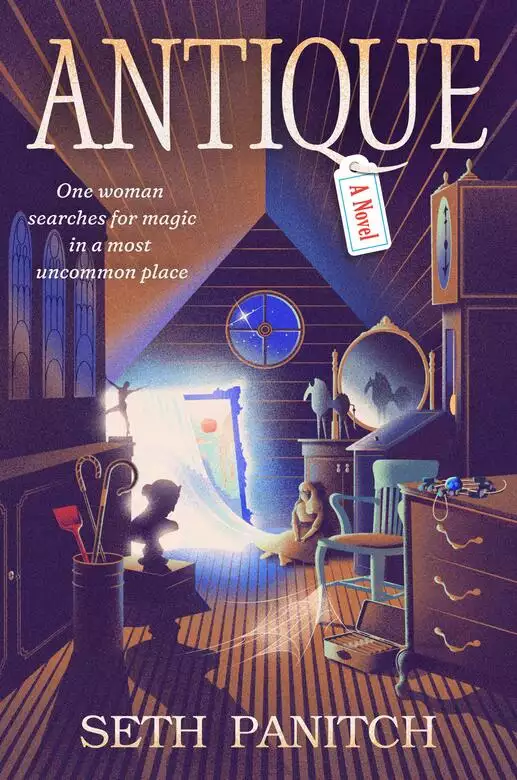
An uplifting, magical story about a once-celebrated antique appraiser who gets caught in the thrall of a strange, powerful necklace—one that has the power to transform her life, and the fortunes of those around her.
Grace Schaffer is adrift. Raised by an eminent but emotionally withdrawn scholar, her talent landed her a coveted spot on Antiques Roadshow, where she charmed legions of viewers. But she's recently fallen from her gilded perch, losing her career, her marriage and her very identity in the process, leaving her with the same question her clients so often ask of her: What is it worth? Or, the question that beats beneath it, What am I worth?
In a last-ditch attempt to revive her career, she signs on to an amateur travelling show, where an old, tarnished necklace catches her eye. Imbued with a strange and sudden confidence, she begins predicting the precise amount that objects will sell for at auction—far beyond their market values. As she performs act after act of this seeming divination, Grace catches the attention of detractors and fans alike, all clamoring to see what she’ll do next. Caught in the necklace’s strange and possibly dangerous thrall, Grace is soon thrust into the hunt to uncover a lost masterpiece… before it disappears forever, taking her hopes and dreams with it.
As Grace struggles to find her own worth outside the comfort of marriage, the limelight of career, of even the necklace’s awesome power, she comes face to face with the hardest appraisal of all…herself. Antique takes readers on an exhilarating journey of art and love, one that will leave them believing in the magic that lies within us all—should we dare to use it.
Release date:
February 3, 2026
Publisher:
Grand Central Publishing
Print pages:
320
* BingeBooks earns revenue from qualifying purchases as an Amazon Associate as well as from other retail partners.
Five thousand years old. And what it contained was older still. It had been worn as a necklace by the high priestess of Sin, the Babylonian god of wisdom, whose many eyes peered through the Great Void, illuminating the night sky for those curious enough to contemplate it. At one time, the necklace’s six strings were threaded with the riches of Empire, but they had been stripped clean by greedy fingers over the millennia, leaving only the first string, the original artifact: twelve cylindrically shaped stones of pure black onyx spaced with Nubian gold nuggets of unequal size and shape.
And fastened in the very center, between two crimson bloodstones, hung the celestial globe itself: a marble-size stone of the finest lapis lazuli, mined in the ancient limestone beds of Pakistan. It emerged from the earth a perfect sphere, and those who unearthed it averted their eyes, awed by the golden pyrite inclusions that shimmered like starbursts across the deep blue face of the stone. To hold the globe was to grasp the Cosmos, and it was of such infinite value, a great stepped ziggurat rose in the Sumerian city of Ur to protect it.
But the ziggurat fell when Ur fell, and the high priestess smuggled the globe out of the smoldering city. She ran afoul of the wilderness and might have failed in her task, but for the kindness of a small tribe of nomads. They took her in, and although they nursed her body to health, her soul succumbed. With her last breath, she placed the globe about the neck of Sarah, the wife of their leader, Abraham. And so the necklace was passed from mother to child, from generation to generation. It ventured to Egypt with Joseph, it hung about the shoulders of Moses on Sinai, and as he gazed up for the last time into the wonders of the firmament, he gifted it to the Bedouin sheep herder who tended his final rest. The Bedouin returned to his tribe, and the necklace remained with them for thousands of years, passed down from generation to generation, while cities and peoples and nations rose and fought and fell.
In the year 1917 of the Common Era, an American spy stole behind the Ottoman lines to gather intelligence on the Turks. The mission failed—the spy traded his cover to save the life of an innocent Bedouin caught in the crossfire—but they escaped together and hid out the war under the protection of the Bedouin’s tribe. When he was free to go, the American left with a gift from the wife of the man he had saved. It was an old, tarnished necklace, but quite stunning to behold; a single string of onyx and bloodstone housing a stone of the deepest blues and golds he had ever seen.
He brought it home to his wife, and she wore it for a time, but boxed it when her eyes lit upon newer, finer things. Her daughter wore it at her wedding, but children and the cares of home gave her little chance to bring it out into the light, so it remained in the dark for many years, the once glittering starbursts long since burned out beneath the dust and debris of neglect. It no longer shined because it had no need to shine. It had no purpose, and was content to remain purposeless for the eternity to come.
Until.
The great tent rose like the unfurled mainsail of a nineteenth-century frigate, its pearl white canvas flapping in the humid Massachusetts breeze. Wherever it appeared, whether in botanical garden or trash-strewn parking lot, it was recognized as a beacon to those who worshipped oil and pastel and platinum, who felt the keen tug of provenance and history. They came by the hundreds, sometimes thousands, seeking answers from a traveling oracle that was, to them, no less profound than the one at Delphi. Two twin cardboard monoliths stood sentry outside, identical in text to the thousands of fliers that had been mailed, posted, stuffed in mailboxes, slipped under windshield wipers, and taped to every road sign in town by the show’s local brigade of dedicated volunteers:
THE APPRAISAL EXPERTS ROADSHOW WANTS YOU!
BRING YOUR CHERISHED, YOUR CHOTCHKES, YOUR HUDDLED GLASSWARE!
FREE CONSULTATIONS TO THE FIRST 100 VISITORS
AT THE: MEDFORD ART CENTER, SATURDAY AND SUNDAY MARCH 25 & 26
ONE WEEKEND ONLY! HOPE TO SEE YOU THERE!
The huge signs funneled the hopeful multitudes into the cool confines of the great tent, where they were greeted and their cherished wares evaluated for admittance to the show. Some were directed to the Antiquities Table, others to Clocks and Watches. English tea sets followed the yellow spike tape to the Silver and Jewelry Desk, dog-eared (and nibbled) baseball cards took the express train to Toys and Collectibles. There was Arms and Militaria from wars both Civil and foreign, Textiles and Rugs for those hung in dining rooms and trampled in playrooms, Books and Photographs and Carnival Glass, and when all else failed, the all-inclusive come one, come all Decorative Arts.
And so the faithful filed in, armed with moth-eaten boxes and overstuffed shopping carts brimming with the cherished legacy of generations. They came from mansion and mobile home, from dorm and apartment, from condominium and convalescent hospital. They came from near and far and high and low, but mostly they came from the nooks and crannies of an America that felt just a little bit forgotten, just a little bit left behind. They came, not for an appraisal, but for an answer:
What’s it worth?
Brenda Almond had no idea as she turned the old cedar box over in her hands. Fifty dollars? A hundred? That would be nice. Not that she’d sell it. Unless they said a thousand—for a thousand, sure. She could fix her daughter’s brakes and replace that damn dryer that still smelled like her ex-husband. What if it’s worth more, though? she thought, her mind swirling with dizzying possibilities as she crossed the threshold into the buzzing, thrumming heart of the show.
She was greeted by a Grand Central Station of chattering humanity. Eight tightly packed lines of guests fanned out toward the Appraisal Desks, like a promenade of ants nosing their way down diverging lines of pheromones. She took her place in line, shuffling ever closer to the Antiquities and Tribal Arts Table, its green fabric sign flapping at her like a matador’s cape. The wait was agony—the closer she drew, the slower she moved—until finally, the line froze altogether.
Brenda’s spirits sagged, and she wondered if she had spent her last sick day of the year for nothing—until she noticed an expert behind the neighboring Paintings, Prints, and Photographs Table waving her over.
“I can help you over here, miss,” the woman said.
The woman was striking—tall, a bit lanky, but gracefully so—and when she gestured, there was a familiarity to it, as if Brenda were an old friend at a chance meeting. There was an effortless elegance to her, an unforced confidence that intrigued Brenda, so she shuffled over to the nearby table. “They told me ‘Tribal Arts,’” she said, holding up her green station pass.
“That’s all right.” The woman puffed out the chest of her charcoal pinstripe pantsuit in a mock show of pride. “We all know a bit more than just our own bit, if you know what I mean.” She smiled, a lovely smile; unforced, genuine. It wasn’t just kind, it was kindred. “I’m Grace,” said the woman, whose name tag confirmed this, just above the name of her gallery: SCHAFFER & SCHAFFER, LTD.
“I’m Brenda.” She pointed at Grace’s name tag, joking: “What happened to the other Schaffer?”
Grace paused, but the smile remained airborne. “There’s just me today,” she said, shifting her attention to the box in Brenda’s hands. “Now, what lovely treasure do you have there?”
Brenda set it down on the table between them, making a few adjustments until it was just so. “I was hoping you’d tell me. I know very little about it.”
Grace switched on a desk lamp, bathing the little box in sharp white light. Brenda was riveted—not on the reveal, but on Grace, on her reaction. Her ex-husband had told her it was worthless. That she was a fool to buy it. Tell me it’s rare, she thought, willing it so with all her might. Tell me it’s beautiful. Just please—don’t tell me he was right.
Grace opened the box, dipped her fingers inside, and lifted out a fist-size shrunken head—eyes bulging, nostrils flaring. “Oh, Brenda.” She grinned. “I’m absolutely smitten.” And she was—taking the utmost care as she set it down on a soft felt doily. “How did you come across this whimsical little character?”
“I was on my honeymoon,” Brenda said, the words tumbling out. “Me and my husband—well, ex-husband—spotted this poor little guy at a street fair in Puerto Plata, all alone at the end of a table. I don’t know if I wanted to buy him, as much as I wanted…”
“To rescue him?”
“Yes!” This woman knew, thought Brenda. She understood.
“Well, let’s take a closer look at your tsantsa, shall we?”
“Tsantsa,” said Brenda. “I like that.” Much better than “shrunken head,” which was what her ex-husband called it; and what her ex-husband had, so far as Brenda was concerned.
Grace tilted the tiny skull into the lamplight, turning it this way and that, as if searching for a trapdoor into the mysteries within. “Tsantsas go all the way back to the ancient Jivaro tribes of Peru, although the practice was outlawed in the 1930s. This isn’t to say we don’t see authentic ones every now and then, but they are incredibly rare.”
“Is this one…?” Brenda couldn’t even say the word.
“Authentic?” Grace turned it over in her hand with reverence. “If he is, we’d be in the audience of something quite special. Would you mind if I take a closer look?”
“Please!” she yelped, instantly covering her mouth. “Sorry.”
“Oh, don’t be.” Grace chuckled. “I’m excited myself.” She ran her fingers through the stringy black hair of the tsantsa. “The hair is nice and glossy—that’s a promising start.”
Brenda nodded, her heart racing.
“There’s a telltale incision on the back of the skull, here,” Grace said, running the tip of her index finger over a faded suture line. “And the lips,” she said, turning the head back over, “they’re sewn up in the exact pattern we’d want to see.”
I never dreamed, thought Brenda—but of course she had. And here it was, revealing itself before her very eyes. She willed herself to be present, to enjoy the moment—she’d want to remember this for the rest of her life.
Grace withdrew a magnifying glass from the armory of tools before her. “And in terms of the skin itself…” She trailed off, spying something in the glass that gave her pause.
“The skin…? Yes…?”
Grace started to speak, and then took Brenda’s hand instead, brushing it over the tsantsa’s cheek. “You feel that?”
“It’s smooth.”
“Too smooth, I’m sorry to say. Real skin—animal or human—has texture, imperfections. I can’t spot any, not even under extreme magnification.”
The excitement drained from Brenda’s cheeks. “Does that mean…?”
“It’s synthetic,” sighed Grace. “Probably worth ten dollars. Maybe twenty.”
“Twenty dollars?” Brenda deflated, shrinking herself about an inch. “That’s all?”
Grace nodded, offering a sad smile. “I’m so sorry, Brenda.”
And Grace was, but that didn’t make Brenda feel any better. “Thank you,” she said, gathering the head and plopping it back into the box without ceremony.
“But I’m sure there’s tremendous personal value in it, isn’t there?” asked Grace.
Brenda took one last look inside the box before slapping the top back on.
“No,” she said. “Not really.”
Grace Schaffer sighed as she watched Brenda disappear into the crowd. She felt tired. No, she felt old. She was only in her forties, well mid-forties, that’s what she told people. But forty-six was no longer mid-anything, was it? It was the other side of middle. It was past middle.
It was Old.
Maybe it was the appraisal. She should have known it was synthetic the moment she opened the box. First show back or not, it was unforgivable—she had given that poor woman a false hope, and that had made the reveal that much harder. The show’s director had assured Grace it would be just like getting back on a bike, and if it was, hers was in serious need of a tune-up. It wasn’t just the missed signs of counterfeit. Even when she had the facts straight, they sounded so odd coming out of her mouth. Off-key. Which was exactly how Grace felt—off, flat, behind the beat. Worst of all, when appraisals ended like this one (as they all had right before her hiatus), they always felt to Grace like a breakup—not a nasty one, like her marriage had been—but sad nevertheless. To see the hope drain out of someone’s eyes, and know it was your call that had pulled the stopper. It used to feel so common; an ordinary part of her everyday business. Now it just felt cruel.
Then again, maybe it wasn’t just the appraisal that troubled her. Aside from antiquities appraiser Jerome Zwick, who could boast (but never did) of a massively successful career spanning over fifty years, the batting order of her new team looked less like the New York Yankees and more like the Hartford Yard Goats. These were not the bow-tied, high-heeled celebrity superstars of Antiques Roadshow, nor the appraisal aristocracy that dominated the acquisition departments of Sotheby’s, Christie’s, Bonhams, and Heritage Auctions. These were the no-names, the working stiffs of the Antique World; all of them in business, none of them known outside of it. They were here, not for the small fee they received from the show for their appearance, but to drum up much-needed business for their struggling galleries. That was reason enough for them to return, year after year, many of them for their entire careers.
But it was not the reason.
All of them, Grace included, were on the trail of a Lost Ark, of a Loch Ness Monster. They called it a Grail, and every appraiser, every gallery owner, every auctioneer had one on their career bucket list. That one undiscovered treasure, that misplaced masterpiece—whose unearthing had the power to rekindle a small spark of wonder into a world that had been bled dry of it. But the flow of fresh discoveries had slowed to a trickle, and then dried up completely. Without the possibility that something mysterious was waiting on the other side of monstrous student loans, and endless degrees, and a lonely lifetime spent in the gloomy corners of cavernous libraries, their spirits sickened and, for some, died off completely. Those who remained found their talents no longer needed, unnecessary in a market that thrived no longer on new discoveries, but on recycling past finds until they spit out higher and higher values. Worth was no longer calculated by age or provenance, but by dollar and cent, and so the experts turned on one another, picking at each other’s scholarship like a murder of crows.
Grace’s thoughts were interrupted by a red-cheeked woman in an orange muumuu. “Paintings, Prints, and Posters?” she asked, rushing up to the table with a large painting wrapped in a sheet no less colorful than her outfit.
“At your service,” said Grace, switching gears as best she could. “Can I help you?”
“Prepare to have your mind blown!” Before Grace could even get a scent of what was beneath the sheet, the woman yanked it back, revealing a blue-and-green-pastel painting of the woman herself, naked—her arms and legs spread wide like Leonardo da Vinci’s Vitruvian Man, her hands wrapped around two un-da-Vinci-like battery-operated, bullet-shaped devices.
“Pardon me,” said Grace, grabbing her phone and grimacing at the blank screen as if an important call were coming in. “I’m terribly sorry. I have to take this. It’ll only be a moment.”
Grace ducked out the rear of the tent into the blissful relief of the fresh morning air. It was not blissful for long.
“That head wasn’t worth ten dollars, Grace,” said a voice behind her. “And certainly not twenty.”
Grace turned to find Jerome Zwick scowling at her from the tent entrance, his thick, stocky frame locked in position like the bolt of a sniper’s rifle. He had a nickname (they all did), and his was well earned: Torquemada—the Grand Inquisitor. On anyone else, a three-piece gray tweed suit and yellow bow tie might evoke a favorite grandfather; on Jerome Zwick, it evoked the Third Degree. Although he only stood five and a half feet, Grace felt him tower over her like a bald skyscraper.
“I know it’s been a while,” he said. “Shake the rust off, kid.”
Grace thought of arguing the point, that it was her first mistake, to cut her some slack, and she would have with anyone else, but not Jerome Zwick. Their orbits had only occasionally crossed at conferences and auctions, but his reputation was unblemished by the usual inflammation of ego that afflicted many in the field. If he lowered the boom of his bushy white eyebrows on you, you probably had it coming.
“I’m trying, Jerome,” she sighed. “But I feel a bit wobbly in there. Maybe I came back too soon. But there’s only so many ways I can rearrange the furniture in my living room before I go stark raving mad.”
Jerome eyed her, and Grace felt the heat of his stare. He was appraising her like a five-hundred-year-old pottery shard, which was pretty much how she felt—a faded, unremarkable piece of something that used to be spectacular.
“You can’t be here because you don’t want to be anywhere else,” he said. “That’s no good for you.” He pointed at the small crowd milling about in the garden. “Or them.”
She nodded. “Please don’t tell Elaine.” Grace winced at how pathetic it sounded.
“Tell her what, Ms. Schaffer?”
Grace laughed. “I owe you one.”
Jerome cracked a sly grin. “Mind if I claim it now?” He pointed at her name tag. “That second ‘Schaffer.’ I’m curious—why not ‘Schaffer & Karlin’?”
“God, no.” She chuckled. “Victor wouldn’t have been caught dead sharing a billboard with me.”
“Of course not. He wouldn’t deserve it,” said Jerome, and Grace fell just a little bit in love with him.
“No, the second Schaffer, that’s always been—” Grace hesitated. “That’s my dad,” she said, and even that tiny mention of the man made her chest tighten. “It’s been nearly a year, and I still can’t bring myself to take his name off the door. I shouldn’t be surprised—it took me thirty years and half a dozen therapists to stop calling him ‘Doctor.’”
“I didn’t know you and Albert were in business together.”
“We weren’t,” said Grace. “Not officially. But he was always… there.”
Jerome, ever the Inquisitor, leaned in slightly. “He still is, isn’t he?”
Grace looked back at him—and reminded herself to be more careful around him. “Yes,” she said, “I suppose he is.”
He waited for more, but for Grace this was a stone best left unturned. “Are we square?” she asked.
Jerome nodded and slipped back into the tent, leaving Grace alone outside with the dwindling line of buzzing, hopeful visitors. No matter how small the heirlooms they carried, how distressed, how shattered, how smudged, they bore within them the infinite weight of their owners’ expectations. And Grace felt that weight, felt it press down, its iron grip digging into her, for she knew—rust or no rust—it was her job to reward those expectations, or dash them all to pieces. She stood and watched them crowd into one side of the tent, bursting with excitement, filing out the other in a slow trickle of disappointment.
Grace knew that procession well. Ever since she was a little girl. It wasn’t a tent, of course. It was an office in Jersey. But the journey was the same—excitement in, depression out.
Oh yes, she thought. There’s no place like home.
Gracie Schaffer was tired of hearing it, although her mother never tired of saying it: Sit at the kids’ table. Go to bed early. Eat your carrots. Go out to play. Play? There was no time to play! She had books to read, and mysteries to uncover, and who the h-e-l-l would she play with? Phoebe Archer? Phoebe was a kid, for God’s sake. Not Gracie—no Girl Scouts for her, no slumber parties, no giggling about Tommy Mains and his stupid feathered hair. No, Gracie was different. It was impossible to miss—all anyone had to do was look at her fingernails.
Gracie adored her fingernails. Not because they were sparkly, like Dinah Cole’s, or perfectly manicured like Reba Geer’s. No, Gracie’s twelve-year-old fingernails might as well have been twelve hundred years old, what with the thick layer of soil and soot beneath them. Her mother could sigh Oh, Gracie until she was blue in the face, but as soon as she cleaned out the dirt beneath Gracie’s nails with that dreaded metal file of hers, those fingernails were once again wrapped around the handle of her little red shovel, digging into the forbidden treasures of their sprawling New Jersey backyard.
And what a collection they curated! The other girls in her sixth grade class had their My Little Ponies and Dream Glow Barbies and Easy-Bake Ovens. Gracie had limestone and sandstone and quartz that changed color when the sun shone through the open blinds of her bedroom window. She had animal bones and snakeskin and shotgun shells and Michelob bottle tops, and even an old cigar box with a parrot skeleton inside. She had the entire history of her backyard on those shelves.
But none of it compared to this.
Gracie knew it as soon as her shovel struck something hard and unforgiving beneath the barren topsoil. It was small and white as ivory, like an animal’s tooth, but Gracie knew different. She was sure it was stone the moment she plucked it out of the protesting earth—but it had been fashioned. A scraper, a tool, perhaps? No, this was too sharp, too pointed. This was a weapon. But whose? She couldn’t imagine.
But he could.
Gracie dropped her shovel and ran across the yard, jumping over her mother’s flowerbeds, up the splintering wooden stairs, and into the air-conditioned blast of the family room. Her mother, sitting primly in her favorite armchair in the corner, pried her eyes up from a large hardcover book, took one look at Gracie’s mud-caked shoes, and slapped the book face down on the coffee table.
“Gracie,” she gasped. “Shoes off, young lady.”
Gracie groaned and kicked off her shoes, booting them across the room to join a small squadron of similarly adorned Keds in the corner, before bounding toward the hallway.
“He’s working, Gracie.”
“This is an emergency.”
“What kind of emergency?”
Gracie spun around as if her mother had spoken in tongues. How on earth could she possibly understand? This was History (Living, Breathing History; that’s what he called it), and only True Art Historians could handle this sort of emergency. “Sorry, Mom,” she said. “You wouldn’t understand.” She expected her mother to yell at her. Maybe raise her voice a little—just enough for Gracie to work up a stink and storm off down the hall. But she didn’t.
“Well,” said Shirley, picking her book up off the coffee table and settling back into her armchair. “Perhaps I wouldn’t.”
Gracie stared at her mother, and her mother stared back, wavy-chestnut-haired mirror images of the other—but Gracie knew from experience the similarity was skin deep at best. “It’s not your fault, Mom,” she said. “You’re just not that into it, is all.”
“No, dear,” said Shirley, submerging back down into the depths of her book once again. “I suppose I’m not.”
Gracie hesitated. Her mother may have always had her head in a book, but the woman herself was unreadable. Gracie had tried, over and over, but like an empty canvas, there was just nothing to keep her attention for very long.
“Whatever, Mom,” she said, and off she went, tearing down the hallway, around the corner, flying toward the double doors at the end of the hall. She skidded to a halt at the threshold and, with just the very edge of one knuckle, knocked softly on the door and placed her ear against it—but nothing stirred within.
“Dr. Schaffer?” she called.
“Working,” said the basso gruffness within.
“I think I found something.”
Silence, save the crisp Gatling gun of her father’s typewriter.
“It’ll only take a second.”
The typing stopped. A chair slid back, and hard-soled shoes clacked their way toward the door. A lock snapped and the doors swung wide.
Albert Schaffer stood in the doorway, which appeared to retreat from his massive frame, unable to restrain him. He towered before Gracie, his legs and arms dangling down from a barrel-chested redwood trunk of a torso. His face was likewise long and thin—not gaunt but sharply chiseled, framed by a short, jet-black beard shot through with thin brushstrokes of silver and ivory. His eyes were hooded by the broad cliffs of his brow, but they simmered and crackled with irritation, hot enough to liquefy Gracie’s resolve.
“Grace,” he said, and the very hardwood beneath her feet vibrated with the sound. “I am not to be interrupted.”
“I know, I’m sorry,” she stammered, smacking her tongue against the dry roof of her mouth. “But this is important, I promise.”
“It will have to wait.” He began closing the door.
“It’s an arrowhead,” she said, blurting it out. “I think it’s Native American.”
Albert paused; eyes narrowed. “You think?” he said. “What’s your proof, Grace?”
“Shape, for one,” she said, her trembling voice settling, calming, for he had opened the door. He had challenged her. And she was ready. “And you can see the faint fluting on the edges, it’s ay-ay-asymmetrical.”
“More, Grace,” he said. “I need more.”
She had saved the best for last. “Strike scars,” she said. “From flintknapping.”
He paused, his face unreadable. “Show me.”
Gracie opened her hand to reveal the arrowhead, which looked humongous in her tiny, mud-streaked palm. Her father raised his gold-rimmed spectacles and peered down at it, silent for an excruciating eternity. Finally, he let his glasses fall and trained his cold, hard gaze upon her.
“Come in,” he said, walking back into the mahogany depths of his office. “And close the door behind you.”
Gracie replayed it in her mind, to be sure she had not imagined it. She glanced down at the threshold—the one she had only ever crossed in secret—and stepped inside, closing the door behind her, sealing her inside a forbidden world. The entryway sparkled with g. . .
We hope you are enjoying the book so far. To continue reading...

 Please log in to recommend or discuss...
