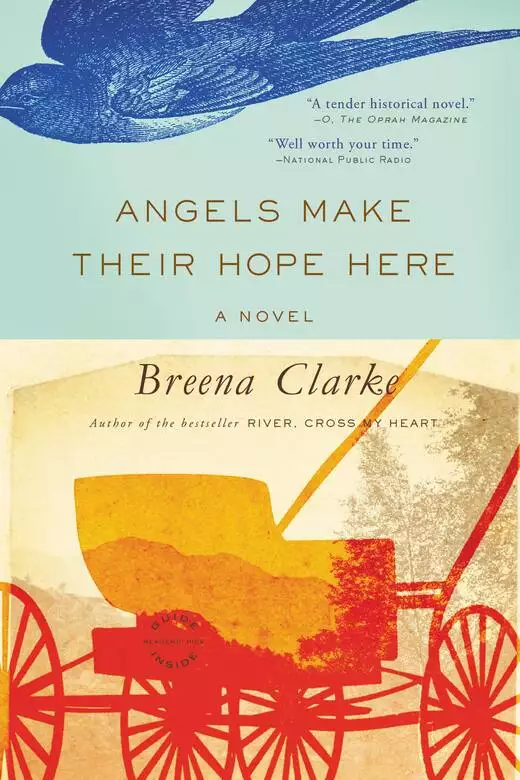
From the author of the bestselling River, Cross My Heart-a compelling and lyrical new novel about a young black woman in the Civil War era who finds refuge in a racially tolerant community. Russell's Knob is not paradise. But already in 1863 this New Jersey highlands settlement is home to a diverse population of blacks and whites and reds who have intermarried and lived in relative harmony for generations. It is a haven for Dossie Bird, who has escaped north along the Underground Railroad and now feels the embrace of the Smoot family: Duncan (so much older than Dossie; could he expect her to be his helpmeet?), his reticent sister, his exuberant nephews, and a circle of friends that includes the local spirit woman, Noelle. Tentatively, Dossie begins to lay down roots-until an act of violence propels her away from Russell's Knob and eventually into the mayhem of New York City's mean streets. With the same storytelling brio that distinguished the acclaimed novels River, Cross My Heart and Stand the Storm, Breena Clarke weaves the richly dramatic story of one woman's triumph in the crucible of history.
Release date:
July 7, 2015
Publisher:
Little, Brown and Company
Print pages:
288
* BingeBooks earns revenue from qualifying purchases as an Amazon Associate as well as from other retail partners.
RUSSELL’S KNOB, THE VILLAGE he brought her to, was secreted. It was a hide, a hush-up, a keep-quiet-about spot, a conceal-and-bottle-up sanctuary, a curtain, a disguise, a dissemble place. The homesteads that formed it were laid so that they were encountered singly—knots along a string. If one homestead was set upon, folk could fall back and escape uphill to the next house and make a stand with their neighbor. Together they could push a flaming barrel down the cliff to discourage the interloper and, if they were overrun, they could retreat to the next place on the string. This arrangement resisted the possibility of a complete burnout as had happened once or twice in the early times at Russell’s Knob.
The first building in the village was a small stone house that sat like a muddy brown bird hiding herself in dense foliage. Outsiders and casual climbers were meant to miss seeing the cleverly disguised house and the cut that led to the town. If you knew the cuts you could find the town.
The old stone house, built so the natural slope of the hill obscured it from view, was the last home of Russell Sitton, the village’s founder. Old Ninevah Van Waganen, a great-granddaughter of Russell Sitton, lived there and kept a signal fire.
Russell’s Knob—is it a town or a village or a country all to itself? Who is to say? They are what they have always been. They are refuge from bondage. Whosoever seeks to make them slaves will get a damn good fight. Whosoever starts trouble here will die here. So they survive by staying watchful, clever, secretive, and well armed.
Officially they began as Munsee. When others walked farther west, they laughed and spit and came to hide in the highlands. Warriors looted from their homes and shipped across the salt sea came to Russell’s Knob when they could escape a mountain and find their way. Angolans brought from the sugar islands by their fat Dutch masters ran off to the highlands whenever they could. More black Africans and Caribs came when the patriots chased them and they couldn’t keep their white gals in the lowlands and the white gals didn’t want to go off to the cold in Nova Scotia or suffer heat in the West Indies. Coal-black and half-black gals came to the highlands after running off from white men, and some white men came chasing them and didn’t go back. Black men and their black wives whom they would not be torn from came to escape. Fearful, unattached women of all colors came and were given sanctuary. Most of the women brought jumbled babies and, because they wouldn’t give up their jumbled babies, they stayed alongside each other in the hills. The People of Russell’s Knob were a blended soup of colors after a few generations and made their own circumstance. Amalgamators! Ach! It was a word that was hated here. To outside eyes they were an immoral mixture. Between themselves they were so tightly woven and bound up together that they were impenetrable by outsiders. They were staunch and strong.
Lowlanders who knew of their existence often said, “Oh, those Indians? Smelly ol’ women and bucks and amalgamators that can’t come in town like civilized folks.”
The People of Russell’s Knob, snug in their hide, came into the nearby towns regularly to trade and buy but did not sleep in the towns. The People of Russell’s Knob came in town for commerce, then went back to their own hidey-holes. They lived their lives many colored—they dared it!—where it was high and dry and safe. They were known—when they were known at all—for clinging to each other tightly, defending their homesteads with their lives, and being fierce and living free.
It felt to Dossie, who had only known lowland flats and tangled brush, as if the trees around Russell’s Knob created a house by fanning themselves out and meeting high up in the middle to form a shelter in the woodland. At one rise she pulled at the man’s hand to halt him but was too timid to lift her head and look at his face when he turned. She stood and trembled before him with her hand in front of her lower self.
“Gwan then,” Duncan said and indicated with a nod that he would wait for her to attend to her wants. She scampered off into the forest and did as she wanted behind a bush, picked some berries, and filled her mouth. When she was done and rejoined him, he smiled to see her blue-tinged face.
The way of settling in a string made for an extreme of privacy for the people of Russell’s Knob. The pattern—the necklace—could not be fully appreciated except by long familiarity. Each of the houses was well back in a copse, most of them with small brooks running by. Smoot and the girl encountered no one else on their journey to his homestead, though the smell of cook fires attested to other folk and their vittles nearby. When they had reached the place, he gave her drinking water from the fast-running stream that cut through the hill and spilled out at the edge of his homestead. He seated her on a wooden bench over which trailed a grape arbor. He then went ahead into the house and brought out a bowl of berries for her refreshment. Mountain blueberries, held to have the power of magic healing in these environs, benefited the girl immediately. She gorged on them in a bowl of milk. It was said by lowlanders who had seen the mountain folk that they grew long-tall and lanky for reaching so far above their heads to dine on blueberries on the bushy tufts in the crevices of the highlands. Through the summertime in Russell’s Knob, few of the children’s mouths were colored anything other than dark purple. Each one a contented and laughing face.
The man’s homestead had a welcoming, charred-wood aroma. While Dossie consumed her berries, he watched her. He seemed pleased that she ate. When she had finished, he rose up and left her sitting again. She watched him attending to his animals and wondered that there was no wife bustling about and no young’uns running out to greet him. He built up his own fire in the hearth. He drew up his own water.
He told her his name. Duncan Smoot pronounced his name clearly and proudly but did not ask hers. He retrieved her from the grape arbor and led her by hand into the house. The smell of cooked coffee dominated the aromas. The man himself smelled of sweet ale—an aroma she’d caught as the two climbed and sweated that was very different from the smell of whiskey and retching and yellow water of other men. She had the notion then that he was not so old as his hair might say. His hair was gray mixed with dusty brown and was soft-woolly—was of a kind that was disposed to snag at dust and seeds and bits of fluff. His eyes were a color that was like a dark mustard seed. Drawn by hand into the kitchen, she was led to a table, and a seat was indicated. He placed a small cup of coffee before her. She sipped timidly, concerned not to displease him by refusing to drink what he had offered. After a while he took her to a room with a large wooden bed laid over with a fluffy feather mattress. He seemed to present the room to her. He said nothing, but held his face in a gentle, firm expression. He showed her the night pan. When he left the room, Dossie stretched out on the rag rug and waited for the arrival of the woman whose room this must be.
Mr. Smoot’s wife must be a wonderful woman, Dossie assumed in a comfortable curl on the well-worn floor. After a short while her urgency would not let her sleep. She left the room and saw that Mr. Smoot still sat at his kitchen table. He looked at her and pointed out in the yard to the privy. Now the smell of whiskey in the room dominated that of coffee.
No woman came that night.
Dossie knew ’twas a young’un’s job to sweep a yard. As soon as it was light she found the bound-up stick broom and set to. She did not want Mr. Smoot to think she was a lazy gal.
Where is his woman? Dossie thought as she worked and looked around. She had peeped in the bed when she rose from the floor. There were many possessions about the house all set in good order, though many things were notable for their absence from this room. The bedroom of this woman was free of dust and belongings. She is got no hair that needs tending? She needs no rag to tie it? She need no shawl? Mr. Duncan’s wife must’ve took his children and gone visiting with her people, Dossie thought to herself.
The solid house had good plank floors that cried softly from being stepped upon many times and worn in gentle ruts. It had wooden shutters and some glass panes in the windows like the house of Mr. Abingdon, though it was not nearly so big. It sat in the center of a clearing on a point of land higher than the surround. The house was ringed with a sitting porch on three of its sides and was ringed at the outer edges of the swept and pebbled yard with a low stone wall. Near to the house was a growing patch protected with a short wooden fence, and at back was the chicken coop, a small, well-built barn, and an outhouse.
After a day had passed in this idyll—abundant food and water to drink—Dossie wondered and questioned herself to know why she had come so quietly when Duncan Smoot took her by the hand. Was his hand the hand of God? Was this deliverer the answer—the consequence of her fervent prayers? Was this the know-everything God that Evangelist Zilpha had hollered about? Dossie was not troubled by her thoughts. She was only puzzled. When she slept on the first night she’d cried for Evangelist Zilpha not because she wanted help from the woman, but that she saw the horrible collar on her neck when she closed her eyes and saw the Evangelist’s poor tongue hung nearly to her chin. In her dream she asked the Evangelist who was this man. The Evangelist could not answer because of the tightening of the horrible thing. Spittle and blood and small, hard white chips flew out of the Evangelist’s mouth as she tried to speak. Only her eyes had spoken. “Gwan, gwan with him!” The collar came to be upon Dossie’s own neck and she screamed.
Duncan Smoot was kind when her cries startled him. She leaped up like a small animal flushed out of its nest and ran smack into him standing in the passage. The sound of the wind shushing through the trees ringing his house lulled her back to sleep.
“Aw, Hattie, don’t come here a-barkin’,” Duncan Smoot said to a woman who stood on his porch when Dossie entered his kitchen from the chicken yard on the second day. The woman advanced on him with her knuckles pushed against her waist.
“Aye, Rooster, what kind of thing are you doin’ in yer house!” She stood toe to toe with him. Her voice rose in volume.
“You’re a good lookout,” Duncan said and patted the woman’s cheek. Her face was flushed with indignation, and he grinned to cool her. “You got it wrong. Come on in and meet the girl.”
Dossie saw the woman’s stormy face and heard her angry voice with alarm. At last the woman of this house had come! Dossie froze still, bowed her head, and braced herself. The woman was on a boil!
Harriet Smoot Wilhelm’s cap fell back from her head in her excitement. Her hair, curled and napped like sheep’s wool, fell well below her shoulders. She was Duncan Smoot done softer, smaller, more delicately turned. And she was as straight-back-up in this house as he was. She walked in boldly when he stood aside the doorway, and she came up to Dossie and ran her eyes all over her.
“This here is my sister, little gal. Hattie—Hat—is her name,” Duncan said. He followed his sister into the house carrying the basket he’d relieved her of when she walked up. “Don’t be scared of her. She don’t always come in making a big blow,” he finished and pecked his sister on her cheek. “Hattie, this is the little bird you heard about. This is Dossie.”
Ah, the magic in his manner! Dossie’s heart, which she thought of as so tiny in her chest, began to expand and swell. She feared that her senses would leave her. His voice was so lovely, and he spoke with so much fancy! Why she didn’t even know that he knew her call.
“How do. Are you treated bad?”
Dossie, whose eyes became wide when Hat approached her, answered, “Oh, no, ma’am. How do, ma’am.” Dossie tucked her chin with deference.
Harriet—called Hat, Hattie, or Pippy by her brother—screwed up her brow and folded her arms across her chest, then dropped her arms before speaking again. “Let’s us have a cup of coffee,” she said, finally smiling, and went to the stove. “You drink coffee before, girl?”
Dossie answered, “Yes, ma’am.”
“Lesser stuff than this, I bet you. The lowlanders don’t know ’bout coffee. We got the good Carib beans—mountain beans. Coffee is best the closer it grows to God. Duncan gets them beans down at the canal boats. He thiefs ’em,” she declared breezily. “Like he thiefed you.”
“Hattie,” Duncan cautioned.
“She ought to know who she’s taken up with,” Hat teased. “’Tis only fair. And ’tis the best coffee. Our water is sweet, too. Put cream in your brew, though. You’re a little girl. You’re too young to have your coffee black.”
Dossie watched Miz Hat put her shawl on a hook familiarly—without glancing—and go to the stove to pour a cup of coffee. Dossie knew then that this kitchen was her kitchen. Hat walked into the cook room and lay out the things she’d brought in her basket. She set a pan of biscuits near the fire to restore their warmth and put jars of jam on the shelf. She examined a basket of eggs that Dossie had gathered.
“These are good eggs, Brother,” Hat called out, walking a circuit between the two rooms. “Shall I build you a cake? Let’s us have a cake, little girl,” she said in a manner of merriment. “Brother, you’re not caring for your chickens good. Your henhouse needs tending. Maybe you got some help now?”
“Is nothin’ wrong with my henhouse, Pippy, except that your son is lazy and won’t do what I tell him. And the other one is spoiled and lazy, too. That’s what is wrong with my henhouse,” Duncan said. Hat heard the tone and, for the sake of her son and her nephew, said no more.
Dossie realized then, when Hat tied on her apron, that it was the sole piece of woman’s clothes that she had seen in the house.
Watching Hat spin up a cake was like watching a sudden flush of butterflies or a swarm of lightning bugs in the dark. She was so pretty, Dossie thought. Miz Hat picked up one thing and another with such grace and skill! She flew through the steps and got the cake up to hang on the cookstove before one’s head could turn.
Hat left the house while her cake was cooking and returned some time later with a bundle.
“The People of Russell’s Knob are lawless,” she said in a wryly humorous manner as she put a large piece of fluffy cake covered in a thick berry sauce before her brother. “We’re a spurned people in a spurned town. This is where you’re at, little girl. You not jus’ in Duncan Smoot’s back pocket. We’re a town of people. We’re not much wanted in the surrounding towns and we keep away from them.”
“Aw, Hattie, hush. Give the little girl a piece of your cake,” Duncan said. Hattie’s cake was the most delectable thing he’d ever tasted. In fact, Hattie could well be considered the finest cook for miles around. Duncan laughed to himself that he might never marry as long as he could eat at Hattie’s table. He wanted to fuss at her, but instead he asked for more cake.
“The girl can come with me—for good lookout,” Hat said as she stood up to take leave. She twisted up her loose hair and pushed it under her cap, which had fallen lopsided when she took off her apron. Tidying up her loosened hair was her favorite and well-known habit. She gathered it and twisted it, then undid it in the next gesture. The final was that she pushed it under her cap.
“Mind your business, Hattie,” Duncan countered. His tone had a warning, though it was still sweet.
“Do what is… proper, Duncan,” Hat insisted. She wanted to stamp her foot at him to drive her point but hesitated. Duncan might toss her onto the kitchen floor with a slap if she did that. He might. She calmed herself. Let it remain just a tiff. Hat backed away from Duncan and crossed to the door. At the last moment before leaving, she marched back toward Dossie and reached for her wrist.
“Come with me, girl.”
“No, ma’am,” Dossie asserted and drew back. She then added in a small, clear voice, “I will stay here with Mr. Duncan, ma’am. I can be a good chicken girl. There is things to do.”
Hat cut her eyes at her brother, then turned to Dossie with a pleasanter face. “You need some things then,” she said and handed over the bundle she’d gone to fetch.
Later while Dossie scraped ashes from the fireplace, and Mr. Duncan Smoot salted down some fish, he said, “Yonder bed is for you to lie in.” Dossie dropped her eyes to the floor before his feet. Duncan was perplexed. He’d expected a naïve smile. He hoped he hadn’t frightened or shamed her. Ah, Dossie had not been raised here, where children laugh and frolic! It wasn’t in her nature to be carefree or to be saucy or to ask for what she wanted.
“Thanks, sir,” Dossie mumbled.
She’d made a choice for herself. It made her scared. But recollecting how Mr. Duncan had spoken of her earlier made her thrill.
Miz Hat’s bundled gift was an apron wrapped around a calico dress and a white chemise that had been pounded and wrung to softness. There was also a pair of slipper shoes, two head scarves, and some soft, ragged strips.
Though Dossie was uncertain of herself in the things that Miz Hat brought, she made a good fit in the new clothes. The dress was big on her but had ties. The apron fit exactly to her size in all points. The waist seemed just her own, and the strings tied came to a pretty, jaunty bow. There was a decorated edge along the bodice of the apron, though it had lost its bright color. She had never worn a thing so prettily decorated. Ah, has Miz Hat got a daughter who has given up her things?
“Ha! Pippy’s apron,” Mr. Duncan said. He chuckled when he saw Dossie in the new clothes. He smiled full at her for the first time. The radiance of it bedazzled her.
Dossie took up the job of chicken gal, fetching gal, cook, and cleaner. She did not ask questions of Mr. Duncan because he anticipated her needs and directed her to this, that, or the other. He told her when to do certain things and made it plain when his expectations had not quite been met. She continued to be quiet and self-effacing in his presence.
On many an early morning in the highlands, misty rings that look like distant cook fires appear in the mountains. With the advance of the sun, mist burns off, and the colors blend with full sunrise. Jan Smoot, a younger version of his uncle, strode up just after sunrise on such a morning and ever after caused Dossie to think that he was called Son for that reason. But he was occasionally called Son by his uncle to mark the baby title he was given at his birth. Dossie looked out from her peeking perch when she heard their voices. The two had an exchange in the clearing. The young one, head-bowed-humble and paying Duncan Smoot a requisite obeisance, listened, then departed. When he returned hours later, he unhooked a large dead bird from his saddle’s pommel and came in the house.
He, too, was comfortable in the house. On entering the kitchen, he crossed directly to the table and slapped the bird down. Dossie jumped with a start. The large gaudy-colored thing seemed more a tithe or a toll than a meal.
“Uncle, there are five other ducks,” Jan said. He stood erect and kept his eyes on the floor in a slightly insincere manner of deference.
“Leave another here, take two to Noelle and two to Hattie,” Duncan said sternly.
“He won’t harm you, little girl. He’s for the dinner pot,” Jan added and smiled full out at Dossie.
“This is my sister’s boy, Jan.” The sound he gave the name was a short, crisp sound that was half of. . .
We hope you are enjoying the book so far. To continue reading...

 Please log in to recommend or discuss...
