Prices may change without notice. Check price before purchase.
Share
Book info
Sample
Media
Author updates
Lists
Synopsis
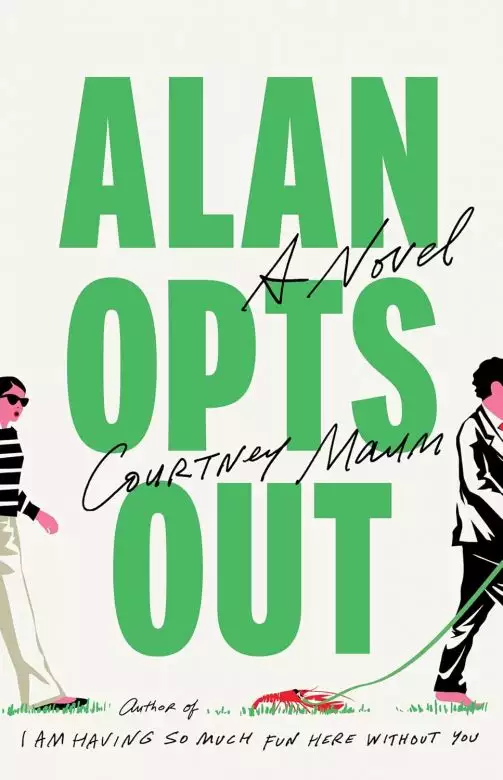
For readers of Rufi Thorpe and Taffy Brodesser-Akner, the story of an ad exec who bombs the biggest pitch of his career and decides to forgo capitalism and live off the land of his suburban Connecticut home--a timely and comedic take on ambition, consumerism, and the sticker price of happiness from an author known for her stealth, comedic satires of the industrial happiness complex.
Alan Anderson is a powerful advertising executive who has built a successful life and thriving business by making people buy stuff they don’t actually need. He’s up for the biggest pitch of his career and the account everyone wants, US Dairy: cow’s milk sales are plummeting, and the C-Suite wants to see trendy oat milk kicked to the curb. But when an anarchist farmer tanks Alan’s presentation, Alan bombs the pitch but ends the day with an epiphany. No longer will he exploit the insecurities of others in the service of capitalism. Alan is opting out.
This development is anathema to his wife, Vivian. She’s just a few positive affirmations, a swimming pool, and an exacting series of social tests away from finally becoming part of the elite women’s club, the Queen Annes, in their adopted town of Greenwich, Connecticut. As if contending with a daughter who wants to write plays (!) and another who has an unnatural empathy with animals isn’t enough to manage, she can only watch as Alan moves into their backyard playhouse to live off the land and—worse—spend time with the family. But instead of shocking the neighbors, Alan’s commitment to a less-is-more lifestyle seems to be catching on. Could everyone want what Alan’s not selling?
Funny, sexy, intelligent, and poignant, Alan Opts Out is the most ambitious novel to date by celebrated author Courtney Maum, acclaimed for her stories that tackle big, chewy subjects of our post-modern America with wit and heart.
Release date:
June 2, 2026
Publisher:
Little, Brown and Company
Print pages:
304
* BingeBooks earns revenue from qualifying purchases as an Amazon Associate as well as from other retail partners.
IN THE POST-PANDEMIC era, Americans weren’t drinking enough milk. Dairy consumption was down from the redwood forest to the Gulf Stream waters, and the US Dairy Council was seeing red.
That ended today. As Alan Anderson waited for his driver to unchain the gate to Greenacres, he tried not to feel offended that his farmer wasn’t there to greet them. No, this was a good thing, no one meeting them at the entrance. This was authenticity. No such thing as idle hours on a Wisconsin dairy farm. Alan’s farmer, his interlocutor, Tucker—whom his underlings at Orris + Anderson had selected out of fifty candidates to be their poster man for dairy—had better things to do than welcome a city slicker when the needs of dairy called. While Alan waited for his driver to untangle the gate’s chain, Tucker probably had his callused hands wrapped around an udder or was fixing a piece of machinery needed to cut grass. Tucker was a man who put the needs of American milk drinkers before his own ego. The American dairy farmer was sacrifice incarnate. This was why Alan’s staff had chosen him, via Google Meet.
With his life now firmly established in Belleport, a private seaside neighborhood in wider Greenwich, Connecticut, it had been some time since Alan had returned to the Midwest of his youth. He couldn’t say that the vibrant grass here didn’t stir him. The penile shafts of the grain silos shining silver against the sky, the humped shapes of the milk cows in the distance, chewing, shitting, chewing; there was something primordial about the land here, something essential and pure and nearly monastic, and Alan was going to bottle it and share it with the world. Or not the world, actually: Because of the hormones that the USDA allowed in milk, foreign countries were beginning to bar American dairy exports. Alan would share this pure, clean feeling with Americans. America was quite enough.
As the barn he’d been told to look for came into view (why were all barns red, was this something he needed to know for the pitch?), Alan pushed his Breitling Navitimer under the denim work shirt he’d donned to read blue collar, prepared to leverage his Midwestern past. Having grown up in a tourist town that came alive only in summer, when people crammed onto the Saginaw, Alan could harness the instability and loneliness of farmers who coursed their lives around the seasons.
“Should I park here, sir?” his driver, Hugo, asked, indicating what could have been a parking spot if it were marked with lines, but as it was, they were negotiating a patch of mud outside the barn. Though he had on footwear appropriate for the soggy conditions, for a fleeting moment Alan wondered how his sister would approach Tucker, what she’d wear and say to telegraph that she worked with animals, too. Despite the lesbianism and alleged gluten intolerance revealed after their dad’s death, it was his veterinarian sister, Aubrey, who was the golden Anderson, anointed because she’d stayed in Michigan while Alan had become whoever he needed to be to get the hell away.
But the Bay Port years weren’t so far behind him that Alan couldn’t channel it; the clean smell of the baking powder his mother vacuumed into the carpet weekly to keep out the lake’s dampness, the tidy basket of remotes and church bulletins by her spot on the couch. The bleak predictability of his parents’ Fridays, when his father acted like a single Miller High Life and a plate of green bean casserole equaled heaven on earth. As a child, Alan hadn’t known what to call his parents’ life and habits, but he craved import and influence, a flashier Friday. And now, Alan, he had that. A continent of dairy, the chance to change humanity’s relationship to milk. Alan was going to kill this. He stepped out of the car into the mud.
The morning went off without a hitch. In the parlance of the youth, the Real-Life Dairy Farmer “understood the assignment.” As they moved from task to task, with Tucker working and Alan observing how he worked, Alan explained that Tucker would barely have to speak during the pitch. He just had to be himself. “But myself in the Big Apple,” said Tucker, “isn’t really me.”
“All you need to do is run them through your workday,” Alan coached him. “Show them what milk means to your family. I’ll prompt you with the questions, you just need to answer. And show up in overalls?”
Tucker Brannigan wasn’t going to be a problem. The problem was with cow’s milk. Alan had been gaming out the complications. One of the issues his creatives had been having—the reason they needed a human emblem for their pitch to US Dairy—was that the people working under Alan didn’t drink cow’s milk anymore. The upwardly mobile youngsters on his payroll didn’t see milk as a viable beverage option: It was more akin to a condiment, something you defaulted to when none of your preferred creamers were available. Milk was the opposite of aspirational, the opposite of modern, a relic from the age of crinkle fries and Ronald Reagan. Like so many other things in American life, milk had lost its meaning and become conflated with other terms and signifiers: “He” did not mean man, “fire” meant outstanding, “milk” did not mean milk. Alan witnessed this distortion play out each time their interns at Orris + Anderson took coffee orders. The staff requested milk that was pressed from almonds and cashews and oats and other grains historically associated with mouth dryness, but these days, Alan supposed, you could make nearly anything wet.
Another issue was milk’s color: The whiteness didn’t play well with generations who wanted rainbow everything. For whatever reason (and there were many you could pick from), the market segments they had tested where dairy sales were down (millennials, Gen Z, the queer community, Black Americans, college students, and women under thirty-five) reported that milk was “lame,” considered outdated; that it was filling and “too fatty” and had an oily taste; and—in one striking response from a career barista—that it was “right-wing.” If you contrasted these deterrents with milk’s pros—it was relatively affordable, nutrient rich and wholesome, extensively available—you’d circle the approach that Alan was most partial to, which was pitching milk as food.
It was a good thing Alan had carved time out in his schedule to make the trip to Greenacres; good to see the challenges in this aging farmer’s path, firsthand. Alan’s father, Norbert, a blue-collar Michigander through and through, would have loved a man like Tucker, a man who carried out the same tasks day after day with sciatica and forbearance, no matter the weather. Even Alan felt envious witnessing the pride and grace with which the RLDF (the code name his agency had given their Real-Life Dairy Farmer) manipulated buckets and pitchforks, mud pumps and the baler. The whole thing left Alan fantasizing about the commercials his agency would direct when they won dairy: Should they show modern compacting presses and motorized bore wells, or just people (they had to be people, they couldn’t just be men) squeezing milk into milk buckets, cow after cow? They’d probably need a hybrid angle: old-timey work ethics paired with modern sterilization practices to suggest milk’s “cleanness” and safety. They’d cue “environmentalism” with wide shots of rolling acres and happy, grazing cows. Pandering to the newest breed of patriotism, an acoustic version of “My Country, ’Tis of Thee” could strum beneath the visuals. They probably couldn’t afford Kelly Clarkson, but a man could dream.
Alan would give credit when and where it was due; his underlings had knocked it out of the park with the RLDF. Tucker had been wearing a checkered work shirt with actual coveralls when Alan greeted him, a Green Bay Packers cap over what appeared to be a healthy head of hair. A man of few words but delightful phrases (he’d answered “tough tomatoes” when Alan inquired whether the animals got cold during the winter and kicked off not one but three sentences with “If I had my druthers”), Tucker also had the dragged vowels and circular consonants of his Wisconsin brethren that Alan would ask him to exaggerate when they pitched the client.
Because that was the whole plan here: Get the Real-Life Dairy Farmer in front of US Dairy. On pitch day, rather than showing a run-of-the-mill PowerPoint like his competitors, Alan was going to show Tucker. Alan would warm the room up with a montage of what cow’s milk used to mean to people, not just in America but all around the globe, and then he’d guide Tucker through a series of questions about his values before taking the room back and delivering the tagline, which he was still working on. Which his employees were also working on, but—as usual—Alan would pen the winning line. They were talking about US Dairy, for God’s sake, an account worth 14 mil. This was Alan’s fight. Over his career he had persuaded prostate cancer survivors to enjoy the freedom and superior moisture management of SailAway® adult diapers; had overcome his animosity for electric vehicles to help them surge in market share; had made the duck-billed platypus the face of supplemental health insurance. Since its founding seventeen years earlier, Alan had grown Orris + Anderson from a boutique advertising agency into an international terminator; he alone could get middle-class Americans drinking milk again.
On the flight home, Alan texted his new assistant to schedule an all-hands-on-deck meeting for EOD even though HR discouraged meetings that could disrupt his stafflings’ “work-life balance,” which as far as Alan could tell was code for going home and scrolling TikTok with a cannabis seltzer. But desperate times called for some maturity. Alan was going to get milk, and he was gonna get his wildcat as well. Though he’d never admit it, one of the things Alan was aiming for with the US Dairy win—aside from a fat bonus—was a new Lion in his crown. The Cannes Lions Award was the top honor in advertising, and Alan had nine of the golden sculptures purring in his office. Not that Alan needed to prove anything to anyone—he’d done that when they’d won John Deere away from Publicis—but a tenth Lion would quell the nervousness he sometimes felt about his ability to keep performing in the industry, soften the animalistic instinct that something dark was coming. But nothing dark was coming for Alan Anderson today! A turbulence-free flight in business class, an excellent meeting behind him, a download with his team ahead. That fresh Lion was nearly on the mantel.
Alan ordered a soft drink from the beverage cart, considered bringing his wife to the South of France for the awards. Vivian hadn’t been able to come abroad the last time Alan won a Lion—or rather, he hadn’t exactly encouraged her to join. A pit crew of one, Vivian thrived in preparing and supporting Alan through high-profile work events, but on-the-ground shop talk was not where she excelled.
Truthfully, Alan was decelerating in that arena, too. Gone were the days when he could stay up drinking pastis until all hours with cinematographers and casting agents, magnetizing the foreign PR girls with his native pluck. At fifty-plus years old, Alan needed to manage his energy; he needed early nights and the reassuring presence of a woman who believed in Alan nearly as much as he did—maybe more, in fact. A trip to the South of France was exactly what was called for. Flaky croissants and hotel bathrobes, perhaps some post-lunch intimacy, another area where his stamina had slowed. A diminished flame was to be expected after nearly twenty years of marriage, but regrettably (because it signaled weakness, a flaw in character) it was Alan snuffing flames. He was flattened after work, leveled, completely fried of brain. Sending emails from the battered wingback in his study calmed his nervous system more than the prospect of penetrative sex, which at Alan and Vivian’s age was starting to require the guest stars of calendars and lube.
But that wouldn’t be the case in France, oh no—the blue sea, it worked wonders in the bedroom. The wrench in the Cannes getaway was that the ocean wasn’t the water that Viv craved. She’d been talking about it for months now, how she wanted to spend Alan’s dairy bonus on a swimming pool. He wasn’t for it, was against it, but he was softening. At this point in his career, Alan could stand to be a little generous, even reckless. Why not give it to her, the prize Viv had dreamed of since they moved to Greenwich? Alan would win the big account, of course he’d win, and then he’d give her swim time. It was going to cost Alan an amount he did not appreciate—the dig, the installation, the time-consuming maintenance—but long term, it was cheaper to give Vivian a swimming pool than to widen his bandwidth.
High on his magnanimity, Alan sipped his ginger ale—a bubbling and refreshing beverage that itself could stand a reboot—as the plane shot him and his fellow passengers through the building clouds.
ON THE THIRTY-THIRD floor, which housed O+A’s main conference room, Alan’s terrifying assistant, Jacquelyn, waited outside the elevator. “Everyone’s there,” she said, handing him the visuals he’d requested. “Flight good?” Jacquelyn wasn’t big on eye contact or full sentences, but she was big on multitasking, which Alan appreciated as they fell in step together through the chilly hall. Her ruthless prioritization skills were salvational (his former PA had left advertising to pursue a degree in “land art”), and as soon as Alan figured out how to compliment Jacquelyn’s focus without it seeming like a come-on, he would give that compliment. In the meantime, Alan was on eggshells with her; cowed. He didn’t call her “Jackie” like everybody else did because she’d never said he could.
“We picked ourselves a winner,” Alan responded. “Did you know that cows are called heifers until they have a baby, at which point they’re called a cow?”
Jacquelyn didn’t really answer. Did she not drink milk? Alan felt like he should know this—she’d been there three months. But as with so many other details about his direct report’s life outside of Orris + Anderson, it felt perilous to ask.
They arrived at the conference room, which was a square shape made of glass just like every other conference room in the first and second worlds. Alan had wanted something with privacy, real walls, but his cofounder was a recovering frat type who took a nearly religious level of comfort in conformity, so they’d settled on glass walls. Kenneth’s penchant for convention would have been a problem if Alan weren’t on the scene. From the get-go, when they’d met back at Northwestern, Kenny (as he’d been called then) was the money, and Alan was the brains. Even as twenty-something panty chasers, they’d had a partnership that worked beautifully: Kenny getting the girls to their side of bars and restaurants, Alan entertaining them, Kenny picking up the bill. At heart, Kenneth was a decent person and an extremely loyal friend, but for an executive in advertising, he had abysmal taste.
“Okay, people,” said Alan, striding into the room. “Thanks for staying late. We’re two weeks till pitch and I’m happy to report that all systems are go-go on our RLDF. Tucker’s gonna knock their socks off with his whole heartland thing.”
Alan spread out his papers, the photographs of dairy farms and Jersey cows with their anime eyelashes, a flannel work shirt hanging off a wooden peg.
“The angle isn’t making milk ‘cool’ again,” said Alan, leaning against the whiteboard. “Americans have lost religion, and we’re their guide to faith.”
In the airplane, Alan had briefly toyed with the idea of using Scripture in the tagline. Samuel 17:29 was apt: “The people are hungry and weary and thirsty in the wilderness.” What was the IP of a Bible verse, exactly? They couldn’t use it—no one had a sense of humor in 2024—but it was tempting.
“Milk,” said Alan, holding up an image of a glass jug on a doorstep. “It’s life, it’s family, it’s proof positive you’ll live to see another day. Have any of you read The Grapes of Wrath?”
The adult children that he worked with cast their eyes down at the table. “Verrrry dramatic scene at the end there, involving milk,” Alan explained. “It’s the staff of life, my people. Important work, tough stuff. This Tucker I spent time with? He’s a volunteer for the town ambulance. The man has never tasted wine. You know what he has every night with his meat and his potatoes?”
“Milk?” ventured Sylvie, his least favorite copywriter.
“Yes,” said Alan. “Milk. And you know what his wife and his three children drink at that same table?”
“Milk?” said Sylvie, again.
“His wife puts almond extract in hers and his children, chocolate syrup. Milk is adaptable to a variety of palates—something we might keep in mind for future applications when we land the account. But for now, I want you to go home thinking: Milk is freaking church. Give me honor, give me dignity—no more of this trend shit, Milk is the new matcha—” He watched Sylvie, who had supplied him with this nonsense, blush. “The game here is not to convince people that milk is making a comeback, it’s to show them that it’s been there all along, wholesome and faithful, the goddamn hometown sweetheart. While soy milk’s been out there slutting it up, milk has had its nose to the grindstone. This is a beverage that knows what it is and exactly what it wants. Show me what milk wants. Show me what milk offers. Twenty-five taglines each for tomorrow morning, capeesh?”
His creatives nodded and muttered their assent. Alan was going to write double that number, because he had control issues. Because Alan was a man who always, always won.
VIVIAN ANDERSON PUSHED the beauty products inundating her bathroom counter into an eddy by the outlet. Centered in her mirror and encased in flesh-toned shapewear, she resumed listening to Strive or Die, the motivational podcast she looked forward to every day. “A match point mentality isn’t a negotiable,” the host declared from her phone’s speaker. “I need my listeners to be waking up every goddamn day thinking—no, knowing—that they are gonna win. This isn’t manifestation. This isn’t vision boards. This is military battle. Women can lift cars that have fallen on their babies. Manipulate actual stallions with their inner thighs. These outcomes happen from just one place of thinking: I win, or I will die.”
First, I’m gonna win the fight against this shapewear, Vivian pledged, tugging at the control shorts cutting off circulation below her gut, and then I’ll win the Annes.
“And I don’t want you dreaming about winning,” the podcaster slash life coach Tawny Grover continued while Vivian shimmied and yanked. “Dreaming is for losity-losers who sleep past six a.m. I want my strivers out there physically grabbing their damn goals.”
“I’m a grabber!” Vivian cried, flush with sudden triumph. The control shorts were up and on. Urination wasn’t an option going forward: Vivian would have to abstain from eating or drinking until further notice.
“Your goals could take days to materialize, or you might need a few years . . . the timeline’s up to you,” continued Tawny. “But one thing I can promise is nobody wins without a plan.”
Vivian nodded in agreement, reaching for the rotating curling iron she’d replaced her nonrotating iron with, but where the heck was it? While Vivian’s dressing room was a pigsty compared to the immaculate way she kept the downstairs rooms, it wasn’t like her to lose items essential to her daily transformation. And yet, she kept misplacing her things. Her TheraFace depuffing wand had evaporated; her coral-pink scalp massager had also flown the coop. And now her brand-new iron? Vivian breathed in through her nose, breathed out through the same passage, letting Tawny’s nasal barkings lubricate and calm her. But it wasn’t working. How was she supposed to rise to the day’s potential without loose waves in her hair?
The doorbell pulled Vivian from her microtraumas. She tugged a robe on and hurried down to meet the Amazon delivery fellow she saw in the security feed on her phone.
“Travis!” she said, forcing herself to smile despite her hectic state. The Midwesterner in Vivian, it had withered but was still clinging to the vine. She always greeted him by name.
“Big load today,” said Travis, lugging Vivian’s latest needs onto the porch. It wasn’t retail therapy, the stream of online purchases flowing to Vivian like water from a tap, it was community alignment. She couldn’t have her girls scuffling around in denim when all the other kids were wearing sweatpants; floral scrunchies wilting in their tresses when the cool girls were wearing neon ribbons. It took vigilance and observation and a finger on the “buy” button to keep up with the trends blowing through the neighborhood. But Vivian was a storm chaser, a climatologist of East Coast dos and don’ts. Today’s delivery was further proof of her barometric instincts. That box there was the ADHD clock the school had recommended for her older daughter, Bailey, for whom “dinner!” translated to “come down sometime this month,” and the carton with the moon logo was the sizzling new riding helmet for her younger daughter, Sunny. Sunny hadn’t had to ask Vivian for the Halo CX helmet bedazzled with rhinestones; Vivian had noticed that all the other show jumpers were wearing them and simply planned ahead. That left three boxes, the contents of which Vivian’s heart thrilled to. Inside those boxes were the ingredients she needed to change her daughters’ lives.
Whoever said that money can’t buy happiness did not have teenage girls. Back in Chicago, Bailey (now fifteen) and Sunny (twelve, so almost a teenager) had been doing well. They had friends, good friends, meaning the right kinds of people with whom they did the right activities: back-to-back sleepovers, Sunday outings to Sephora, mountainous portions of “froyo” shared with giggling pals. But ever since moving to Connecticut, the girls were loafing, flailing. 2020 had been a hard year to relocate, sure. Online learning had delayed the friend-making process; Vivian understood this. But a flight delay was not the same thing as a complete failure to launch. In the four years they’d lived in Belleport, Sunny’s only friends were the horses at her barn, while Bailey had been diagnosed with a “kinesthetic learning style” that her prestigious girls’ school thought would be better addressed at the puppeteering-obsessed Waldorf establishment that was not the Belleport vibe at all. For years, Vivian had been observing and regrouping and failing ever upward, and her girls still hadn’t gotten with the program.
The loafing ended that summer. The stasis? It did too. For decades, Vivian had backed her family with relentless, poreless verve as Alan climbed the ranks of advertising. Swapped her V-necks for boatnecks, her platinum blond for lowlights, consulted an actual speech therapist to mask her corn-fed accent with Connecticut’s dropped R’s. Alan, he’d repaid her. He succeeded and succeeded, moving ever up. But Susannah and Bailey? Vivian smoothed her robe against her shapewear, clicked her tongue against her teeth. She was pulling up the anchor. Dead ahead she’d go. If it took a swimming pool to get Bailey and Sunny the friends and opportunities they merited, then a pool was being dug.
Alan didn’t get it, the transformative potential of an in-ground swimming pool. He’d been popular in Michigan, athletic adjacent; his family, middle class. His house had had three bathrooms, whereas Vivian and her brother, Steven, had to share the only available bathroom in their double-wide with their mother Gretchen’s hair dyes and pastel razors, the fruit rot of the watermelon body wash she was far too old to use. There was, in fact, a second bathroom in the trailer, but it was reserved for Gretchen’s cats.
The Felcher household wasn’t an anomaly in Greystone, Indiana. Though she and Steven were the only kids with a father on an oil rig in some foreign land, lots of people had an absent dad. Their neighborhood was working class. Their classmates, future farmers. But you know what bought you class in Greystone? A true-blue swimming pool. Even a rube lik. . .
We hope you are enjoying the book so far. To continue reading...

 Please log in to recommend or discuss...
