'A bird in a cage may be safe but it will know no peace until it can fly. After all that we have seen, all that we have lost, I believe that the time to dance has come. We've hidden long enough.'
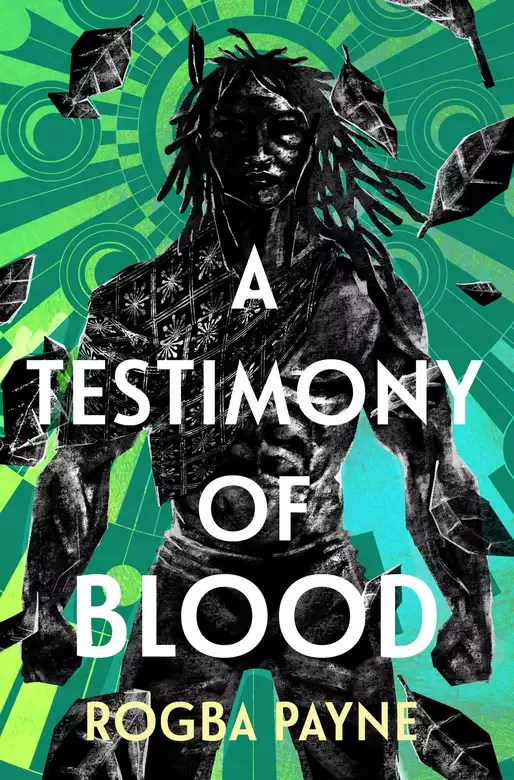
For those with the wit to learn, there is no better teacher than death. Nowhere is this truth better known than in the Eredo; where death's signature marks every corner as its leaders and people try to recover from a devastating attack. The lost princess Falina Almarak has been crowned queen of the Kasinabe and charged with the unenviable task of rebuilding a broken nation.
Rumi Voltaine, seen by so many as a hero, struggles to come to terms with the revelations of his ancestral past and the expectations that come with it. With the Shadow Order deprived of its essential healing elixir, Rumi and his companions embark upon an impossible mission: to journey into the deepest parts of the forest known as the bush of ghosts. The forest holds many secrets - including the gateway known as the Door of Testimony which may hold the power to bring the dead back to life. They will have to be careful though; godhunters are on their trail and time is a precious commodity when your adversaries are immortal...
Inspired by West-African spirituality and set in a world reminiscent of colonial Africa. A TESTIMONY OF BLOOD is the continuation of the SONG OF GODHUNTERS an epic adult fantasy series.
Release date:
July 17, 2025
Publisher:
Orion
Print pages:
544
* BingeBooks earns revenue from qualifying purchases as an Amazon Associate as well as from other retail partners.
Lethi crept out of the bed, quiet as a thief, trying not to wake up Marlé. The empty decanter and drink-drained cut glasses on the dressing room table were a remnant and reminder of the night that had passed.
He ran a hand through his hair and pinched the bridge of his nose. Reckless.
He was a lieutenant now, the youngest in the Palmaine Army. He had responsibilities and drunken nights with Marlé were not one of them.
His trousers and uniform jacket were bunched in a shameful tangle only a few steps from Marlé’s bed. He suppressed a smile, remembering the moment she had told him to undress. How quickly he had ripped his uniform off.
He touched the pendant at his neck. A four-point star suspended on a rope of gold. The closest thing he had to a mother. Inwardly he recited from the Holy Book of Palman. For the Son sees our hearts and brings peace to those who resist evil.
He drew his trousers up to his hips and buttoned his jacket. The soreness from the thick scar across his neck resurfaced as he fastened his gorget patch to the buttons under his chin. Where is my rifle?
‘Did I bring it with me?’ he said, under his breath. I must have.
He scanned the room. It was dark, but he could see the gun’s silhouette. Leaning against the far wall, like an irritated travel companion waiting for him to get ready.
‘Where are you going?’ came a voice from behind him.
He glanced back. Marlé. Her voice was sweet as pine honey. She held the bedcovers up to her neck with one hand, almost as a threat. The smile on her lips said she meant to make good on her implied challenge. Her eyes carried the sure knowledge that she could make him come alive again with a drop of the bedcovers.
‘I said, where are you going?’
A sliver of morning light leaked through her curtains, illuminating her grape-dark skin for the slightest moment and it made Lethi’s heartbeat faster.
‘You know I can’t stay,’ he said, sliding his rifle sling over his shoulder.
‘But I want you to stay,’ she said, lowering the bedcover ever so slightly. An inch from abandoning modesty.
He lifted his chin. ‘I can’t.’
‘Last night, you said I could have anything I wanted.’
‘That was last night.’
Her smile widened. ‘Fine. I know you will always come back to me.’
‘Is that so?’
She gave a soft nod. ‘You are in love with me, Lethi, and I wonder when you will finally say it.’
He strode towards her and crouched low. ‘I might be a reckless soldier and a degenerate gambler, but I’d never take such a ghastly risk as loving you.’
She threw back her head and laughed. The sweetness of the noise filled the room and Lethi found himself leaning towards her. That close, he could smell the powdery musk of her perfume. Every cord of muscle in his body pulsed with the desire to kiss her.
Her laughter cut off sharply and her dark eyes were on him again. She traced a finger over the deep scar across his neck and inclined her head towards his. Then, as he parted his lips to touch hers, she grabbed him by the chin. ‘Be gone then, soldier man, but come back to me.’
Lethi’s breath caught in his chest as she shoved him back. It almost hurt to be diverted from their kiss in that way.
‘Shave before you come back to me,’ she said, massaging the dark stubble on his chin. ‘Like the first time.’
Lethi smiled and bowed as he rose to leave.
She gave him a long look. ‘I know your secret, soldier man.’
Lethi went completely still.
‘I can see it in the thickness of your hair. The bridge of your nose. The smell on your skin when you sweat. The colour of your eyes by candlelight.’
Lethi could only stare, mouth agape.
She leaned forward and whispered in his ear. ‘You can dress like them and style your hair just so, but you can’t fool me. I have seen the dancing truth of you. When you talk in your sleep, you speak Odu.’
Lethi’s breath caught in his gullet and for a moment it was as though he had been punched in the throat. He took a stumbling step, remastering himself as he drew back from her. ‘I don’t know what you’re talking about,’ he muttered.
Even to his own ears it was unconvincing.
She gave a knowing smile. ‘Of course you don’t.’ She leaned back in her bed and let out her breath. ‘Till we see each other again, my lost soldier.’
‘Till we see each other again.’
Lethi slipped out of the door, down the narrow staircase and through the arched doorway. The sudden glare of the sun made him shield his eyes. How late is it?
His grey saddlehorse was hitched to a lantern post, and he mounted without ceremony, directing the horse towards the northernmost of the six villages they had been working through for the best part of a year. His fire team would be waiting for him.
When he arrived, the air in the village still carried the smell of death and gun smoke. People ran or hid at the sight of his uniform as he rode through. He parted the crowd with all the gentle authority of a ship’s prow parting the ocean face.
One particular woman stared at him as though he was a walking, breathing pile of crap. ‘What are you looking at?’ Lethi said, in the Common Tongue.
She spat on the floor in disgust. ‘How do you sleep at night?’
He tapped his rifle casually. ‘With one eye open.’
Her snarl disappeared at the sight of his gun, and she backtracked into the shadow of a mudbrick shack with the rest.
A scream nearby drew Lethi’s attention. He rode towards the sound. Banasco, a burly man with a receding hairline, stood in front of a cluster of shackled captives with black sacks over their heads. Beside him stood Dareem; a thin, bald man with a thick beard and a cattle prod in hand.
‘How many did you find?’ Lethi asked.
The two men turned to him and saluted.
‘Seven, sir,’ said Banasco. ‘Attem is still searching the village, but these seven for sure are from the Black Hammer Clan.’
Lethi studied the captured men. One of them, by his size, looked little more than a child. Lethi removed his hood. It was a boy, not more than fourteen if Lethi guessed right. All the same, the boy’s brown-eyed stare was pure murder. Young or not, he wanted to do Lethi violence.
‘Quite young,’ Lethi said.
Banasco shrugged. ‘What shall we do with them?’
Lethi thumbed his chin. Their orders were to kill all members of the Black Hammer Clan, but their campaign through Guyarica had been a long one and whatever remnant there was of the Black Hammer would be dead before the end of the year. In truth, their work was as close to done as it could possibly get.
‘How many did we catch in that last village?’ he asked.
‘Twelve,’ Banasco said.
Lethi scratched his neck. ‘Leave the boy. Hang the rest somewhere everyone in the village will see.’
Banasco didn’t move. ‘Leave the boy?’
Lethi froze. The man was lurking dangerously close to insubordination and for a young lieutenant that could be the beginning of the end. He drew himself up to his full height and spoke low. ‘If you ever make me repeat myself again, I’ll have you flogged naked in front of the natives.’
For one, eternal moment a tense silence had its way and Banasco just stared. Then he let out a breath and bowed his head. ‘Of course, sir.’ He turned to Dareem. ‘You heard the lieutenant. See that they’re hanged.’
Dareem scowled. ‘I hung the last batch. The Lieutenant said you should hang them.’
‘Chain of command,’ Banasco said, smirking.
‘I’ll just wait for Roadie to get back. He enjoys it,’ Dareem said.
‘Take your squabbling elsewhere,’ Lethi snapped.
The two soldiers saluted and dragged the prisoners away.
Two men appeared in the distance. Attem and Roadie. Attem was a dark Darosan man, with tribal marks on his cheeks and shoulder-length locs. He was the only native on their team, and without him they would have been lost in Guyarica. The man could smell sedition in a sweetshop. As good at hunting the Black Hammer Clan as a veteran cat culling a rat infestation. Within hours of them landing in a village, Attem would find a way to flush the clan out from the deepest, darkest holes. The team would spend hours searching a house, then Attem would arrive and fish out three insurgents from a cupboard as though he had told them to wait for him there.
The other man, Roadie, was of Northern Palmaine vintage – pale as the first sheet of snow. Even in the blistering heat, it was plain he came from a place where the sun never shone. Frighteningly skinny, he had the skeletal hands and stern-faced stare of a man that had seen death and spurned its summons. It was said of Roadie that he had seen more corpses than cooked meals. A good man to have on your side to be sure, but a dangerous one too. Hardly ate, never seemed to sleep, never hesitated to draw his blade.
Attem gave a casual salute. The man always had an easy bearing. Other Lieutenants had said he was too easy for a native, but their loss was Lethi’s gain. Native or no, he was the best tracker Lethi had ever seen.
‘The village is clean, sir,’ said Attem.
On the matter of hiding rebels, Attem’s word was as good as certainty.
‘Good,’ said Lethi.
‘That’s the last of the villages in Guyarica. Sir, we could sweep out east to the river to make sure, but I think we have routed the Black Hammer in this land.’
Lethi thought the same thing, though he had hoped not to hear it so soon. It meant this part of their mission was over, and there had been great pride in doing it so well.
‘I am minded to agree with you, Attem.’
Attem nodded and wet his lips. ‘If I may ask, sir, what is next?’
In truth, Attem certainly could not ask. A man of his rank asking his lieutenant any question was an act of shuddering audacity. But what did rank mean now? What good was there in withholding that information when their early success was largely based on Attem’s tracking skills.
‘We wait for instruction from the Crown,’ said Lethi. ‘Then I expect we move on west.’
Attem clicked his tongue. ‘West?’
‘To Basmine.’
Roadie leaned back suddenly and gripped his knife as though the word alone was sure to bring danger.
‘Sir …’ Attem started. ‘Basmine is not like this place. It is far larger, dense as a rock. If the Black Hammer Clan have gone as far as Basmine then—’
‘Attem,’ Lethi said, putting a hand on Attem’s shoulder. ‘We will have our orders.’
Attem swallowed and let out a heavy breath. A sigh heavy with the resigned irritation of a guilty criminal receiving his death sentence.
‘Give me a week to tell my people, see my family,’ Attem said. ‘I am an Odu man.’
It was a fair request. Richly deserved. Lethi nodded. ‘Four days.’
Attem hissed but made no further complaint.
Roadie gestured to the boy prisoner, still kneeling in the dust, and inclined his head. It was his way of asking, ‘Should I kill him?’
Lethi shook his head and waved off Attem and Roadie in dismissal. They saluted and moved in the direction of the rest of the fire team. They would call him a hero for what he had done in Guyarica. A light in the darkness. And what ugly heroes we make.
Lethi turned his attention to the boy. Though silent, his jaw was clenched tight, and a trail of tears had run down his dust-soaked cheeks. Lethi sank to his haunches and pulled six gold coins from his jacket pocket. ‘Take this and start over somewhere.’
The boy made no move to collect the coins.
Lethi shrugged and dropped the coins on the floor. ‘Suit yourself.’
He straightened and walked towards the rest of his team.
‘Omaku,’ said the boy.
Lethi narrowed his eyes. He had heard the curse before, along their campaign. It was an Odu word. It meant something along the lines of ‘I will find joy when you die’.
When Lethi first heard it, it had unnerved him, but the Palmaine Army had been long in Guyarica, and the word had lost its power.
He smiled at the boy. ‘Find joy some other way.’
The young man walked with the slow hesitation of a panther on the prowl. His teeth were clenched tight with the same sort of predatory anticipation. The vaulted theatre was teeming with people and all eyes seemed trained on him.
‘That’s him,’ someone whispered.
He walked with his back straight, uncomfortable with the attention but maintaining his soldier’s bearing. The single black cowrie that served as a pendant for his necklace seemed to grow warm as he moved under the attention of their stares.
‘The Old Dog Never Dies!’ someone shouted.
He raised a hand in salute. It was a gesture of respect, when said in that way. An homage to his mother who had once worn those words.
Another shouted a name. ‘Ajanla Erenteyo.’
He turned at the sound of it. It was not his true name but one he wore as a sort of mask. Ajanla Erenteyo. The one who killed the Priest of Vultures. It was like they were talking about someone else. His true name – that he had only just come to know – carried a story that most would struggle to believe.
A voice sounded from behind him. ‘You’re getting good at this.’
He glanced over his shoulder. A woman with fire-red hair and a high-necked grand-boubou, gave him a teasing smile. Though it felt strange, when he looked at her, he could think only of a sword.
‘Zarcanis,’ he breathed.
She smiled. ‘Hello, Rumi. Keep this up and people might actually believe you are who they say you are.’
Rumi didn’t have to ask what she meant. The Eredo was preparing for war and it meant that the people needed symbols. Stories. Symbols like Zarcanis who had gone toe-to-toe with a godhunter and told others to leave her to it. Symbols like Alangba who had faced down twenty Obair and won. Like Ladan who had lost a hand to save his friend. Renike. Renike, barely fifteen, who had faced a nightmare and stood her ground. People who had fought in the Battle of the Thatcher and won. It was why Rumi walked like he was strong, even when he wanted to be anything but strong.
The truth was, there had been no victory won at the Thatcher. The hundreds who were now in shallow graves were a testimony to the silent truth. When the battle ended there were tears of sorrow, not of joy. They had lost more than they ever could claim to have won. Basmine was still under the control of the Palmaine, and across the protectorate they were still whipping native boys bloody for whistling at night. It was survival, not a triumph.
The fighting, they all knew, was far from over and nothing stirs people to fight like a story. A myth. Something to believe in. To hope for. So they let the stories grow till they had sprouted legs and walked on their own.
It occurred to Rumi that stories had a way of shape-shifting as they travelled. In the Eredo they called him Ajanla Erenteyo, but the Priest of Vultures had called him the Son of Despair. His mother had called him Voltaine and now he was meant to understand that his true name was Omo-Xango – a descendant of a god; Xango the agbara of thunder. It was a lot for anyone to hold together all at once.
In the aftermath of the battle, a good number of capable Seedlings were made Sulis. More at one time than ever before. The Eredo needed shadowwielders if it was to succeed in its unimaginable task, so they were quickening the process of making them. Every day, new recruits were given the Bloods and being taught to wield the shadow.
Rumi had not called his own shadow since the battle. Had not returned to sparring. He wasn’t ready. He had not fortified his mind enough to even attempt to call it again. To call the shadow was to confront the deepest truths of the mind. To face the deepest gripes of the unconscious. There were truths lurking at the back of Rumi’s mind that he dared not confront. Truths too clear and sharp to acknowledge.
They reached the meeting room and a tall, bearded man gave an affirming nod. The muscles on his arms would look obscene on any statue and yet here he stood, a full picture of brawn. He had the look in his eyes of a man who had to fight to the death to earn his morning bread. Alive and intense.
‘Ajanla Erenteyo,’ he said.
Rumi smiled. ‘Strogus the doorkeeper.’
Strogus held the door open. ‘Take a deep breath. Your crowd awaits.’
Rumi breathed in as he stepped into the meeting room. The huge chamber could have been a theatre of its own. Rock lanterns had been carved into the stalactite canopy and the large roundtable at the centre of the room dominated the space. Every man or woman one would expect at a war council meeting was in attendance. Lord Mandla, the leader of the Eredo; his six chiefs who served as trusted advisers; the Captain Shadowwielders who trained everyone in the Shadow Order; the First, Second and Third Rangers of the Chainbreakers – the Eredo’s expeditionary force. All sat with grave, contemplative faces.
Rumi searched high and low, but there was no sign of Nataré. No sign of any of the sentries, for that matter. They were still at their posts, no doubt – guarding the broken walls.
He took a seat away from the round table, in one of the more inconspicuous parts of the room. He thought of his father, still recovering in the botanical ward from his injuries at the Thatcher. At the battle, his father, Griff, had released an explosion of shadow that Rumi could scarcely believe. They had their name back now and what a name it was: Xango.
Rumi scratched his neck. What does it mean to be the descendant of a god? It certainly didn’t give him any godly power. It was said that when Xango called thunder by its name, the thunder would answer; when Rumi called a dog by its name, he was usually ignored. Though he had moments of great strength in the shadow, Rumi was not one of the best shadowwielders. Neither was he a great conjurer, nor did he have the ingenuity of someone like Sameer. In short summation – aside from as a musician, he had seldom shown any true skill in anything. All in all, he was pretty sheggin’ pathetic for a godling. And yet, here he stood – in a room full of heroes, with a name that stood as high as all the others. He felt like an impostor and thief.
A strong tower of a man stepped up to the roundtable – it was Telemi, Lord Mandla’s bodyguard. He raised his hand, cleared his throat and all the talking stopped. Lord Mandla, the beating heart and thinking mind of the Eredo, rose to his feet in the silence. He wore the woven raffia headdress of an aminague, which made him look more ominous and final than he already was.
‘Welcome,’ Mandla said. He cast a quick glance over the room like a shepherd silently counting his flock. ‘We are all here in the context of terror. Thirteen days ago, our gates were broken and we fought an enemy most believed only existed in scare stories. Our grave sites are full, our martyrs have made their stand, and the nights of mourning have not ended. But the truth remains: we are in the teeth of terrible jeopardy. The nation that they call Basmine, and all its precious people, remain in the hands of an oppressive foreign power. With the battle at the Thatcher, forces beyond our imagination have now been made aware of our existence, of our strength. They have broken our wards and left us completely exposed. As a people – as a reality – we face extinction. But I did not call this meeting to dress the wounds of our defeats. We will dress them until we die. I called this meeting to tell you that the future imagined in the dreams of generations past is in our reach.’
Rumi sat up as though suddenly called to attention.
‘Our story is not at its end,’ Mandla said. ‘It is at its beginning. The Palmaine king has covenanted with Palman and the godhunters may break down our door, but we have something they never will: the evidence of the Skyfather’s hand.’
Rumi glanced at the door.
Mandla locked eyes with Rumi, his stare seeming to hold him in place. Rumi was certain that Mandla was going to name him as the evidence of the Skyfather’s hand. Make him some symbol of salvation. His heart kettle-drummed his ribs. Mandla shifted his stare to the tall doors at the far end of the room.
‘We know the truth. We know the mission of their missionaries. We know the silent violence of their loud lies. We know their civilisation is not civilised and we see through the disguise. This year we break the mask. This year we show them that there is a nation. This year we show them that Dara lives. The old blood is back.’
The doors creaked slowly open as Chainbreakers spilled into the room. They moved with perfect synchronicity, forming an honour guard.
A woman strode imperiously forward. She wore a beaded crown that covered her face and a golden iborun shawl of glimmering damask. Her fly-whisk was made with the stark-white hairs of Shinala tail. One by one, the crowd bowed in total salute.
Mandla cleared his throat. ‘Old blood has returned. The circle of time spins anew. All hail the Golden Eagle; all hail the Golden Eagle! Queen Falina Almarak, daughter of King Olu Almarak, blood of the ancestors and rightful ruler of our nation. Ka-Biyesi O!’
Rumi pressed his face to the floor in the highest possible salute. Even to one not born in the Eredo, it was a compelling spectacle.
It was death to look a monarch in the face when they wore the crown. Yet Rumi’s gaze lifted to peek up at her. He stole a quick glance up as the woman took her seat at the centre of the roundtable. A queen. No less than King Olu’s daughter. Now that is a story.
A voice boomed behind Rumi as he came to his feet. ‘Long may she reign.’
He glanced over his shoulder. A small-boned Kuba stood with arms folded across his chest.
Rumi smiled. ‘Sameer.’
Sameer grinned. ‘Ajanla Erenteyo. I hear you killed two hundred Obair with one hand tied behind your back. I hear you blink twice for a good night’s rest. I hear your shadow is like a rolling ocean wave and a mighty east wind.’
Rumi touched his chin. ‘Funny that. I hear you are so clever you tricked Ilesha out of his only good pair of sandals. I hear you read two books every hour and recite them all from memory before you go to sleep. I hear you never use a clock because you count time in your head.’
A third figure appeared; an albino man, big as a bricklifter, with scarred knuckles and golden eyebrows. He grinned. ‘I hear you …’
They waited for a moment, but Ahwazi just gave a confused look.
‘You ruined it, Ahwazi,’ Rumi said with a laugh.
Ahwazi scratched his chin. ‘I had something but it just slipped my mind. What was it?’
Sameer turned to Rumi as they sat down. ‘Is it true you haven’t touched your shadow since it happened?’
Rumi nodded. ‘That one’s true.’
Sameer let out a breath and nodded his understanding. ‘It all got a bit much in that battle.’
Rumi frowned. ‘It did.’
A small silence ensued before Ahwazi snapped his fingers in realisation. ‘That was it. I heard you … Shege, that wasn’t it either.’
Rumi laughed and turned to Sameer. ‘I was told only Suli could attend this meeting.’
He smiled. ‘That’s why I am here.’
Rumi gave him an appraising look. ‘They raised you to Suli?’
Sameer nodded. ‘We just found out this morning.’
Rumi blinked. ‘Ahwazi, you too?’
Ahwazi nodded. ‘Honour in battle. A good many Seedlings were raised today.’
‘I am glad to hear it,’ Rumi said.
Sameer took a moment to wipe his thick spectacles. ‘Everything has changed now. Our gates were knocked down. Our wards were broken. We can no longer pretend that there isn’t a world out there that is desperate for our participation.’
Ahwazi rolled his shoulders. ‘And what a participation it will be.’
‘What do you think happens next?’ Rumi asked.
Now Sameer rolled his shoulders. ‘I can’t say for sure’ – he gestured to the now-seated queen – ‘but she stands at the centre of it.’
Rumi lowered his gaze. ‘Long may she reign.’
‘Long may she reign,’ Sameer added.
Ahwazi raised his chin, his voice suddenly serious. ‘I remember now, and I actually did hear this one.’
Rumi smiled. ‘We are listening.’
Ahwazi put a hand on each of their shoulders and spoke. ‘I heard your father shouted the name of a god to call his shadow. I heard the blood of a god runs through your veins.’
The laughter stopped.
Falina could barely see anything beyond the crown’s beaded veil. It was a miracle she had made it to her seat without tripping over, and now she wanted nothing more than to take the crown off and have someone rub peppermint oil into her scalp. Maka Naki pulled her chair out and bowed low, his face almost pressed to the ground. He’d been different since the battle. Fewer smiles, hardly any jokes, no interest in her bottom. They were all different since that day.
She glanced across the table at Alangba and managed a smile, though he could not see it past the beaded veil. Alangba had put his life on the line for her against unimaginable odds. Having someone give so much of themselves to see you safe; all because they believed that you were something important, something worth fighting for. It changes you. That was why she was here. That was why she wore the crown. Alangba’s words flashed through her head: ‘duty comes before death’.
A part of her did not want to be there. In a way, knowing they were all survivors of that carnival of death made the guilt stronger. Who were they to live and hold meetings when so many had died? At the same time, being around them gave her a sense of belonging that she had never had before. In Palmaine, she’d felt like a flower cut from the cluster; in the Eredo she was a seed replanted. They had been to the hellmouth together and here they were – fighting. ‘One Nation,’ Mandla had said. One speech from Mandla would have a fish fixing to fly. I don’t have what he has – I’m no leader.
Her sister Adelina should have been the one to wear this crown. She would have carried it well – but she jumped from the slave ships. And now the coward wears the crown.
Falina drew in breath, nodded to the gathered crowd and spoke in perfect Mushiain. ‘Ejide.’
At her command, men and women rose from their bows to take their seats.
Mandla cleared his throat. ‘Your Majesty, we have called this meeting to seek your approval on the recommendation of the chiefs.’
Falina raised an eyebrow. ‘And what is that recommendation?’
Mandla lifted his raffia headdress and met her gaze. ‘War, Your Majesty.’
Falina’s knees kissed as her entire body went tense. What she had seen was just a battle, and now the call was for war. It was no surprise to hear Mandla say it, but the word still hit like a punch.
She drew in a breath. ‘Are we not safe here? Can we not rebuild our walls? Fortify ourselves?’
Mandla’s expression did not change. ‘Our wards were the work of ancient magic that cannot be restored. Our walls and gates will be rebuilt, but it will take time. Worse still, some of the prisoners we held have escaped, Zaminu amongst them. The man is no fool – he knows we are here and will certainly try to find us. We will fortify as best we can, and perhaps we might be safe again, but we will never have peace. The Palmaine strangle our land, dominate our brothers and sisters, and we sit quiet while the blood song plays.’ He shook his head. ‘A bird in a cage may be safe but it will know no peace until it can fly. After all that we have seen, all that we have lost, I believe that the time to dance has come. We’ve hidden long enough.’
There were murmurs of strong approval amongst the crowd. Any idle spectator saw that there could only be one choice now. Mandla had laid the truth out plainly – to hide now would be an act of loud cowardice. There was one thing Falina knew for sure about the Kasinabe – cowardice to them was a sin as grave as treason.
Falina’s jaw tightened as she lifted her gaze to the crowd. ‘So, it is war, then.’
The crowd didn’t cheer, didn’t grumble, didn’t even murmur in surprise. Her declaration of war was regarded with the solemn silence of a gardener trimming the hedges – war was nothing new to them, it was what they had always known would come, what they were built for.
Mandla bowed low. ‘Long may you reign and may your victory be permanent.’
Falina tilted her neck slightly under the weight of the beaded crown. ‘How do we begin our preparation?’
‘First, by raising your war chiefs, Your Majesty,’ Mandla said.
‘Who are the candidates?’
‘The Six Chiefs remain at your service, Your Majesty, but for this campaign we will need at least two more.’
Falina rubbed her neck. ‘Who would you recommend?’
‘On the field of battle, there is none greater or of more varied experience than Zarcanis the Viper.’
A tall, lithe woman with red hair rose to her feet. Falina made a show of inspecting the woman. From the set of her shoulders and the subtle cords of muscle under her high-necked boubou, it was plain this was a warrior. Her dress was simple and she had a deviously casual bearing that complemented the blank, inexpressive look on her face.
Falina parted her veil with one hand. If she was going to go to war alongside this woman, she wanted them to be face-to-face when they agreed to it. The crowd gasped, but this was not a time for ceremony. ‘Zarcanis the Viper?’
‘Some people call me that,’ the woman said.
Falina produced a golden kola nut from the ornamental satchel at her hip. ‘What do others call you?’
Zarcanis stared at the golden kola nut like it was a dire threat, then picked it up and
We hope you are enjoying the book so far. To continue reading...

 Please log in to recommend or discuss...
