- Book info
- Sample
- Media
- Author updates
- Lists
Synopsis
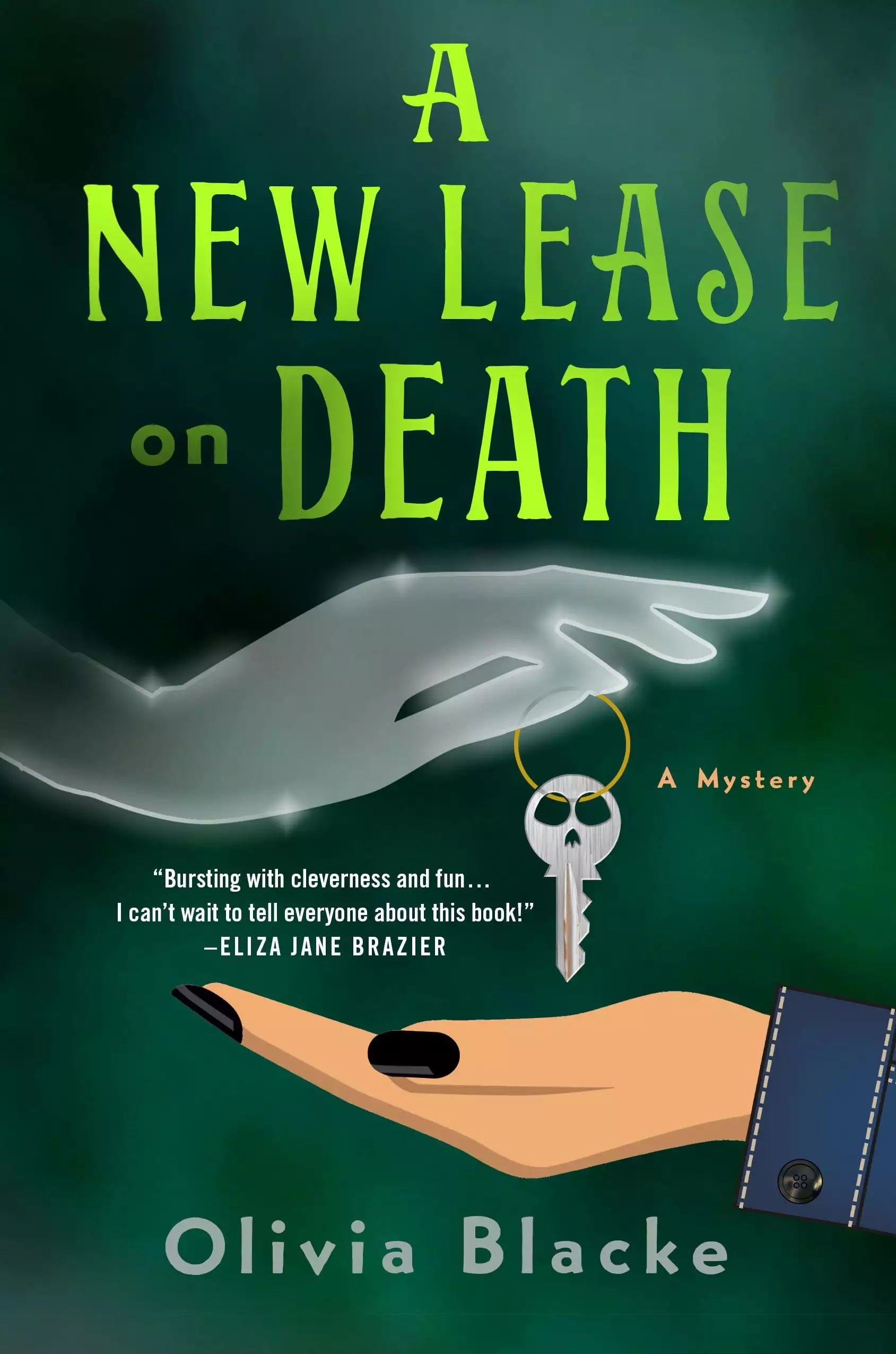
In this darkly funny supernatural mystery about an unlikely crime-solving duo that launches a commercial, unique, and genre-blending series, death is only the beginning.
Ruby Young's new Boston apartment comes with all the usual perks. Windows facing the brick wall of the next-door building. Heat that barely works. A malfunctioning buzzer. Noisy neighbors. A dead body on the sidewalk outside. And of course, a ghost.
Since Cordelia Graves died in her apartment a few months ago, she's kept up her residency, despite being bored out of her (non-tangible) skull and frustrated by her new roommate. When her across-the-hall neighbor, Jake Macintyre, is shot and killed in an apparent mugging gone wrong outside their building, Cordelia is convinced there’s more to it and is determined to bring his killer to justice.
Unfortunately, Cordelia, being dead herself, can't solve the mystery alone. She has to enlist the help of the obnoxiously perky, living tenant of her apartment. Ruby is twenty, annoying, and has never met a houseplant she couldn't kill. But she also can do everything Cordelia can't, from interviewing suspects to researching Jake on the library computers that go up in a puff of smoke if Cordelia gets too close. The roommates form an unlikely friendship as they get closer to the truth about Jake's death…and maybe other dangerous secrets as well.
Release date: October 29, 2024
Publisher: St. Martin's Publishing Group
Print pages: 304
* BingeBooks earns revenue from qualifying purchases as an Amazon Associate as well as from other retail partners.
Reader buzz
 Please log in to recommend or discuss...
Author updates
A New Lease on Death
Olivia Blacke
I didn’t know how long I sat cross-legged in the snow, waiting for the dead man crumpled on the ground in front of my building to wake up. Might have been five minutes. Might have been five hours.
As I watched, pellets of snow accumulated on his flannel-pajama-clad legs and fuzzy-sock-covered feet. The dead man wasn’t dressed for the weather, that much was certain. Boston in the winter was harsh and unforgiving, but he hadn’t died from exposure. If I had to guess the cause of death, I’d wager it had something to do with the bullet hole in the center of his forehead.
I guess someone could have shot him then walked off with his coat and boots. This wasn’t exactly a crime-free block, as evidenced by the body collapsed on the cold, hard sidewalk in front of me. His sleeves were pushed up to his elbows and he had a bruise on one of his bare wrists. Judging by the phone still clutched in his other hand—the latest model—robbery hadn’t been the killer’s primary motive. That phone cost a month’s rent in this neighborhood.
It was either very, very late, or very, very early, depending on how I looked at it. Despite the weather—which was nasty, even by Boston standards—eventually someone would pass by, maybe walking their dog before work or hurrying for the bus. They would notice the snow-dusted pile of clothes that with each passing flurry looked less and less like a human body. Someone would eventually call the cops, but the dead man was already beyond help.
A few cars had passed while I sat vigil. Drivers struggled through as-yet-unplowed streets in near-whiteout conditions without so much as a glance in our direction. Not that I blamed them. In weather like this, they’d need all their attention on the road. The street was steep, and if they slowed too much, they’d never be able to crest the slippery hill. Besides, in this neighborhood? At night? If I didn’t live here, I wouldn’t stop, either.
Distracted by patterns forming in the swirling snow as it drifted lazily to the ground, I almost missed it when the dead man sat up.
“Easy, buddy,” I told him, but I doubted that would be much help. The next few minutes were going to be rough for him.
“I know you,” he said, blinking at me in confusion. It wasn’t yet daybreak. The streetlights—the few that were working—reflected off the low, heavy clouds and the thick layer of snow coating every surface, bathing the street in a bluish light. Despite my advice to take it slow, the dead man pushed himself to his feet. He swayed for a moment, struggling to regain his equilibrium, which couldn’t have been easy, not in his condition.
I got to my feet as well, keeping a fair distance between us as he tried to process what was going on. Now that he was upright, the snow fell away from him as though it had never been there. He wore an oversized Boston Bruins hoodie. Out of habit, he flipped the hood over his head, yanked his sleeves down, and shoved his hands into the front pocket, slouching as he did so. The sweatshirt wasn’t nearly warm enough to protect him from the bitter cold, but whether or not he realized it yet, he was beyond caring about such things.
“You’re not the pizza delivery guy,” he said. He gave me a long assessing look, the kind that made me feel like I was on display at a market. “Wait a second. I do know you. You’re that girl,” he said.
“Cordelia,” I told him. I made no move to shake his hand. “Cordelia Graves, 4G.”
“Jake Macintyre,” he replied automatically. “4H. You live across the hall.”
“Yeah,” I agreed. He’d been my neighbor for going on two years. He was a nice guy. When the building manager told me he couldn’t fix my
leaky sink until Monday, I asked Jake if he could loan me a wrench or something. Instead, he came over and fixed the leak himself, and then insisted on helping me rehang a sagging curtain rod.
Jake was a slightly below average height white man with a full head of dark hair and the beginnings of a beer paunch concealed under his hoodie. He ordered a lot of pizza, and sometimes let the empty boxes pile up in the hall over the weekend. Occasionally, I would hear him shouting at his TV when hockey was on, but like many Bostonians, he was more likely to watch the game down at the corner bar than alone in his apartment. He had loud friends over all the time, but he didn’t stomp around when he came home late after a pitcher (or three) of beer, so while he wasn’t the best neighbor I’d ever had, he was far from the worst.
“Wait a sec. I remember now. You’re dead,” he stated, sounding bewildered.
I nodded. “Yup.”
Best I could figure, I’d died a few months ago, sometime around Christmas. Those first couple of days after my death were a confusing jumble, but I had a distinct memory of Jake and a couple of other neighbors standing in the hall, watching the paramedics wheel my body out of my apartment. “I am. Dead, that is. And we need to talk.”
“Bobby put you up to this, didn’t he?” Jake asked. “Or was it Ryan? Maybe Markie? Nah, it wouldn’t be Markie. He’s not speaking to me right now.”
I wouldn’t know if this phenomenon was unique to Boston, because I’ve never really lived anywhere else, but it seemed like half the men I met ended their name with a “y” or an “ie.”
“Markie’s the cute one, right?” I asked. I held my hand up several inches above the height of my own head. I was no slouch myself, a few inches taller than Jake, but Markie—if he was the guy I was thinking of—had to duck to get through doorways, especially those made in the eighteen hundreds when the population was significantly shorter. Come to think of it, I wasn’t so sure Markie was actually cute so much as he was tall. In a city where we spent half the year so bundled up I wouldn’t recognize my own mother if I passed her on the street, I suppose looks didn’t matter all that much.
Granted, I hadn’t seen my mother in decades. I probably wouldn’t recognize her unless she walked up to me and introduced herself, but that was neither here nor there.
“You’re thinking of Scotty,” he corrected me. “Markie’s the one with—” He stopped himself mid-sentence. “You are her, right? The dead girl?”
s, hardly what I’d call a girl. The dead part, well, that was spot-on.
“And you’re dead dead. Not fake-your-death-to-get-out-of-child-support dead?”
“As a doornail,” I said. I wondered what kind of person would ever consider faking their death to avoid paying child support. “About that—”
He cut me off. “You’re kinda cute for being dead.”
I know, I should have been offended. Because feminism and empowerment and all that. Don’t get me wrong. I was a feminist. I was one hundred percent one of those kooks who thought women were whole-ass people in their own right and deserved to be treated as such. Wacky, right? I didn’t love having my cuteness judged by someone I barely knew, as if somehow their opinion of my appearance mattered. Jake’s comment, while not entirely PC, didn’t bother me—much. Not when I hadn’t had a two-sided conversation with another soul in months and was craving any meaningful human interaction.
“Well?” he asked when I didn’t respond. “Care to explain how you’re dead but you’re not dead?”
“Wish I could,” I said. I hardly understood it myself, and I’d had some time to get used to it. He’d helped me when he didn’t have to, and now it was my turn to return the favor by helping ease his transition into the afterlife. Jake was in for a shock. It was unavoidable, but maybe I could soften the blow. “Jake? Aren’t you cold?”
“Nah,” he said. He stomped his feet out of habit. Then, he noticed that he was standing in ankle-deep snow, his feet clad only in fuzzy socks, but he wasn’t freezing. His feet should have been blocks of ice, but they weren’t even damp. “What the heck?” He stomped his feet again. “That ain’t right.”
“You’re gonna want to brace yourself,” I tried to warn him. But now that he was looking down, he finally noticed the corpse at his feet.
The dead body crumpled on the sidewalk was wearing Jake’s flannel pjs. Jake’s fuzzy socks. Jake’s Bruins hoodie. He was holding Jake’s phone. His eyes were wide open and staring up at us. His exposed skin was starting to turn the bluish-gray color of freezer-burnt meat. And there was a bullet hole in the middle of his forehead.
Jake touched his own ghostly forehead, where the bullet hole was, and said, “Shit.”
“Yup,” I agreed.
I didn’t know how to comfort him. I didn’t even know if he wanted comfort. From what I knew about Jake, he was a man’s man. The kind who thought therapy was for wimps and emergency room stiches were a badge of honor. I’d be willing to bet a shiny new MacBook that he’d never exfoliated, and he wasn’t about to start now. If he wanted comfort, he’d reach for a beer.
“Holy shit,” he said again, poking his finger up to the second knuckle into the hole in his head.
I felt obligated to help him, one dead person to another. Besides, he was the only ghost I’d met in all my weeks of searching, and that kinda made us kindred spirits … with an emphasis on spirits. “Here’s the deal,” I said. “You’re dead.”
Was I a brilliant conversationalist or what? Although, to be fair, I was out of practice.
“Seriously?” he asked. “That’s the best you can do?”
“It’s complicated.” I shrugged. Yes, I knew I didn’t have physical shoulders to shrug anymore, but after a lifetime of shrugging and blinking and clearing my throat, I hadn’t quite gotten the hang of doing nothing yet. “Well, maybe not complicated, exactly. More like confusing. Look, there’s no manual or anything. I don’t know all the rules. I’ve just been kinda making it up as I go along.”
I was blowing it. I hadn’t spoken to anyone since I’d died, at least not to anyone who had heard me. I finally had a chance to remedy that, and all I could do was ramble.
“Dead,” he repeated, thoughtfully. He started to nudge his dead body with his fuzzy-socked foot, but caught himself at the last minute. “What would happen if I touched him?” He thought about it, then corrected himself. “Me? It? Whatever.”
“Don’t know,” I admitted. “I don’t make a habit of going around poking dead bodies. But it’s probably not a good idea.”
He hesitated, his foot hovering slightly off the ground, just an inch away from his own dead leg. If he took a minute to think about it, he’d probably realize that he was off-balance. He’d wobble, even though gravity didn’t work on incorporeal beings. Ghosts—or whatever I was, whatever we were—had all sorts of limits I was still discovering, but were outside the laws of normal physics.
ketch. I’d never been much into the physical sciences. I’d never given a fig about thermodynamics or entropy or any of that stuff back when I was alive, and if I stopped to try to figure it out now, everything got a little blurry around the edges.
Take this particular moment, for instance. I was standing on the sidewalk in front of a dilapidated apartment building in Boston because I believed I was standing on the sidewalk in front of a dilapidated apartment building in Boston. If I stopped believing that, even for a split second, then I would sink into the pavement like it was quicksand. I’d tried a little too hard to wrap my head around the physics of my situation one time from the comfort of my fourth-floor apartment, and ended up sinking through the floor only to end up buried to my neck in the concrete pad of the basement before I could stop myself. “Don’t stop believing,” I muttered.
“Huh?” Jake asked.
“Never mind,” I told him, as if I hadn’t just spaced out. I did that on occasion back when I was still alive, but it happened more often lately. My mind would wander off on a tangent, and the next thing I knew, hours had passed, or days. Once I was daydreaming about a tropical retreat and woke up on a beach in Bimini. Which didn’t suck, but that would have been counterproductive right now. “Let’s get out of here,” I said.
“And go where?” he asked.
“I don’t know,” I admitted. “Inside. Out of this storm.” Away from the dead body, I added mentally. Yes, I was dead. But that didn’t mean that standing over a dead man with a bullet hole in his forehead didn’t creep me out, especially when I’d known him before he was a corpse.
An ear-splitting siren bleep cut through the night, announcing the arrival of a blue-and-white Boston police car. In the apartments around us, curtains and roll-up shades twitched as bleary-eyed people peered out of ice-frosted windows to see what all the commotion was about.
“You think he’s here for me?” Jake asked as the patrol car slid toward the curb. Its wheels spun helplessly in the drifted snow.
“Nah, they probably got called out for the other dead body,” I replied.
It said something that Jake’s first instinct was to look around to see if I was joking or not. Seriously though, it wasn’t the worst neighborhood in the world. It wasn’t even the worst neighborhood in Boston. It was cheap and the garbage trucks came by more or less on the regular. There was a decent bar on one corner that’s neither clean nor well lit, but the beer was cold and who really cared if your shoes stuck to the floor? It was a dive bar, not a hospital.
There was a small market catty-corner to the bar. I heard a rumor that it was a front for something nefarious, and the prices they charged for fresh vegetables were downright criminal. But, they were open 24/7 for those late night SpaghettiOs cravings, so I’d been a loyal customer.
The cop hadn’t gotten out of the cruiser yet. He appeared to be talking to someone through his walkie-talkie. Was he calling for backup? Or was he stalling, buying himself one more precious minute in the comfort of his heated car before facing the brutal cold outside?
I knew from experience how traumatic it was to watch strangers poke and prod at your dead body before carting it away. Jake didn’t need to witness it happen to him. I tugged on Jake’s sleeve. “Come on. Let’s go.”
Jake stared down at my hand, watching the sleeve of his hoodie move as if by magic. Earlier, he’d been able to put his hood up without even thinking about it, but now, when he touched his own sleeve, his hand passed through it. “Teach me how you did that,” he said. “Please?” He tried to cover my hand with his free hand, but it went right through me. Misfiring neurons that didn’t exist any longer set my hand on fire, and I jerked away from him.
I could touch objects in the physical world if I really, really wanted to, but it came with a price. A completely inanimate object like a sheet of paper? No problem. But something with a little juice in it, like a remote control, would fry my circuits for hours, not to mention what it did to the remote. And touching a human being? Forget about it. Jake’s hoodie sleeve was fair game, but touching his bare skin freaking hurt.
“Make you a deal,” I told him, shaking my hand as if it were asleep and I was trying to jump-start circulation. I knew my hand wasn’t there anymore. I had no skin, no fingers, no nerves. There’s no reason that something that didn’t exist should hurt this much, but it did. “Come inside with me, and I’ll teach you what little I know.”
Without waiting to see if he was following, I headed up the steps toward the front door of the building. Could I have hurled myself Kool-Aid Man–style at the brick wall and gotten the same result? Probably. But in my mind, I still believed that people were supposed to walk through doors, not walls, and so that’s what I did.
of sand that was melted into the smooth glass. But after monotonous weeks of having nothing better to do but experiment with passing through solid objects, I finally had someone to talk to who could actually hear me and talk back, and that had my entire attention.
It didn’t take my eyes any time to adjust to the dimly lit lobby. Dark, light, it made no difference to me anymore. Just like I no longer felt the cold, I no longer needed light to see. Pretty convenient, if you asked me.
I heard a loud crash behind me. I whirled to see Jake plastered against the door. His features were smushed against the glass, cartoon-style. “Open up,” he called. He pressed his hands on the door. His voice should have been muffled, but it was as clear as if we were standing in the same room.
“Come on inside,” I urged. “Forget about the door. The door isn’t real.” I held out my hand.
He pushed his hands against the glass, but remained stubbornly solid on the other side.
“Oh, for crying out loud,” I muttered. With my body still inside the lobby, I poked my head through the glass. Was I showing off? Maybe. Just a little. “There is no door, Jake. It doesn’t exist. Just walk right through it.”
“I can’t,” he said.
“I believe in you,” I said. I pulled my head back through, so I was standing wholly on the other side of the door. I crooked a finger at him. “Come on. You can do it.”
Jake closed his eyes, screwed his face up with concentration, and stepped through the door.
My earliest memories after my death were jumbled, with huge gaps missing, but I remembered the first time I got up the nerve to walk through a closed door. It was terrifying. Halfway through, I had a sudden fear that I would get stuck, so of course, I did. Mind over matter goes out the window when you’re not made of matter anymore. It took Jake minutes to master what had taken me days.
“Great job!” I told him. “I knew you could do it.”
Jake looked down at his hands. “I … did it.” He sounded like he didn’t believe he’d made it. He glanced back at the door, then at his hands again. “I just walked through a friggin’ door. How’d I do that?”
“Like I said, you’re dead,” I reminded him gently. I was trying to be patient with him. Being dead was confusing. And frightening. And horribly lonely. And I wasn’t just talking about the first few hours. But my initial transition would have been a lot easier if someone had helped me the way I was determined to help Jake. He’d have someone to show him the ropes, and I’d finally have someone to keep me company. It was a win-win.
“It’s going to be okay,” I assured him. And it would be. Because now we had each other.
“I’m dead,” he repeated. It was finally sinking in. “You’re dead. We can walk through closed doors.” He lifted his hand in front of his eyes and stared at it. “We’re ghosts.” He shook his head. “No. That can’t be true. I don’t believe in ghosts.”
“Jake! Don’t even think—” I started, but it was too late. His hand shimmered and began to fade. Just like when I had worried about gravity and the earth beneath my feet quit being solid, Jake couldn’t exist as a ghost if he didn’t believe in ghosts. His body convulsed, exploded into static, and disappeared.
In a flash, Jake was gone, and I was all alone again.
Fourth-floor walk-ups should be illegal.
Back when I was alive, grocery days were the absolute bane of my existence. They were worse than a visit to the dentist and the gyno combined. Should I try to carry everything up in one giant, heavy load? Or should I make multiple trips up and down the stairs, panting for breath and crossing my fingers that whatever I left in the lobby didn’t grow legs and walk away before I got back for it?
Yes, my building had an elevator, but the last time it worked, Cyndi Lauper had a number one song on the charts. And even if it was in perfect order, I’d never take another elevator again. Electronics were no longer my friend. I’m sure there was some kind of logical reason that a decent theologian or physicist could explain, but all I knew was if I got too close to electricity, things went kablooey, which was sad, considering that while I was alive, I worked at a high-tech software design company. I’d only been dead a short time, and I already missed the Internet.
As I trudged up the four flights of stairs to my apartment, the light bulbs flickered in the claustrophobic stairwell. I could only imagine how much worse it would be if I ever attempted to take the elevator, if it wasn’t already on the fritz. At best, it would get stuck between floors. At worst, it would short out half the power relays in Boston. It wouldn’t bother me any, but my fellow Bostonians might complain, especially those who relied on electricity to not freeze to death during the long, frigid Massachusetts winter. I wasn’t desperate enough for company to wish that on my beloved city. Not yet, anyway.
Besides, I didn’t much mind the stairs anymore. It’s not like I was huffing and puffing as I struggled to lug groceries to the fourth floor these days. I’d been experimenting with other less conventional means of transportation. Since I’d discovered entirely by accident that simply by questioning the existence of the floor, I could drop several stories in an instant, I thought it would be fun doing it in reverse. The only problem was, it didn’t work.
Theoretically, if I could imagine myself weightless, I would be weightless. I could float up the four flights of stairs. I could zip up a chimney like Old Saint Nick. In practice, every time I tried to levitate, nothing happened. Maybe I didn’t believe it enough. Or, maybe I needed a bit of pixie dust to jump-start the process. Too bad I was all out of pixies.
I didn’t even have a Jake anymore.
As I slipped effortlessly through my apartment door, I felt a stab of guilt. Could I have saved Jake-the-ghost if I’d done something different? How could I have possibly warned him without triggering the very event that zapped him? If I’d still had lungs, I would have sighed. Telling someone not to think about something was a waste of energy.
Maybe that’s why I hadn’t encountered any other dead people. Nobody believed in ghosts anymore. If they did, Boston would be lousy with them. Granted, I hadn’t searched every inch of the city yet, but I’d covered a few hundred square blocks. I hadn’t found a single one, but I still went out every night, looking for other ghosts. It wasn’t as if I had anything better to do.
My own apartment was dark, so I walked to the window and flung open the heavy blackout curtains. The apartment faced a small strip of lawn that separated my building from the one directly behind us. The view left something to be desired, but for a short time every day, there was natural light, and I wasn’t about to miss it.
Back when I was alive, I developed a bit of a, well, I guess I could call it an obsession with houseplants. I collected them like some people collected Pop! bobble head dolls. Every plant had a name, a backstory, and a complicated care routine. If
it didn’t sound so pathetic, I’d say that they were my best friends. Now, much like me, most of them had withered away and died. Only Eunice remained.
Eunice was a hearty large-leafed philodendron. The thought of anything happening to her absolutely killed me—metaphorically, at least. She didn’t need a lot of light, or else she would be a goner already. But she needed as much as she could get, especially in the long, dark Boston winter, and the very least I could do for her now was open the curtains and let her try to get a glimpse of the sunrise.
“It’s a little early for this, don’t you think?” Ruby Young, my sorta kinda roommate, asked as she entered the room. Ruby was everything I wasn’t. Petite. Perky. Alive.
Sometimes I pretended her constant chatter was aimed at me. It made me feel less alone. Not that I got much alone time since she moved into my apartment. Okay, sure, technically I guess my lease expired when my physical body did, but as far as I was concerned, this apartment was still mine, as was all of the furniture, the dishware, and Eunice the philodendron.
After my death, the building manager advertised my apartment as “fully furnished,” and twenty-year-old first-time-living-on-her-own Ruby jumped at it. She’d taken one look at my wardrobe and declared it cheugy—whatever that meant—and shoved most of my clothes into the nearest donation box. Now my closet was filled with colorful T-shirts with nonsensical sayings like “Taco to the Hand” over a cartoon image of a taco, thrift store denim, and her vintage Doc Marten boots. She reheated fast-food leftovers in my grandmother’s Pyrex pie pan and ate them with my mismatched silverware.
She shuffled across the living room floor wrapped in an old fuzzy pink robe. It went down to her shins even though it had barely reached my knees. She had rainbow-colored furry slippers shaped like unicorns on her feet. The robe used to be mine. The slippers were all Ruby.
Her straight, dark hair was pulled back in a ponytail, as it was most days. Her eyebrows were jet black and lush without being messy, the kind I’d envied back when I was alive. “Seriously, I’m not dressed yet,” she said as she jerked the curtains closed. She was generally more cheerful than this, but she hadn’t had her coffee yet. She talked to herself incessantly, which, after a while, almost felt like we were having a conversation, one-sided as it was. “What if someone is looking in?”
around listening to music or podcasts on her phone. I’d never seen her pick up a book, and she hadn’t once turned on the television I paid the delivery folks extra to mount on the wall. Honestly, the only thing more humiliating than having a roommate in my forties was living with someone who couldn’t name a single Pearl Jam song. Well, that and the fact that she murdered most of my plants.
My apartment—our apartment?—was cozy, which was just another way of saying it was tiny. Technically, it was a one bedroom, but when the door to the bedroom was open, it blocked the bathroom, and when it was closed, I froze, so soon after I moved in, I took the door off its hinges and stored it in my locker in the basement. The living room was just barely big enough for a love- seat, a coffee table, a bookshelf, and a floor lamp. The kitchen doubled as a dining room if I pulled a stool up to the counter, and the bathroom had lime green tile and a single tiny window that opened to a tiny sliver of air between it and the solid brick wall of the building next door.
Not that I wanted to think about the bathroom. My dead corpse had laid scrunched up in the bathtub for almost a week before the EMTs arrived. If I ever stepped inside that bathroom again, it would be too soon.
As soon as Ruby disappeared into the bathroom, I reopened the curtains. Seriously, Eunice wasn’t the only one around here that could do with a little sunlight. Vitamin D did everyone good, even me.
A burbling sound caught my attention and I drifted into the kitchen. The last time this room had gotten a facelift, Jimmy Carter was president. There were only enough cabinets to hold a few essential dishes, a box of cereal, and a jar of peanut butter. The cabinet doors had gone missing long before I moved in. The countertops might have once been yellow, but now were so spotted with stains they were closer to muddy brown. The overhead light flickered and blew as I entered the room, reminding me to maintain a respectful distance from the brewing coffee pot.
Me and electricity didn’t mix, and it would be a shame if my proximity blew up the coffee pot. The only thing that Ruby and I seemed to have in common was our love of coffee. She brewed a pot first thing in the morning and continued to drink it right up until bedtime. No wonder she was so perky. I couldn’t smell the coffee anymore, but I could remember what it was supposed to smell like while it brewed, and that was enough most days.
“Almost ready, my darling,” Ruby said to the coffee pot in a singsong voice as she breezed into my kitchen.
I plastered myself against the wall, careful to not get too close to the appliances while staying out of Ruby’s path. The sensation of a living walking through me was about as pleasant as getting hit by a train.
She stopped in the middle of the kitchen and frowned up at the dark light. “Again?” she asked. She flicked the light switch off and back on. Nothing happened. I could have told her that. She pulled out her cell phone and texted the building manager. He spent so much time in my apartment changing light bulbs, he was probably starting to suspect that Ruby had a thing for him. Ruby begged him to call a real electrician to get to the heart of the problem, but she’d be better off with a priest.
Not that I wanted to be exorcised. I just knew that as long as I lived here—and I had zero intention of ever leaving—Ruby was going to experience occasional electrical issues. I hoped that eventually she’d wise up and invest in a step ladder and light bulbs in bulk, but for now, she seemed content to notify the building manager and wait for him to take care of it.
“Ahh, coffee, have I told you today how much I love you?” she asked the machine. While it finished brewing, she put away dishes that had been drying overnight in the rack over the sink. Ruby got down my largest mug and sat it next to the coffee maker. As always, her phone was already in her hand. She started scrolling. “And what’s on the agenda for today?” she asked.
The way she talked to herself all the time was almost endearing. If I was being completely honest, Ruby wasn’t the worst roomie in the world. She didn’t have any pets and she picked up after herself. “Ooh! I’d almost forgotten I have a job interview this morning! Better shake a leg.”
I was tempted to peek over her shoulder to get a glimpse at her phone, but I didn’t want to fry its delicate circuits. Besides, I had a good idea that whatever job interview she had lined up would be a disaster. Ruby was smart and full of energy, but she continuously applied for positions that she was either seriously overqualified or woefully underqualified for. As a result, she hadn’t gotten a single call back yet.
It was almost like she didn’t want to get a job, which made no sense. She had bills to pay. Most importantly, rent was due soon. Ruby was
growing on me as a roommate, and if she got evicted, what would happen to Eunice? I couldn’t risk having the next occupant kill my last remaining plant.
Knowing that she couldn’t afford to get turned down for yet another job, I headed for the bedroom to check out what she planned to wear. Sure enough, she had a pair of jeans with threadbare knees and a T-shirt featuring a cartoon sloth with the caption “Just Lazing” on it folded on the edge of the bed. I had nothing against sloths, but it wasn’t exactly the impression you’d want to give a potential employer. Maybe she’d get lucky and never have to take off her coat and scarf so the interviewer wouldn’t see what she was wearing, but instead of counting on that, I dug through her closet.
“You really shouldn’t have tossed out my clothes,” I muttered to myself as I riffled through everything she owned. “I had some really nice pieces. I mean, would it kill you to wear a skirt on occasion?” Okay, maybe skirts weren’t the best idea in the dead of winter, but it beat showing up to a job interview in jeans that were falling apart at the seams.
At the very back of her closet, wadded up and shoved onto the shelf above the hangers, I found a cowl-necked sweater. It was an unfortunate shade of green, but it didn’t have any cartoons or silly sayings on it, so it would have to do. The only pair of pants she owned that wasn’t blue jeans was a pair of gray corduroys that didn’t completely clash with the sweater. I carried the sweater and cords to the bed and laid them out neatly on top of the covers. Then I returned the jeans and tee to the closet. I was tempted to toss them out the window, but I knew how much she liked that sloth T-shirt, and I’m not a monster.
The first dozen or so times I tried to move something, my hand went right through it, just like Jake’s hand had passed through his hoodie when he consciously tried to touch his sleeve. After a lot of patience and practice, I eventually got the hang of it. All I had to do was believe I could move something, and I could. Now, I could carry pretty much anything I could have lifted back when I was alive. I couldn’t hoist a pickup truck over my head or anything cool like that, and trying to do too much left me exhausted until I had a chance to recharge, but folding a T-shirt and shoving it back into a drawer was no problem.
Ruby returned to her bedroom, both hands wrapped around the mug of steaming coffee to warm her hands. I hadn’t noticed it, being dead and all, but it was likely frigid in the apartment. The building was old and drafty. It cost an awful lot to
keep the heat on high enough to make a noticeable difference, and walking around in a big robe was cheaper than running space heaters. The more I thought about it, the prouder I was of the interview outfit I’d selected for her. It was way too cold for her to be running around town in ripped jeans and a tee.
She stopped short at the foot of the bed. “Where did these come from?” She scooped up the outfit I’d laid out and tossed it in the dirty clothes hamper. She turned slowly, surveying the room. When she spoke, her voice came out in a squeak. “Cordelia? Cordelia Graves?”
When I died, it was like I’d fallen through the cracks of the universe. I could see and hear everyone around me, but they couldn’t see or hear me. I was alone. I was unnoticed. I was invisible. Then Jake came along, but I totally screwed that up. I thought he was my last chance to interact with another soul, but now this interloper, this annoying trespasser in my apartment, acknowledged my existence even as I was starting to give up all hope of ever mattering again.
“You can see me?” I asked. “And you know my name?”
Ruby cocked her head to one side. “Come on, Cordelia, I know you’re here. Show yourself.”
Ever since I could remember, I’ve wanted to believe in ghosts. And not just ghosts. All sorts of paranormal creatures my mom used to call claptrap. Sasquatch? Real. I mean, I’ve seen the videos! Chupacabra? Nessie? Champ? Skunk apes? Why not? UFOs? The government practically admitted they exist. But ghosts? That’s the dream.
The moment I first stepped foot in this apartment, I just knew it was haunted. There was this odd sensation in the place that’s hard to describe. The first time I flew in an airplane, I didn’t notice the change in air pressure because it built up gradually. Then I yawned and the pressure popped. That’s the closest I could come to explaining how the air inside the apartment felt. Not threatening. Not scary. Just off. Different. It pops.
Then there’s the fact that the rent was dirt cheap. It was a steal, even in this neighborhood. The apartment came fully furnished, and not with just a lumpy sofa and a saggy mattress left over from the last tenant. There were socks in the drawer, matched and folded, arranged in neat rows. Lush green plants covered every surface. Seriously, what kind of person moves out and leaves that many plants behind?
Of course, I googled this place before signing the lease. It wasn’t hard to find info about the recent tragedy. Cordelia Graves, the last resident, dead at forty-three of apparent suicide in her—soon to be my—Boston apartment. She’d OD’d on pain killers and booze in the bathtub. No family members were listed in the article I’d read. I guess there were worse ways to go, surrounded by all these pretty plants.
I tried my hardest to keep the plants alive. I did, but I only ever managed to make things worse. Too much water. Too little water. Too much light. Too little light. One by one, they went in the trash. All of them but one stubborn philodendron were gone now. If there really was a ghost in this apartment, she probably hated me.
I hadn’t told anyone that my apartment was haunted. People already thought I was a flake. Whatever. Personally, I preferred “eccentric” but apparently, I wasn’t old enough or rich enough to be called eccentric. For now, I was just weird. It’s okay for weird people to believe in ghosts, but if they tell people there’s a ghost living with them, then they’re not weird. They’re not eccentric. They’re crazy. And not the socks-on-hands, aren’t-they-fun-at-parties kind of crazy, but the seriously-we’re-worried-about-you-Ruby crazy.
It’s not like I had proof or anything. Sure, things weren’t always precisely where I remembered leaving them, but I’ve been called scatterbrained a time or three. Light bulbs randomly burned out—which honestly could just be that the cheapo landlord bought cheapo bulbs. I heard strange noises sometimes, but the walls were thin and my neighbors were loud.
The curtains opened by themselves when I wasn’t looking, like they’d done this morning, but I supposed there could be a logical explanation for that. Maybe there was a nearby underground train track, or when trucks passed by outside, it rattled the foundation and the heavy curtains slid open on their own. I mean, nothing in this building was square or level. It could happen.
But this was different. Even if I wanted to, I couldn’t ignore that ugly green sweater and those itchy corduroy pants lying out on my bed. As if I’d ever wear that sweater. The only reason I even had that puke green sweater was because before I moved here, my ex, Jerky McJerkface, borrowed my car and when I got it back, that sweater, along with a skanky bra and a tube of lipstick, was wadded up under the passenger seat. Two years of being madly in love and thinking we had a future together, and
this was all I had to show for it. I kept the sweater as a reminder of why my ex was, and always would be, my ex. I wouldn’t wear that sweater any more than I would wear her nasty lipstick.
Here it was, actual proof positive that I wasn’t alone in this apartment. It was about time that me and Cordelia Graves were formally introduced. And if I was wrong, and I was talking to thin air? Well, no one would ever know, now would they? “Where did these come from?” I asked, hoping for a response, any response.
When there was none, I shook my head. Was I imagining things? It wasn’t possible that I’d laid that sweater out by accident and then forgotten. Sure, I did things on autopilot sometimes—who didn’t?—but that wasn’t something I would do. Then again, a spontaneous four-hundred-mile move to a city I’d never even visited, without a job or a single friend, just so I could “start over” didn’t seem much like something I would do either, and I’d done exactly that.
I tossed the outfit in the dirty clothes hamper so I didn’t have to look at that sweater anymore, then I took a good hard look around my room. Nothing else was out of place. There were no unexplained shadows or strange movements out of the corner of my eye. But I knew down to the tattered soles of my favorite unicorn slippers that I wasn’t alone.
“Cordelia? Cordelia Graves?” My voice sounded high-pitched and squeaky like it always did when I got overexcited. Which, according to my mom, was pretty much all the time. But could you blame me? This was by far the single most coolest thing that had ever happened to me, and I’d once found a megalodon tooth on a Maryland beach. “Come on, I know you’re there. Show yourself.”
My request was met with total silence. Nothing. Nada. Not even the flutter of curtains. I looked around, hoping I could catch a glimpse of the apartment’s former occupant. Was she happy I knew she was there? Scared? Upset? There was nothing to see, nothing to hear.
When I looked down, the green sweater was back, laid out neatly on the bed. I could barely contain myself. There really was a ghost in my apartment. It wasn’t just my overactive imagination.
I still wasn’t putting on that sweater.
“Wow. Okay, you really are here. But I’m not gonna wear that, no matter how hard you try.” I held it up. “See what that color does to my skin? And it’s at least a size too small.” I balled up the sweater and shoved it under my bed with my foot.
that. I hadn’t told anyone why we broke up, not even my mom or my sisters. I was too embarrassed. Everyone had warned me that Jeffrey was bad news, and I didn’t want to admit that I’d gotten duped. I knew I was far too trusting, but he’d seemed so sincere. A ghost wouldn’t judge my bad decisions, would she? Not like my sisters or cousins would. “That was her sweater. The girl he was cheating on me with. Now you see why I can’t wear it.”
I reached into the closet and gathered up the clothes I wanted to wear today. “I’m gonna be late for my interview.” I hugged the T-shirt and jeans to my chest. “You don’t, you know, watch me change, do you?” I asked. I didn’t know why the idea of having a ghost in my apartment was amazing until I thought of her seeing me undressed, but I was suddenly self-conscious. “I would really appreciate it if you didn’t.”
Still clutching the clothes, I scurried off to the bathroom and slammed the door behind me. Ironically, the bathroom was the only place in the apartment I ever felt completely alone. I would have thought that if anything, this would be the most haunted room in the place, not the least. I knew the previous tenant had killed herself from the info I found online, but it wasn’t until I chatted up some neighbors—Jake, the old guy across the hall who apparently lived on pizza and beer, and Milly, the busybody in the unit next to him—that I found out Cordelia had intentionally OD’d in my bathtub.
I didn’t know which was sadder, the fact that Cordelia died alone in the tub in this lime green bathroom or the fact that no one noticed she was missing until she’d been dead for a week. Milly and Jake both even asked to see where she died. As if I didn’t know better than to invite strangers into my apartment.
They wouldn’t have seen anything interesting. I got rid of most of her personal effects, donating her old-fashioned clothes to charity. I bought all-new sheets—there was just something icky about sleeping on a dead woman’s sheets—and towels, and lugged her collection of empty liquor bottles down to the recycling bins. I didn’t know why she’d kept them, but that woman had more empty bottles of Jack Daniel’s than she did houseplants. She killed the bottles. I killed the plants. I guess that about made us even.
Dressed now, I glanced at the clock on my phone. I was going to be late for my interview. I was dragging my feet on purpose. The interview was at a call center. It wasn’t the worst job I’d applied for. It wouldn’t even be the worst job I’d ever had before. At least it was an in-bound call center, so I didn’t have to call anyone and have them curse me out before hanging up on me.
Thank goodness for cell phone spam filters and Millennials who never answered their phones because in a few years, cold calls might finally become obsolete. Until then, the robocallers would keep trying to get in touch with me about my car’s expiring warranty. Joke’s on them. I didn’t even have a car. Not anymore.
I didn’t have time to enjoy the rest of my coffee, but there was no way I was leaving home without it. I riffled through the kitchen cabinets in the dark, grabbed a travel thermos, and dumped the rest of my mug into it, topping it off with what was left in the pot. I preferred my coffee sweet and light, but since I couldn’t exactly afford sugar and cream right now, I’d take what I could get. Thermos capped, I unplugged the coffee maker before pulling the filter out. How many days had I reused this filter and beans? Two? Maybe three? Considering the murky light brown color of the coffee in the pot and the fact that the filter all but disintegrated when I touched it, it might have been more.
It was times like this I missed home the most. It wasn’t just that there was always fresh coffee, but there was always someone to drink it with. Between my mom, my sisters, all the nearby aunts and uncles, and a neighborhood where everyone knew everyone, I was never alone. I didn’t appreciate that until after I’d moved away.
Although I was tempted to try to stretch one more day out of the coffee grounds, I knew I had to let it go. I opened the trash can to dump the filter, and there, on top of the trash, was the puke green sweater I’d kicked under my bed. I chuckled to myself. Living in a haunted apartment apparently had its upsides. “Thanks, Cordelia,” I said out loud to my ghostly roomie as I dumped the coffee grounds. “I knew you’d understand.”
I was unprepared for the unholy blast of freezing air that hit me when I opened the lobby door downstairs. It was March, for Pete’s sake. There should be crocuses blooming in the planters separating the street from the sidewalk and hints of spring in the air, not well over a foot of fresh snow on the ground and more of it still coming down.
But it wasn’t just the frigid air and drifts of snow on the unshoveled walk that surprised me. After living in Boston for six weeks, I was used to that. What I wasn’t expecting was three cop cars, an ambulance, and a white van parked in front of the building. Police officers huddled around one of the cars. The one in plain clothes with his badge displayed on a chain around his neck glanced my way. “Active crime scene,” he told me tersely. “Back inside.”
“I have a job interview,” I told him.
He tilted his head and studied me. “What’s the job?”
“Call center,” I said, as if that was any of his business.
“Reschedule,” he said.
“I really, really need this job,” I answered. Did I want it? No. Did I want to eat? Yes.
He huffed. The puff of warm air hung suspended in front of him. “Fine. Name and apartment number?”
“Ruby Young. 4G.”
He wrote that down in his notebook. “Okay, Ruby Young from 4G, you got any ID on you?” I dug my license out of my bag and handed it to him. “Maryland?” He asked. “You realize we’re in Massachusetts, right?”
“I just moved,” I explained. “Haven’t gotten around to getting a new license yet.” I tried to look past him to see what all the commotion was about, but all I could see was where dozens of boots had trampled down the fresh snow, turning it to gray slush, and a lumpy blanket on the ground that seemed to be the center of attention. “What happened?” I asked.
He glanced over his shoulder. “4G you said? You know a Jacob Macintyre?”
“Jake from across the hall? What did he do?” Jake was a decent guy. Loud, but friendly. He was a little rough around the edges, but I had a hard time picturing him getting involved in something that would warrant such a big police presence. I strained to see around the officer, but he moved to block my view.
“He’s dead,” he said.
“He’s dead?” I repeated. I felt numb, and it wasn’t just from the cold seeping into my boots. I couldn’t wrap my head around it. I’d seen him just the other day. Some of my mail had ended up in his mailbox, and he stopped by to drop it off for me. And now he was dead? It didn’t seem right. It didn’t seem fair.
“You okay?” the cop asked. “You’re shivering.”
My wardrobe had been sufficient for Maryland, where it got bitterly cold on occasion but never stayed that way for long, but it wasn’t cutting it here. If I was going to tough out the Boston winters, I needed to invest in better clothes. But to do that, I needed a job. I was already late for my interview. That wouldn’t make a great first impression.
The wind kicked up, snatching the blanket that had been covering the lump on the sidewalk, revealing a frozen body clutching a cell phone. I caught a glimpse of pajama pants, a hooded sweatshirt, and fuzzy socks before one of the cops snagged the blanket and tucked it back into place around the body. Jake’s body. I shuddered.
“What happened?” I asked.
dragged my attention back to the cop. Answering him seemed more desirable than thinking about the dead body on the sidewalk a few feet away from me. “In this neighborhood?” I asked. It wasn’t like I lived on Skid Row—that was a solid three, maybe four, blocks away. This was affordable housing that attracted young families, older singles, a few ruffians, and me. Okay, maybe more than a few unscrupulous types to be honest, enough to keep the tourists away and the rents affordable.
The officer continued to hold his pen above his notebook while he stared down at me, seemingly impervious to the snow falling all around us. “What can you tell me about Jake?” he asked.
“Huh?” Between the cold and the knowledge that there was a dead man, a man I’d known, right on the other side of him, it was hard to concentrate on the cop’s questions.
“You know him well?”
“Not really,” I admitted. “Hardly at all.” A gust of wind blew a swirl of snow pellets into my face. It stung, and I dipped my head to protect myself. I could feel my lips chapping and my nose starting to run. I needed to get out of this weather, and the bus stop was still two whole blocks away. “We’re neighbors. We bump into each other sometimes. Are you sure he’s dead?”
The cop nodded.
I let that sink in. It wasn’t like I’d never known anyone who’d died before, but it was all so unexpected. I hadn’t woken up this morning expecting to find a ghost in my apartment and a dead man outside on the sidewalk. It was overwhelming, so much so that I momentarily forgot I had to be somewhere. My phone buzzed, reminding me that my job interview was supposed to start in a few minutes. “I’m sorry, but can I go now? Please? I’m really late.”
“Where are you parked?” the officer asked. He glanced down the street and I saw what he was seeing, a line of cars waiting to be shoveled out, disguised as identical lumps of snow lined up against the curb.
In the distance, I heard the distinctive sound of snowplows working their way around the neighboring streets. The beep, beep, beep as they backed up. The scrape of the plow over the pavement. The wet swoosh as they dumped their loads. A growl of a diesel motor revving, and then more beeps as they reversed to do it all over again until the street was passable. They hadn’t gotten to my street yet. With all of the emergency vehicles blocking the road, they might not be able to for a while. Good thing I took the bus.
“I’ll be fine,” I said, instead of answering his question directly. The cop didn’t need to know that I’d sold my car, figuring I could get a few months of rent for it to tide me over until I found a job. My stomach grumbled and I thought of my empty refrigerator upstairs. Maybe I should have held out longer and tried to get more money instead of selling it to the place with the catchy jingle.
I was tempted to call home and ask for help. I didn’t need much, just enough to last a few more weeks at most. But I didn’t because I knew Mom would send me money even though she couldn’t afford to do it, and because the whole point of moving to Boston was to prove to myself that I could make it on my own. And I would. Somehow.
“Be careful, Ruby Young in 4G,” he said. He handed me his business card before returning to the huddle of officers in the street.
I glanced down at the name on his card. “Sure thing, Detective Mann,” I called out.
“Good.” He nodded. “You never know what’s out there.”
I waited twenty minutes for a bus that never came. There was no way I was going to make my interview now. Maybe the bus broke down, or the weather was causing delays, but I couldn’t wait there any longer. Even though the bus stop offered some shelter, I had to get up and move around before I ended up frozen to death and shelved next to Jake in the morgue.
If I went back to my apartment so soon after leaving, the cops might think I was acting suspicious. The attention I’d received from Detective Mann was enough interaction with the police to last a lifetime, so without a formal destination in mind, I headed toward the main drag. As I walked, I glanced up at the windows surrounding me and wondered if every apartment I passed was haunted like mine. In a city as old as Boston, I had to assume that every building was at least a little haunted.
People died all the time. In the last few months, two people had died that lived in the same building. On the same floor, even. Across-the-hall
neighbors. I shivered, and not just from the frigid temperature.
By all accounts, Cordelia Graves had killed herself. No one seemed to know her well, but judging from the contents of her apartment, all she ever did was read books and drink booze. Don’t get me wrong, I’m not one to judge anyone’s lifestyle choices, but as far as I could tell, she didn’t have any family or friends, at least none who cared enough to come by and claim her belongings.
I assumed she, unlike myself at the moment, had a job that she went to every day. Judging by her boring, corporate wardrobe, it was a boring, corporate job. Considering the neighborhood we lived in, it couldn’t have paid much.
Come to think of it, I had no idea what Jake did for work, either, unless eating a ton of pizza was a job. I always saw him hurrying to meet the pizza man at the front door. Delivery folks usually decided that climbing four flights of stairs was too much work for a measly tip. Jake had friends over a lot. I’d know when he had company because the walls were thin and his friends were boisterous. I assumed that he, unlike Cordelia, had someone to mourn his death.
I stopped at a corner. Rather than take my hands out of my warm pockets, I jabbed at the crosswalk light with my elbow. Traffic was as heavy as ever. Boston rarely took snow days, and it was still rush hour. I wasn’t sure where I was heading. I’d already missed my interview. I should email them and explain, but my cheap phone plan was out of data.
My stomach grumbled, but I couldn’t afford to have breakfast out—or in for that matter. My cupboards were bare. I really needed that job. Well, maybe not that job, but a job would be nice.
As I waited for the light, I unscrewed the lid of my thermos and took a sip of the coffee. It was tepid now. I’d drank most of it waiting for the bus and now I really needed to pee. Across the street was a convenience store, a dry cleaner, and a local branch of the library. The light changed, and I hurried through the crosswalk.
Inside, the library was warm and welcoming. I knocked the snow off my shoes and stood in the entrance for a minute soaking up comfort from air that wasn’t actively trying to hurt me. When I could feel my fingers again, I made a beeline for the public restroom. Once the important things were taken care of, I headed for the stacks.
Cordelia had left behind an impressive collection of books. She had sci-fi, romance, YA, fantasy, women’s fiction (or, as I called it, fiction). But
she didn’t have any true crime, which was what I mostly read. I kept meaning to donate her books to a local shelter, but the thought of carting her collection down four flights of stairs kept pushing the project to “maybe next weekend.” I wound my way around the aisles, glancing up at the genre signs until I found the true crime section.
I ran my finger along the spines, seeing familiar authors and beloved titles. I’d read most of these already. Some people thought true crime was dark and depressing, but I found it comforting. I liked how in the end, the bad guy almost always got his comeuppance. I mostly read e-books or listened to audiobooks on my phone that I’d check out from the library and download using their Wi-Fi. Thinking of their free Internet connection, I left the true crime books behind as I made my way to the computer lab.
After signing in at the nearest open computer, I composed an email to my interviewer explaining why I’d missed the appointment, but ended up deleting it. Only a desperate company would hire someone who flaked on an interview, and I didn’t want to work at a place like that. I wanted to work someplace cheery. Someplace fun. Preferably someplace with benefits and a living wage and coworkers who slipped out early on Fridays.
The warmth of the library was a welcome change from my freezing apartment. Apparently, I wasn’t the only one who’d had the idea of coming in from the cold, because around me, the other computer stations were filling up.
I opened a new tab on my browser and typed “Cordelia Graves, Boston” into the search engine. The first result was from LinkedIn. I clicked on it, and was prompted to log in. Seriously? Who even used LinkedIn? Cordelia, that’s who. I signed up for an account, knowing I’d probably regret that the minute the spam started pouring in, but was able to open her profile.
The Cordelia Graves in the profile picture was a white woman with long red hair and sad blue eyes. She was posed against a green tiled wall with a hanging plant over her shoulder. I recognized that wall. It was the same lime green tile that was in the bathroom in our apartment. I recognized the plant, too. Despite my best efforts, it was the first of many I’d killed. I felt a pang of guilt at the memory, but at least I was now certain I’d found the right Cordelia.
I scrolled down her profile. The latest job listed was at TrendCelerate, which, according to the ad banner, was hiring. Cordelia had worked in their Boston headquarters. I had not expected that. What was someone with a decent job at a tech company
doing living in a flophouse like our building? I mean, it wasn’t a literal flophouse, but there had been a dead body outside when I left this morning, so it wasn’t exactly the Downtown Ritz.
Before TrendCelerate, she’d worked for a string of other companies with names that all sounded like random word generator soup. CloudIndus. SoftWaverly. VisionCycle. I scrolled through her experience, with titles ranging from office manager to receptionist. My own résumé was only a single page long, but the background was lilac and my name was in a pretty, scrolly font. What I lacked in experience, I more than made up for in spunk.
I entered “Jacob Macintyre” into the LinkedIn search bar. Lots of hits came up, but none were a match to Jake across the hall. I had better luck on Facebook, where he apparently spent his days posting silly memes and commenting on an inordinate amount of fishing videos. According to his About, he was single, worked at a local warehouse, was an avid bowler, and rooted for the Boston Bruins. He had a couple hundred friends, but there weren’t any In Memoriam messages, so the word of his recent passing hadn’t gotten around yet.
I checked the news sites next. I wasn’t expecting to find anything about this morning’s incident so soon, but what I did find sent a chill down my spine. “Boston Death Ruled a Suicide” by Penny Fisher. I skimmed the article since I’d already read it before. It was the same one I’d found when I was researching the neighborhood before I signed the lease. Apparently, suicides of low-profile office assistants in sketchy Boston neighborhoods didn’t warrant a lot of media coverage, so there was only the one article.
One sentence jumped out at me. “Neighbor Jacob Macintyre claims to have seen a well-dressed man carrying a laptop bag leaving Graves’s apartment late on the last night anyone saw her alive, but there were no signs of foul play…”
The computer screen glitched. Twenty new apps launched simultaneously and a commercial began playing loudly. There was a loud pop and smoke began to pour out of the top of the monitor.
I jumped up and took a step back. The images on the display warped even as the smell of melting plastic hit my nose. The library patrons on either side of me noticed. One rushed over and unplugged the monitor. The other hurried off, either to get a librarian or to escape the noxious fumes.
braced in her arms strode up to the computer I’d been using. As she hit a button, chemicals spewed out one end, coating the monitor in foam.
For a moment, I thought I caught a glimpse of a silhouette of a tall woman with long hair in the swirling mist that hung in the air. I blinked and the image was gone. A day ago, I might have dismissed the apparition as a trick of my admittedly active imagination, but now that I knew for certain that ghosts were real, I wondered if I’d just caught a glimpse of one. Were there ghosts in the library, too? What were the odds?
“Did anyone else see that?”
“I think everyone saw your monitor burst into flames, yes,” the stern librarian said, bringing my attention back to her. “Care to explain what happened here?”
Everyone looked at me. I held my hands out to indicate my innocence. “No clue. One minute I’m surfing news sites, and the next, well, whoosh.”
“Whoosh,” the woman repeated, pursing her lips. She put down the fire extinguisher and checked the monitor to make sure it had stopped smoking. She noticed my coffee thermos. “Is this yours? There’s no eating or drinking in the library.”
“It, uh, I wasn’t…” I stammered.
“Never mind.” She raised her voice, something I’d never heard anyone do in a library. “Sorry folks, the computer lab is closed for the day. You’ll have to come back tomorrow.” There were audible groans from the other patrons as they packed up. She waved her arms at them like one might do when herding actual geese, and they slowly made their way to the door. “You,” she said, turning to me.
“Me?” I asked meekly. I glanced over my shoulder, wondering if the librarian might have also seen the ghostly shape of the woman in the aftermath of the fire extinguisher’s spray. If so, maybe she was talking to her, not me. But there was no one behind me, at least not that I saw now.
“Are you okay?”
I nodded, a little too rapidly. “Yup. Fine and dandy.”
“In that case, move it along. And don’t let me catch you with food or drink in my library ever again.”
I snatched up the thermos in question and quickly covered it up with my coat. Out of sight, out of mind, right? “Yes, ma’am,” I said. I retreated to the back of the library, where the biographies were kept, and rested a hand on a shelf to steady myself as I caught my breath.
Ever since I’d come to Boston, I’d been plagued by weird electrical problems. Brand-new light bulbs burned out. My earbuds shocked me when I put them in. The door buzzer went off at all hours of the night, even when there was no one downstairs. I couldn’t be sure if the old wiring and cheap appliances or the ghost of Cordelia Graves was to blame, but this was different. That monitor looked new, and I was blocks away from my haunted apartment.
Beside me, one of the books twitched on the shelf. It quivered, then slid off the shelf onto the floor, landing spine-up with the pages open on the carpet. I picked up the book and glanced at the cover. I didn’t recognize the title or the author. I smoothed down the pages and placed it back on the shelf. The book next to it fell onto the floor with a loud thud.
“Shh!” someone hissed nearby.
“Sorry,” I said, which earned me another shush. In a whisper, I asked, “Cordelia?” I didn’t know if Cordelia could venture this far away from our apartment, but the presence in the library felt the same as the one at home. In response, more books thudded to the ground.
The librarian who’d extinguished the fire appeared at the end of the row. She brushed past me, picking up books even as more titles rocked off the shelves and hit the floor. Unable to help myself, I laughed. It was all just too ridiculous not to. “I’ve had about enough of you, little lady. Out. Now.” All of this was said in the hushed tone of a professional librarian but with the authoritative bite of a woman didn’t take any nonsense from anyone. “Scram.”
I scurried for the exit. At the end of the row, I glanced back to see books continue to leap off the shelf. As the exasperated librarian struggled to collect them, her arms already full, another book flew off the shelf and landed with a thud. “Cordelia, stop it,” I hissed.
“Are you still here?” the librarian asked. “Are you trying to get banned?”
“No ma’am,” I said, and hurried out of the library. The cold air smacked into me as I opened the front door, but at least it wasn’t snowing at the moment. I wiggled back into my coat. “Cordelia? Is that you?” I asked, not expecting a response. On the curb in front of me, the plastic door of a free newspaper dispenser clanged open, spilling newspapers out onto the sidewalk.
An accident? Maybe. It was a blustery day.
headline: “Boston Murder Rate on the Rise.” “No kidding,” I muttered to myself, thinking of the dead body outside my apartment. I folded the newspaper and shoved it back in the dispenser, but it was too late for the other papers. The ones that weren’t blowing all over their neighborhood were already damp from the snow. They stared up at me with the same word repeating over and over in the headline.
“MURDER”
“MURDER”
“MURDER”
I snatched at another newspaper as it blew past, the headline practically screaming at me. “Wait a sec. Murder? What murder? That cop said Jake was killed in a mugging.”
Another paper smacked me in the face. “Sheesh, I can take a hint,” I said, as I tore it off my face and wadded it into a ball. “You think Jake was murdered.” I looked down at the crumpled paper in my hand. The wind died down, and the remaining newspapers drifted to the slushy sidewalk.
I couldn’t stop thinking about seeing the body lying on the sidewalk in the snow. Poor Jake. Plus, something was off about the scene. Jake was holding a phone, wasn’t he? Why would a mugger kill him and leave the phone?
Call it an overdeveloped sense of fair play or one too many true crime podcasts, but I was struck by the idea that if the cops dismissed Jake’s death as a random mugging gone wrong, the killer was going to get away with it. If he was free to roam the streets of my neighborhood, who would he kill next? Maybe he had a thing for short, spunky brunettes, like me. “Just so I understand, you, Cordelia Graves, formerly of apartment 4G, want me to solve a murder?” ...
We hope you are enjoying the book so far. To continue reading...