"Outside of a dog, a book is man's best friend. Inside of a dog, it's too dark to read." - Groucho Marx
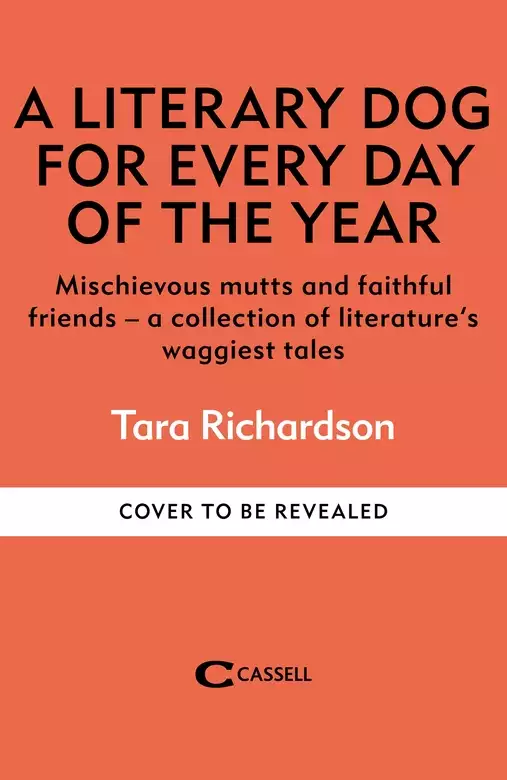
Dogs are our constant companions: from Just William's Jumble and the Famous Five's Timmy, to Mr Rochester's Pilot and the faithful Argos of Homer's Odyssey, we have all grown up with a dog - whether real or fictional. Rediscover the joy of childhood friends and much-loved pets with this selection of quotes, passages and poems celebrating some of the most memorable and best-loved dogs in literature.
A must-have for all dog-lovers and book lovers, this inspirational collection is the perfect gift for canine connoisseurs to treasure all year long.
Also available in the series: A Literary Cat for Every Day of the Year
Release date:
August 13, 2026
Publisher:
Octopus
Print pages:
256
* BingeBooks earns revenue from qualifying purchases as an Amazon Associate as well as from other retail partners.
With the festive season firmly in the rear-view mirror and the winter months seeming to stretch out far ahead, January can be a cold, gloomy month – the perfect time, really, to turn to the glorious combined comforts of books and dogs.
Snuggle up under a blanket and read about a sled dog in the wilds of Alaska (12 January), or escape to the muggy warmth of the Indian jungle (18 January). This month’s dogs are a clever bunch: they converse about society, debate philosophy with cats, run money-making schemes and even write letters. Most of all, though, they are loyal, from Greyfriars Bobby (14 January) waiting at his master’s grave, to Argos (15 January) waiting for Odysseus to return after twenty years at war.
American author J D Salinger was born on this day in 1919. Although he is best known for the razor-sharp cynicism of his 1951 novel The Catcher in the Rye, Salinger also had a silly side. Today’s dog is his pet Herman, who apparently could write almost as well as his master. The letter quoted below, in Herman’s voice, was addressed to Jigger, the canine companion of a woman Salinger had met while on a cruise to Cuba in the 1940s.
Dear Jigger
How are you feeling I am feeling fine. Wile big shot is upstairs shaving his ridikilous face I am going to write you a letter jigger. He don’t even know I can tipe, I can tipe better then he can and could write better storys if I felt like it, the trouble is I aint got the time.
I seen your mother when she was up to my house. Pretty tall and skiny but not too bad if you like that tipe. Old big shot hasnt been the same since he met her and she left on that plane, he jerks my leesh all the time and in general acts like a big jerk. I hope I see you soon jigger because I heard you was very attractive. I heard you wasnt no female but I was never one for splitting hairs on a little detail like that, besides my eyes aint too hot.
Today is Science Fiction Day. It falls on 2 January to mark the birthday of sci-fi legend Isaac Asimov, but today’s dog was created by another big hitter of the science-fiction world, Philip K Dick. Boris is the canine narrator of Dick’s short story ‘Roog’ (the first piece of work he sold). In the tale, Boris is alarmed by the creatures that regularly steal the food he has watched his master and neighbours carefully storing in containers outside their homes.
The Roogs came toward the metal can, and one of them took the lid from it.
‘Roog! Roog!’ Boris cried, huddled against the bottom of the porch steps. His body shook with horror. The Roogs were lifting up the big metal can, turning it on its side. The contents poured out onto the ground, and the Roogs scooped the sacks of bulging, splitting paper together, catching at the orange peels and fragments, the bits of toast and egg shell.
J R R Tolkien, author of The Lord of the Rings and The Hobbit, was born on this day in 1892. Today’s dog is Huan the Hound of Valinor, who appears in Tolkien’s The Silmarillion. Huan is a powerful, loyal and fearless wolfhound, who has been gifted with the ability to understand speech – and to speak just three times in his lifetime. He fights wolves, helps Lúthien escape captivity and defeats Sauron in wolf form. Surely the very definition of a Good Boy.
[N]othing could escape the sight and scent of Huan, nor could any enchantment stay him, and he slept not, neither by night nor day.
Poet and playwright T S Eliot died on this day in 1965. He is more commonly associated with felines, thanks to his much-loved Old Possum’s Book of Practical Cats, but the collection does include a brief musing on the nature of canines:
Now Dogs pretend they like to fight;
They often bark, more seldom bite;
But yet a Dog is, on the whole,
What you would call a simple soul.
When your children are teenagers, it’s important to have a dog so that someone in the house is happy to see you.
– Nora Ephron, I Feel Bad About My Neck
Although Arthur Conan Doyle never explicitly revealed the birthday of his iconic creation Sherlock Holmes, many fans choose today, 6 January, to mark the occasion. In Holmes’s honour, today’s dog is Toby, whom the famed detective borrows from one Mr Sherman in The Sign of the Four, in order to make use of his scent-tracking abilities. Watson, perhaps a little disgruntled at not being Holmes’s only companion on this case, is not particularly complimentary in his description of Toby.
Toby proved to be an ugly, long-haired, lop-eared creature, half spaniel and half lurcher, brown-and-white in colour, with a very clumsy waddling gait.
Naturalist and writer Gerald Durrell was born on this day in 1925. Today’s dog is Roger, his constant companion in Durrell’s much-loved book My Family and Other Animals.
I would suggest to Roger that perhaps it wasn’t worth going out today. He would wag his stump in hasty denial, and his nose would butt at my hand. No, I would say, I really didn’t think we ought to go out. It looked as though it was going to rain, and I would peer up into the clear, burnished sky with a worried expression. Roger, ears cocked, would peer into the sky too, and then look at me imploringly. Anyway, I would go on, if it didn’t look like rain now, it was almost certain to rain later, and so it would be much safer just to sit in the garden with a book. Roger, in desperation, would place a large black paw on the gate, and then look at me, lifting one side of his upper lip, displaying his white teeth in a lopsided, ingratiating grin, his stump working itself into a blur of excitement. This was his trump card, for he knew I could never resist his ridiculous grin.
Today’s dog is Kashtanka, the titular character of an 1887 short story by Russian writer Anton Chekhov. Kashtanka is a fox-like little mongrel who becomes lost after being separated from her owner. She finds herself taken in by a stranger and becomes part of his troupe of performing animals, which includes a cat, a pig and a goose called Ivan Ivanovich.
English poet William Robert Spencer was born on this day in 1769. Today’s dog is Gelert, the tragic hero of Spencer’s poem ‘Beth Gelert, or the Grave of a Greyhound’. The poem describes how Gelert’s master Llewellyn returns from a hunt to find his faithful hound with a blood-stained muzzle, and his young son apparently missing from his bloodied bed. Thinking Gelert has eaten his boy, Llewellyn stabs the dog – only to discover his son safely hidden, unharmed, and a dead wolf lying nearby. After realizing his terrible error, Llewellyn builds a magnificent grave for his loyal and brave dog.
Ah! what was then Llewellyn’s pain,
For now the truth was clear:
The gallant’s hound the wolf had slain,
To save Llewellyn’s heir.
Samuel Dashiell Hammett, author of the 1934 detective novel The Thin Man, died on this day in 1961. Today’s dog is Asta, the lively Schnauzer owned by the novel’s protagonists, Nick and Nora Charles.
Asta jumped up and punched me in the belly with her front feet. Nora, at the other end of the leash, said: ‘She’s had a swell afternoon – knocked over a table of toys at Lord & Taylor’s, scared a fat woman silly by licking her leg in Saks’s, and has been patted by three policemen.’
Thomas Hardy died on this day in 1928. Today’s dog is his beloved fox terrier Wessex, named after the fictional area the author created to feature in his literary works. Wessex – rumoured to be fond of the radio and something of a nightmare at mealtimes – now lies under a headstone that reads: ‘The famous dog Wessex: faithful, unflinching’.
American writer Jack London was born on this day in 1876. His 1903 novel The Call of the Wild tells the story of Buck, a dog who is stolen and sold to be a sled dog in Alaska. As Buck learns to navigate the harsh environment, he grows stronger and braver, and begins to feel more drawn to the wilderness. He becomes the companion of a kind man named John Thornton, who rescues Buck from a cruel prospector, but after Thornton’s camp is attacked by Native Americans, Buck finds himself the only survivor, alone in the wild.
Night came on, and a full moon rose high over the trees into the sky, lighting the land till it lay bathed in ghostly day. And with the coming of the night, brooding and mourning by the pool, Buck became alive to a stirring of the new life in the forest […]. He stood up, listening and scenting. From far away drifted a faint, sharp yelp, followed by a chorus of similar sharp yelps. As the moments passed the yelps grew closer and closer. Again Buck knew them as things heard in that other world which persisted in his memory. He walked to the centre of the open space and listened. It was the call, the many-noted call, sounding more luringly and compellingly than before. And as never before, he was ready to obey. John Thornton was dead. The last tie was broken. Man and the claims of man no longer bound him.
Irish writer James Joyce died on this day in 1941. Unfortunately, after being attacked by a dog as a small child, Joyce remained afraid of dogs all his life, and his dislike of canines can often be seen on the page. Today’s dog – with apologies to Mr Joyce – is Garryowen of Ulysses, the rather vicious canine companion of the character known only as ‘The Citizen’.
So we turns into Barney Kiernan’s and there, sure enough, was the citizen up in the corner having a great confab with himself and that bloody mangy mongrel, Garryowen, and he waiting for what the sky would drop in the way of drink.
—There he is, says I, in his gloryhole, with his cruiskeen lawn and his load of papers, working for the cause.
The bloody mongrel let a grouse out of him would give you the creeps. Be a corporal work of mercy if someone would take the life of that bloody dog. I’m told for a fact he ate a good part of the breeches off a constabulary man in Santry that came round one time with a blue paper about a licence.
Greyfriars Bobby was a fiercely loyal terrier who died on this day in 1872, after spending 14 years at Greyfriars Kirkyard in Edinburgh, where he was said to be guarding the grave of his deceased master John Gray. He had become famous among local citizens for his faithfulness, and after his death he was buried in the same graveyard, close to his master. His story has been immortalized in several books, including Greyfriars Bobby by Eleanor Atkinson.
‘A gude nicht to ye, Bobby.’
They could not see the little dog, but they knew he was there. They knew now that he would still be there when they could see him no more—his body a part of the soil, his memory a part of all that was held dear and imperishable in that old garden of souls. They could go up to the lodge and look at his famous collar, and they would have his image in bronze on the fountain. And sometime, when the mysterious door opened for them, they might see Bobby again, a sonsie doggie running on the green pastures and beside the still waters, at the heels of his shepherd master, for:
If there is not more love in this world than there is room for in God’s heaven, Bobby would just have ‘gaen awa’ hame.’
From one faithful dog to another: today’s canine is Argos, the four-legged friend of Odysseus in Homer’s Odyssey. When Odysseus leaves to fight in the Trojan War, he leaves behind Argos, whom he had been training as a hunting dog. When his master fails to return, the poor dog is neglected. Still, he waits, growing old and emaciated – and when Odysseus finally returns twenty years on, in disguise as a beggar and unable to acknowledge the old hound for fear of revealing his true identity, Argos recognizes him at once.
Abandoned there, and half destroyed with flies,
old Argos lay.
But when he knew he heard
Odysseus’ voice nearby, he did his best
to wag his tail, nose down, with flattened ears,
having no strength to move nearer his master.
Having at last laid eyes on his much-loved master, old Argos dies – but this tender moment between man and dog highlights the bittersweet nature of Odysseus’s homecoming.
Today’s dog is Enzo, the canine narrator of Garth Stein’s The Art of Racing in the Rain. Enzo believes that if he prepares properly, he will be reincarnated as a human in his next life. Here, he muses on how having lived as a dog will make him a better human.
Here’s why I will be a good person. Because I listen. I cannot speak, so I listen very well. I never interrupt, I never deflect the course of the conversation with a comment of my own. People, if you pay attention to them, change the direction of one another’s conversations constantly. It’s like having a passenger in your car who suddenly grab. . .
We hope you are enjoying the book so far. To continue reading...

 Please log in to recommend or discuss...
